Get Full Government Meeting Transcripts, Videos, & Alerts Forever!
Get email alerts on the Education District Feasibility topic
No spam. Unsubscribe anytime.
Hundreds of residents urge Millcreek council to back feasibility study on splitting Granite School District
Summary
Dozens of Millcreek residents pressed the City Council on April 28 to support or finance a feasibility study that would examine splitting Granite School District and forming a smaller, local district including Millcreek, Holiday and possibly South Salt Lake.
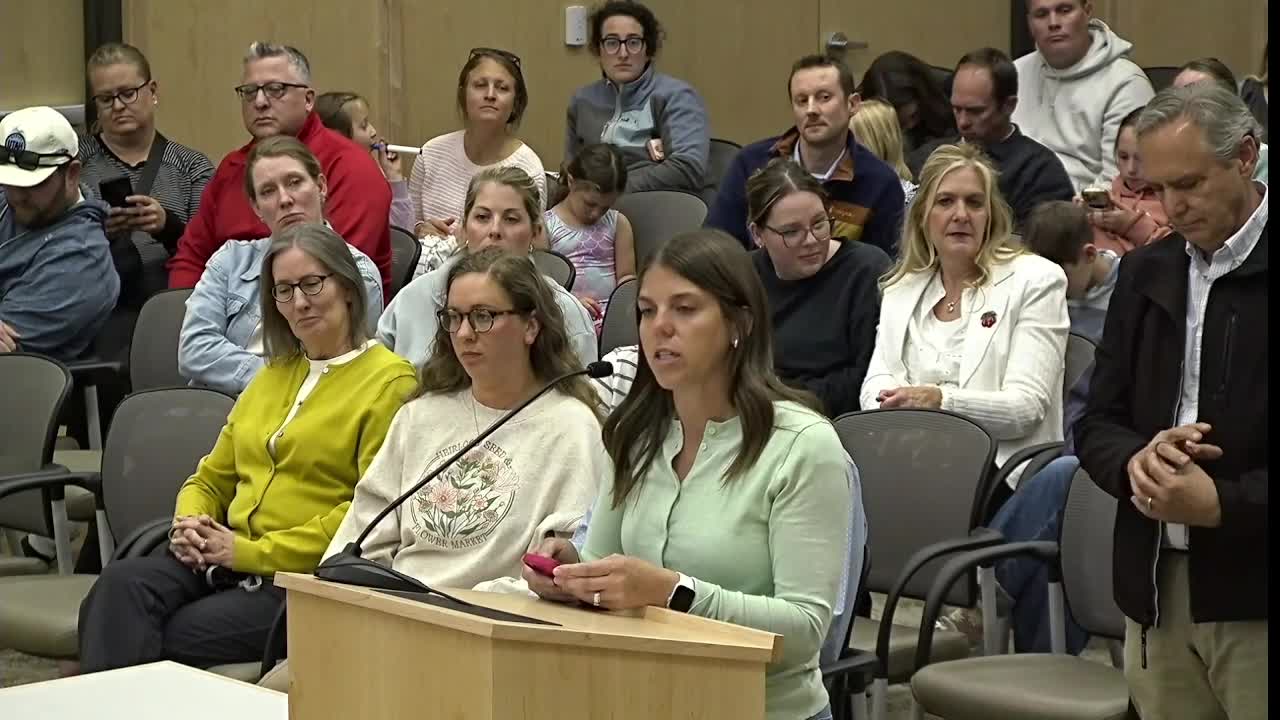
Dozens of Millcreek residents, parents and community leaders used the council’s public‑comment period April 28 to press elected officials to commission a feasibility study on forming a new school district separate from Granite School District.
Supporters said a smaller, locally controlled district could improve representation, retain neighborhood schools and address local priorities. Speakers described previous school closures in Millcreek and urged the council either to fund an independent study or to back a process that could lead to a ballot question. The council did not adopt or fund a feasibility study that night; staff were asked to develop a plan for broader outreach and to report back.
The calls for a feasibility study dominated public comment in a packed council chamber. Taylor Davis told the council a study posed little downside — “If the study shows it’s not feasible, no harm done.” Marcus Nelson and several other parents argued Granite’s size (roughly 60,000 students, they said in public comment) dilutes local representation. Multiple speakers asked the city to consider whether Holiday and South Salt Lake should join any new district.
Speakers cited city budget line items and community fundraising when urging the council to act. One commenter noted the city had recently budgeted $40,000 for the arts council, $50,000 for a sycamore program and $8,000 for scholarships; others said supporters had already raised roughly 10% of the cost of an initial study. Several speakers urged the council to favor a local decision-making model over centralized district control, and some referenced prior state legislation (SB 77) that enabled district splits.
Council members listened and asked staff to prepare outreach and a public survey to gather broader community input. City staff indicated they would convene communications staff and council volunteers to design the questionnaire and explore low-cost and paid survey options, and to map the formal state process that governs school‑district boundary changes and any legislative requirements.
No formal motion to fund the feasibility study was passed. Council discussion afterward focused on methods to learn more from residents (email/newsletter surveys, printed mailers and targeted outreach) and on the realistic timeline and procedural steps involved in any district‑split request. Staff said they would report back with survey options and cost estimates and would identify how the state process would affect timing.
The public‑comment session included parents, coaches, long‑time residents and community organizers. Several speakers described direct experience with past school closures in Millcreek and neighboring communities and said preserving neighborhood schools was central to city identity, walkability and property values. Others urged patience and fuller outreach to West‑Side neighborhoods, South Salt Lake and Holiday before the council committed city funds.
Council members signaled they would not rush a unilateral decision but did not close the door on further study. Mayor and staff told the audience they would develop a survey and outreach plan before the next steps were decided.
Ending: Council members encouraged organizers to continue fundraising and outreach and asked staff to return with specific survey costs and a recommended next step. If the council receives a formal petition or the community raises funds to pay for a study, the mayor said that would change how the council would evaluate city funding.