Get Full Government Meeting Transcripts, Videos, & Alerts Forever!
Get email alerts on the Immigration Detention Policy topic
No spam. Unsubscribe anytime.
Gallatin County residents press commissioners to reject housing ICE detainees, cite due‑process and liability concerns
Summary
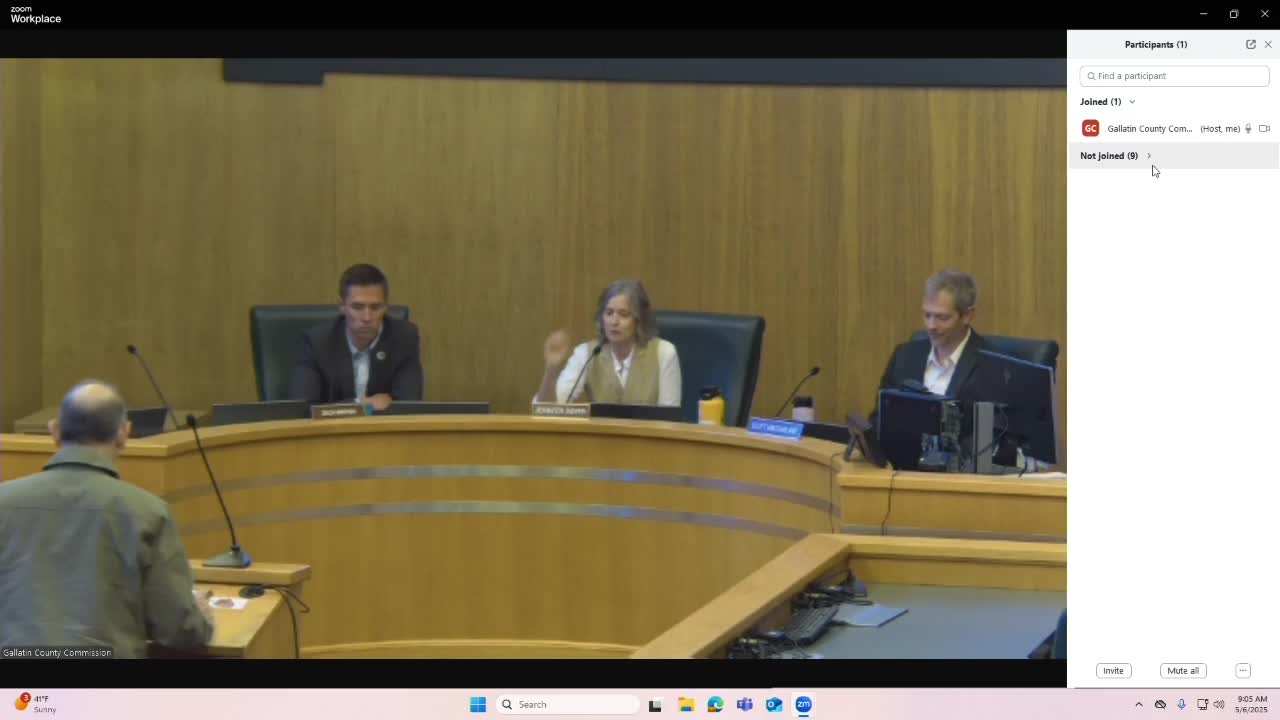
Dozens of residents and local attorneys urged the Gallatin County Commission on May 6, 2025, to reject any negotiation to allow U.S. Immigration and Customs Enforcement to house detainees in the county detention center, saying the move would risk residents' due process rights and expose the county to legal and medical liabilities.
Dozens of residents and local attorneys urged the Gallatin County Commission on May 6, 2025, to reject any negotiation to allow U.S. Immigration and Customs Enforcement to house detainees in the county detention center, saying the move would risk residents' due process rights and expose the county to legal and medical liabilities.
Speakers described what they said were recent national and regional practices by ICE — including detentions without clear charges, cancelled visas and detainees moved long distances — and asked commissioners not to pursue a new memorandum of agreement. "This opens us to some serious legal liabilities," said Liana Bertelsen, a long‑time Gallatin County resident. "We're being asked to turn our community into an extension of a federal agency whose recent actions have demonstrated a disturbing disregard for due process, human dignity, and basic decency."
The comments included a range of concerns: attorneys who visit the jail said staffing shortages and delays are already affecting access to counsel and medical care; community members warned that a contract could chill cooperation with police by immigrant witnesses and victims; and others warned of potential costs to county budgets and reputations. "Our jail system is already stretched thin," said Megan Moore, a local criminal defense attorney. "I respectfully ask that you do not pursue negotiations with ICE in this matter."
Several speakers asked commissioners to consider the difficulty of reliably distinguishing which detainees ICE would present as having separate criminal convictions and which would not. "Many individuals who are detained by ICE do not know their charges," said Ita Killeen, a retired family physician. She and others described instances elsewhere in Montana where detainees' charges and identities were unclear to the public and lawyers.
Opposing views were also voiced. Roger Blank, a Bozeman resident and attorney, urged county cooperation with federal authorities and criticized the county attorney's public statements opposing a detention contract. "Those aren't legal arguments. Those are Democrat talking points of false reasons not to cooperate with ICE," Blank said, arguing that housing federal detainees would not create county liability if appropriate contract terms were used.
Several speakers referenced an April 21 letter reportedly signed by Commissioners Brown and McFarland indicating a willingness to open contract negotiations for some detention beds; speakers who opposed negotiations said they believed the county could not reliably ensure ICE adherence to narrow eligibility criteria for detainees. Speakers also raised local economic and social concerns: Deborah Hines cited an economic analysis she said showed Hispanic residents contribute substantially to the state economy, and others said a contract could harm the local workforce and community cohesion.
The commission did not take action on the topic. Chair (name not specified) closed the public comment period after in‑room remarks and directed that the meeting proceed to the consent agenda. "This isn't an agenda item. There's no action or discussion regarding it," the chair said before moving on.
Why it matters: A county decision to allow federal detainees could create operational demands on the jail, possible legal exposure if detainees' rights are contested, and political and social effects in a county with a sizable immigrant workforce. Community members urged the commission to weigh staffing, medical care, access to counsel and Constitutional‑due‑process risks before engaging in any contract negotiations.
Meeting note: The public comment period was limited to five minutes per person. No formal vote or direction to staff on the ICE matter was recorded during the May 6 meeting.