Get Full Government Meeting Transcripts, Videos, & Alerts Forever!
Get email alerts on the Public Health Fluoridation topic
No spam. Unsubscribe anytime.
Local health professional urges Belpre to continue community water fluoridation
Summary
Dr. Hawkins presented scientific and historical arguments in favor of maintaining fluoride in Belpre's public water supply and referenced Ohio House Bill 182 as an active legislative matter under committee review.
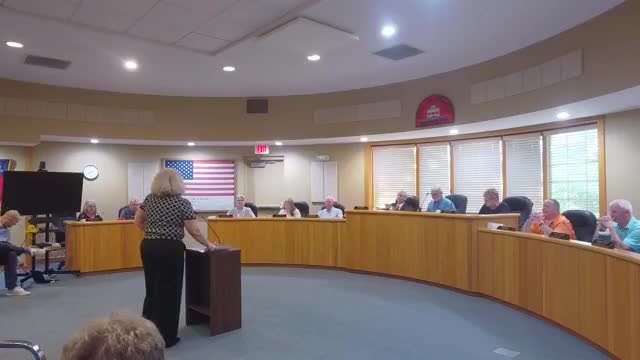
Dr. Hawkins, a local health professional, told the Belpre City Council that community water fluoridation is a proven, cost‑effective public health intervention and urged the city to continue the practice.
The presentation traced the history of water fluoridation, described the current U.S. recommendation of 0.7 milligrams per liter and said fluoridation benefits both children and adults. Dr. Hawkins noted that “for every $1 that we spend in fluoridation, it saves people $38 in medical treatment,” and described fluoridation as “one of the greatest public health achievements.”
Dr. Hawkins referenced pending state legislation, stating that “House Bill 182 is in committee right now” and that similar proposals could prohibit public water systems from adding fluoride. She addressed safety concerns raised nationally, saying high naturally occurring fluoride exposures cited in some studies refer to areas with levels far above U.S. recommendations and that the quantities used in community fluoridation are much lower.
The presentation included specific points Dr. Hawkins raised about effectiveness and equity: community water fluoridation provides dental protection regardless of individual access to dental care or toothpaste use, and she reported seeing higher decay in children who were not exposed to fluoridated community water. She also described the dose-response difference between therapeutic public-health levels and the much higher levels associated with fluorosis in extreme natural exposures.
No formal action or vote on fluoridation policy occurred at the meeting. Council members thanked Dr. Hawkins and moved on to other agenda items.
"Community water fluoridation is cost effective," Dr. Hawkins said, adding that it remains a useful tool “in the fight” against dental decay.