Get Full Government Meeting Transcripts, Videos, & Alerts Forever!
Get email alerts on the Budget Revenue topic
No spam. Unsubscribe anytime.
Staff presents options to close $4.5M gap; property tax, business licenses and operating changes key to a balanced budget
Summary
Finance staff presented revenue revisions and expense adjustments — including a conservative 2% property‑tax growth estimate, a $200,000 upward adjustment to business license receipts and reallocation of asset sale proceeds into the capital fund — as the council works to balance a roughly $4.5 million shortfall ahead of first reading.
At a special budget workshop, finance staff reviewed a list of revenue and expenditure adjustments intended to close an estimated $4.5 million gap between proposed spending and projected revenues.
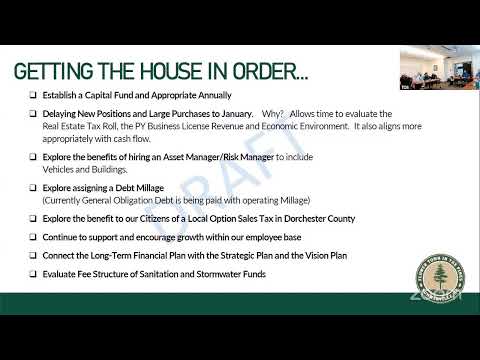
Finance director Rhonda Roberts told council she had updated several revenue lines since the March draft: staff are using a conservative 2% growth assumption for property taxes (staff estimated roughly $350,000 additional revenue from that change), increased the town’s local business license revenue forecast by $200,000 to roughly match 2024 levels, and recommended putting anticipated proceeds from sale of assets into the new capital fund rather than the general fund. Roberts described the revenue changes as conservative and said she used permit data and recent issuance (chiefly CEO/COs) to inform the estimate for development‑related growth.
On the expenditure side staff presented personnel changes and cost controls: several new positions were delayed until January, communications positions were removed from the operating request, and departments were asked to prioritize filling existing vacancies before adding new hires. The draft included a 3% cost‑of‑living increase (COLA) across the board but no district‑wide merit pool unless council chooses to fund merit separately.
The mayor opened the session by urging council to choose which of the options to include so staff could prepare a balanced budget for first reading at the next council meeting. Council asked follow‑up questions about the property‑tax estimate and permit‑based forecast and asked staff to return formal draft ordinance language for first reading.
What’s next: Staff will deliver the budget ordinance for first reading at the next council meeting; second reading and the public hearing are scheduled for the June meeting.