Get Full Government Meeting Transcripts, Videos, & Alerts Forever!
Get email alerts on the Property Maintenance Enforcement topic
No spam. Unsubscribe anytime.
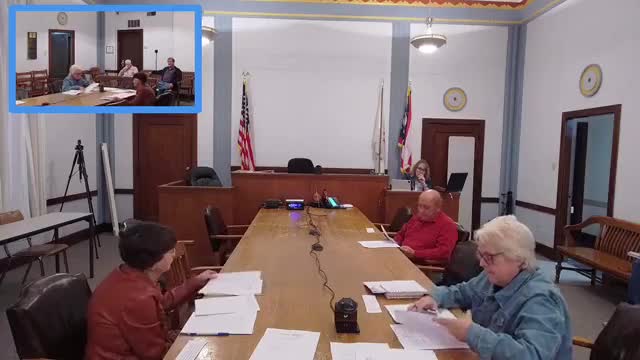
Galion committee debates stronger enforcement, staffing and cleanup options for property maintenance
Summary
At a Laws & Ordinances Committee meeting, members, residents and staff discussed repeated complaints about junk cars, trash and property blight; staff described current complaint-to-court process and the chair pledged to consult the law director and health department about enforcement and possible program changes.
Members of the Galion City Council's Laws & Ordinances Committee discussed persistent property-maintenance problems — notably junk vehicles, yard trash and abandoned houses — and possible nonlitigation responses at a committee meeting.
Committee members and several residents said junk cars and accumulated trash create visual blight and discourage investment. Staff and committee members described the existing enforcement path for private-property complaints: inspection and written notice from the building inspector, a short compliance window, then escalation to the municipal/county court if the owner does not comply.
The meeting record says building inspector Eric Waldinger is the point of contact for property-maintenance complaints on private property, while police handle vehicles left on public streets. Committee members and residents reported that the county contract prosecutor and municipal-court enforcement have sometimes been slow or lenient, leaving problem properties unresolved for months. The committee discussed possible next steps including asking the prosecutor to prioritize a set of the worst addresses, adding enforcement staff, reviving community cleanup days, and increased landlord accountability.
Committee discussion clarified how the current enforcement process typically works: the building inspector issues an initial notice; for trash cases the health department is sometimes involved; staff typically give a resident about 10 days to correct trash issues before a second warning; unresolved matters go to court after roughly 30 days. Committee members said municipal judges and the court often give additional time if property owners show progress — 60 to 90 days was cited as a common extension. A $500 fine was discussed as an example of what some repeat offenders pay instead of completing cleanup.
Speakers and participants emphasized several consequences and constraints. Some committee members said many problem properties are owned by out-of-town landlords or by owners with limited income, which complicates enforcement and cleanup. Committee members noted mental-health issues among some occupants can block enforcement or volunteer cleanup efforts. Several participants urged practical, low-cost approaches — another community cleanup day, targeted landlord outreach, a short-term hire to do proactive inspections, or a focused court docket if the prosecutor will prioritize cases.
Committee chair Marsha (first name used in the meeting record) said she will speak with the law director/prosecutor about enforcement priorities and with Andy Barnes of the health department about coordinated responses and past cleanup efforts. No ordinance changes were approved at the meeting; committee members directed staff and the chair to explore options and report back.
The committee also discussed the cost and liability of volunteer-driven cleanups; previous cleanups were described as costing “a couple thousand dollars” when the city paid landfill or disposal fees. Staff noted that volunteers who are not city employees may not be covered by city workers’ compensation if injured during a cleanup, which was a concern for organizing future events.
The committee left several potential actions on the table: (1) request written guidance from the prosecutor on whether nuisance/property-maintenance cases will be made a priority, (2) produce a short list of the most problematic addresses for targeted enforcement, (3) evaluate the budget for adding one enforcement position (a rough estimate of about $100,000 was cited during discussion), (4) plan a volunteer cleanup with defined liability and cost coverage, and (5) pursue landlord outreach for properties that cluster with recurring problems.
The Laws & Ordinances Committee did not adopt any new ordinance language during the discussion; it voted only on procedural items elsewhere on the agenda. The chair and staff will follow up with the law director/prosecutor and the health department and report to the committee at a future meeting.