Residents push for full Civil Rights Board enforcement as commission hears housing, policing and mass‑incarceration concerns
Loading...
Summary
During public comment Monday, residents, CRB members and community advocates urged the Kalamazoo City Commission to restore enforcement capacity and rebuild trust in the Civil Rights Board to address housing discrimination, unresolved complaints and related inequities.
Multiple speakers at Monday’s public comment period urged the City Commission to ensure the Civil Rights Board (CRB) has investigatory and enforcement capacity, to address housing discrimination, homelessness and related safety concerns.
Kathy Faison, chair of a civil‑rights board partnership group, cited model language taken from Detroit’s human rights ordinance and said residents seek an enforceable mechanism rather than advisory language. “What we are asking for is enforcement,” Faison said, reading portions of Detroit’s powers and duties for a human rights department to illustrate the scope the CRB advocates want.
Speakers, including Charle Davis of ISAAC and residents who identified themselves as Kalamazoo residents, linked the CRB discussion to broader housing equity issues. Toby Hannah Davies, a city resident and volunteer, urged the commission to consider the effects of mass incarceration on housing access, quoting Michelle Alexander’s New Jim Crow and noting that criminal records routinely block access to housing.
Other public commenters described direct policing encounters and homelessness challenges; one speaker said a person sleeping on a bench was cited by police, and that when residents tried to check on the person they were threatened with arrest for interfering. Shauna Espinosa described being threatened with arrest while checking on a person sleeping on a bench and argued the city lacks adequate housing resources.
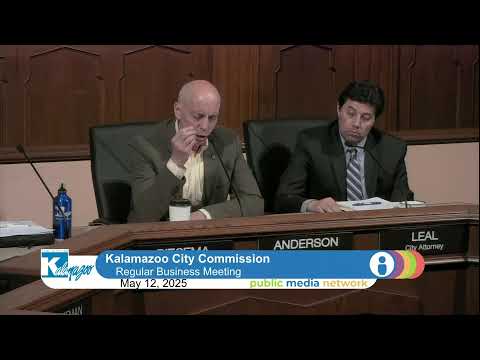
Commission response: Commissioners acknowledged the urgency raised by commenters. Several commissioners, including Commissioner Prado and Vice Mayor Jean Hess, said they want to work with the CRB and community stakeholders to rebuild trust and clarify the board’s role. Manager Risma and staff offered to sit down with the CRB and other advocates to pursue workable language and process. City attorney and staff also previously briefed the commission on CRB scope during a committee meeting, and multiple speakers requested a clearer path for complaint investigation and case completion.
Why it matters: Advocacy groups and CRB members told the commission that without enforceable complaint procedures and adequate staff support, community trust has eroded and many complaints remain unresolved; Faison said only a small number of complaints had been fully investigated and a still smaller number afforded hearings.
Ending: Commissioners directed staff to continue engagement; staff and commissioners said they will seek to develop practical steps to improve complaint intake, investigation timelines and communication with complainants while respecting legal constraints and the city’s processes.