Get Full Government Meeting Transcripts, Videos, & Alerts Forever!
Get email alerts on the Article 7 Budget Finance topic
No spam. Unsubscribe anytime.
Charter commission, CFO review Article 7 of Lansing charter on budget, taxes and borrowing
Summary
The Lansing City Charter Commission reviewed Article 7 line-by-line with City Treasurer and CFO Crystal Thomas, approving most subsections, debating procedural items such as timing of council budget hearings, supplemental appropriations, debt limits, facsimile signatures and special-assessment rules, and requesting follow-up research from staff.
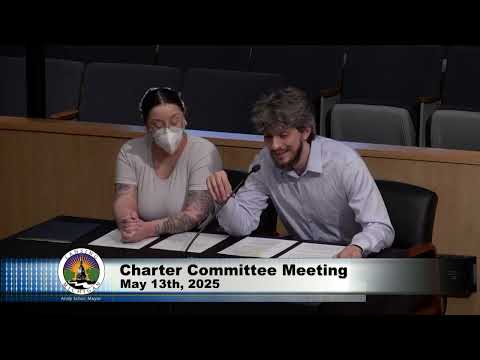
The Lansing City Charter Commission held a section-by-section review of Article 7 (budget, taxation, borrowing and special assessments) at its May 13, 2025 meeting, with City Treasurer and newly appointed chief financial officer Crystal Thomas present to confirm current city practices and answer commissioners' questions.
Commissioners voted to approve most subsections of Article 7 as written but flagged several areas for clarification or amendment, including the timing of council budget hearings, the fixed dollar threshold for supplemental appropriations, procedures for reversion and reporting of transfers, the use of facsimile (auto-pen) signatures on bond interest coupons and confirmation and voting thresholds for special assessments.
Thomas, who said she had been CFO for six weeks, walked commissioners through budget submission rules, the budget message content, bonds and debt sections, and tax and assessor duties. The commission confirmed that the mayor still submits a budget and that city council submits budget priorities by Oct. 1. Commissioners discussed the provision that council "shall by resolution adopt the budget" by May; Commissioner Washington said that council often completes budget hearings very shortly before adoption and argued for a requirement that hearings be completed at least two weeks before adoption. Thomas and staff suggested alternatives, including a budget workshop or "budget school" to train newly elected council members.
On supplemental appropriations and transfers, commissioners debated the charter's current requirement that certain supplemental appropriations receive a two-thirds council vote. Some members questioned whether that higher threshold was necessary because a simple majority approves the budget itself; others defended the two-thirds requirement as a safeguard against ad hoc post-adoption changes.
Commissioner discussion also touched on a statutory dollar threshold in the charter that reads "the lesser of $5,000 or 15%" for a particular appropriation adjustment. One commissioner recommended removing the fixed $5,000 figure and leaving the percentage so the rule would scale over time.
The commission addressed capital improvement planning language (a section was proposed for deletion pending legal review) and clarified that quarterly budget updates and controls are in use. Commissioners also discussed special-assessment rules: how a citywide special assessment was applied for the Red Cedar project; procedures for contesting assessments; "jeopardy assessments" used to quickly secure taxes when collection is at risk; lien and postponement provisions for special assessments; and the council's ability to confirm additional assessments. On that point, commissioners amended 0.2 of the additional-assessments section to require confirmation by a two-thirds vote of council; the amendment was moved, supported and passed during the meeting.
Other items raised included a provision that interest coupons on bonds may be executed with facsimile signatures of the mayor and city clerk. Commissioner Boyd asked whether that refers to an autopen; commissioners asked city legal staff to review whether state law already authorizes electronic or facsimile signatures and whether the charter language should be changed or removed.
Throughout, Thomas and administration staff said they would research open questions and return with answers. For example, staff agreed to investigate whether transfers and reversions were being reported to the clerk as required, how changing hearing schedules might affect departmental preparation time, the historical use of supplemental appropriations in Lansing, and what the city's actual debt limit number is in dollar terms. The commission concluded the Article 7 review and instructed staff to prepare follow-up information and clean-up language for subsequent meetings as the commission aims to complete charter edits in early June for attorney general and gubernatorial review before the November ballot.