Get Full Government Meeting Transcripts, Videos, & Alerts Forever!
Get email alerts on the Fire Staffing Ems topic
No spam. Unsubscribe anytime.
Lansing fire union warns of staffing shortfall as ambulance and call volumes climb
Summary
IAFF Local 421 and union leaders told the City Council Committee of the Whole that fire staffing has not recovered from cuts a decade ago, that call volume has climbed sharply and that current minimum staffing constrains ambulance availability and raises health and safety concerns for firefighters and residents.
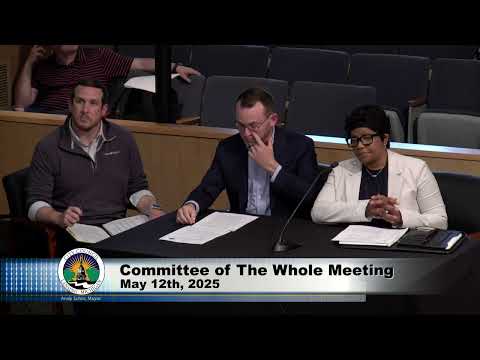
Brad (IAFF Local 421 business agent) told the City Council Committee of the Whole on May 12 that Lansing Fire Department staffing has not recovered from cuts made during earlier budget reductions and that call volume has increased significantly.
“The number 1 concern for the community stakeholders … is our staffing levels,” Brad said, summarizing a department strategic plan. He said the fire department staffed 52 personnel per day in 2010 but is now at 41 despite rising call volume, and that “we're running 27,000 calls a year.”
Nut graf: The testimony matters because union leaders say minimum staffing is insufficient to meet current emergency medical services (EMS) demand and fire calls; that shortage affects worker fatigue and sick leave; and it constrains the city’s ability to operate additional ambulances or fully crew trucks.
Brad told council that adding one fully operational ambulance position requires multiple hires: “Our minimum staffing…We have 41 people on a day. So if we wanted to staff another ambulance, our minimum staffing would have to go to 43. And that would be 6 new hires.” He said long hours and frequent overtime are producing fatigue and mental‑health strains among firefighters: “we have numerous of my members that are struggling with PTSD, mental health issues…Our sick leave is increasing just due to the fact that a fatigue.”
Union and city representatives said steps are underway to increase trained staffing. Jake, the city’s chief strategy officer, noted the city obtained a SAFER grant that adds 15 firefighter positions immediately; he said the grant addresses attrition but that maintaining those positions beyond the grant requires budgeting. Brad and others described contractual changes that require new hires to pursue paramedic training and noted state moves to create a Michigan‑only paramedic license as support for local training pipelines.
Council members pressed for a long‑term plan. Brad said the department’s strategic plan aims to align staffing with workload by 2029 and applauded recent internal steps, but he said much work remains. Council and the administration agreed to provide further analysis and follow‑up on staffing plans and vacancy fill timelines.
Ending: Union leaders asked the council for a long‑term staffing plan and quicker action to fill funded vacancies; city staff said they would provide additional detail about vacancy timelines, recruitment events and how grant hires will be sustained in future budgets.