Get Full Government Meeting Transcripts, Videos, & Alerts Forever!
Get email alerts on the Single Room Occupancy Ordinance topic
No spam. Unsubscribe anytime.
Planning commission forwards proposed single‑room‑occupancy and rooming house rules to City Commission
Summary
The commission recommended creating zoning standards for single‑room‑occupancy (SRO) and rooming houses, including occupancy caps, minimum bedroom sizes, a parking ratio and a requirement that most tenants remain for at least 90 days to discourage transient use.
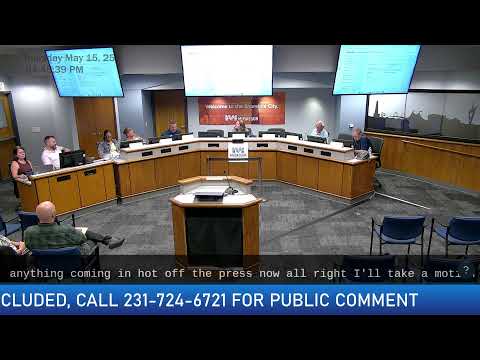
The Muskegon City Planning Commission on May 15 voted to recommend that the City Commission adopt an ordinance creating standards for single‑room‑occupancy (SRO) buildings and rooming houses.
Planning staff outlined the proposed rules: allow rooming houses and SROs in specified residential districts (RM‑1 and form‑based urban residential subject to rezoning), require the owner or manager to live on-site for traditional boarding houses (manager presence optional for SRO), limit bedrooms to 100 square feet for a single tenant and 200 square feet for two tenants, cap SRO buildings at 20 bedrooms and 25 total occupants, and limit small rooming houses (site-level single-family conversions) to occupancy caps tied to house size (e.g., houses at least 2,000 sq. ft. may allow up to six people; up to 2,500 sq. ft. may allow eight). Staff proposed a parking standard of one space per three bedrooms and a residency stability clause modeled on Grand Rapids that would require at least 90% of SRO units to be occupied by the same tenant for a continuous period of at least 90 days.
Commissioners asked about parking, how conversions would be treated to avoid illegal spot‑zoning, and whether existing funding programs such as Low‑Income Housing Tax Credit (LIHTC) or other state/federal sources could be applied. Planning staff said SRO uses would typically require rezoning to RM‑1 plus a special use permit, and that redevelopment of former churches or schools could be suitable candidates.
Two members of the public spoke in favor: Jake Eckholm, who described SROs as a needed part of the housing spectrum and urged continued zoning reform, and Devin Washburn, who said he recently purchased a former church and supports the proposal as an adaptive reuse option. The commission voted unanimously to recommend the SRO and rooming‑house standards to the City Commission for approval.