Get Full Government Meeting Transcripts, Videos, & Alerts Forever!
Get email alerts on the Solar Projects Eminent Domain Home Repairs topic
No spam. Unsubscribe anytime.
Residents urge alternatives to neighborhood solar farms, call to repurpose funds for home repairs; drainage project and CDBG recovery funds also criticized
Summary
Multiple public commenters urged the council to avoid using eminent domain for neighborhood solar farms, proposed repurposing ARPA dollars for home repairs, and asked for more information about a proposed 30-acre drainage project tied to CDBG disaster recovery funds.
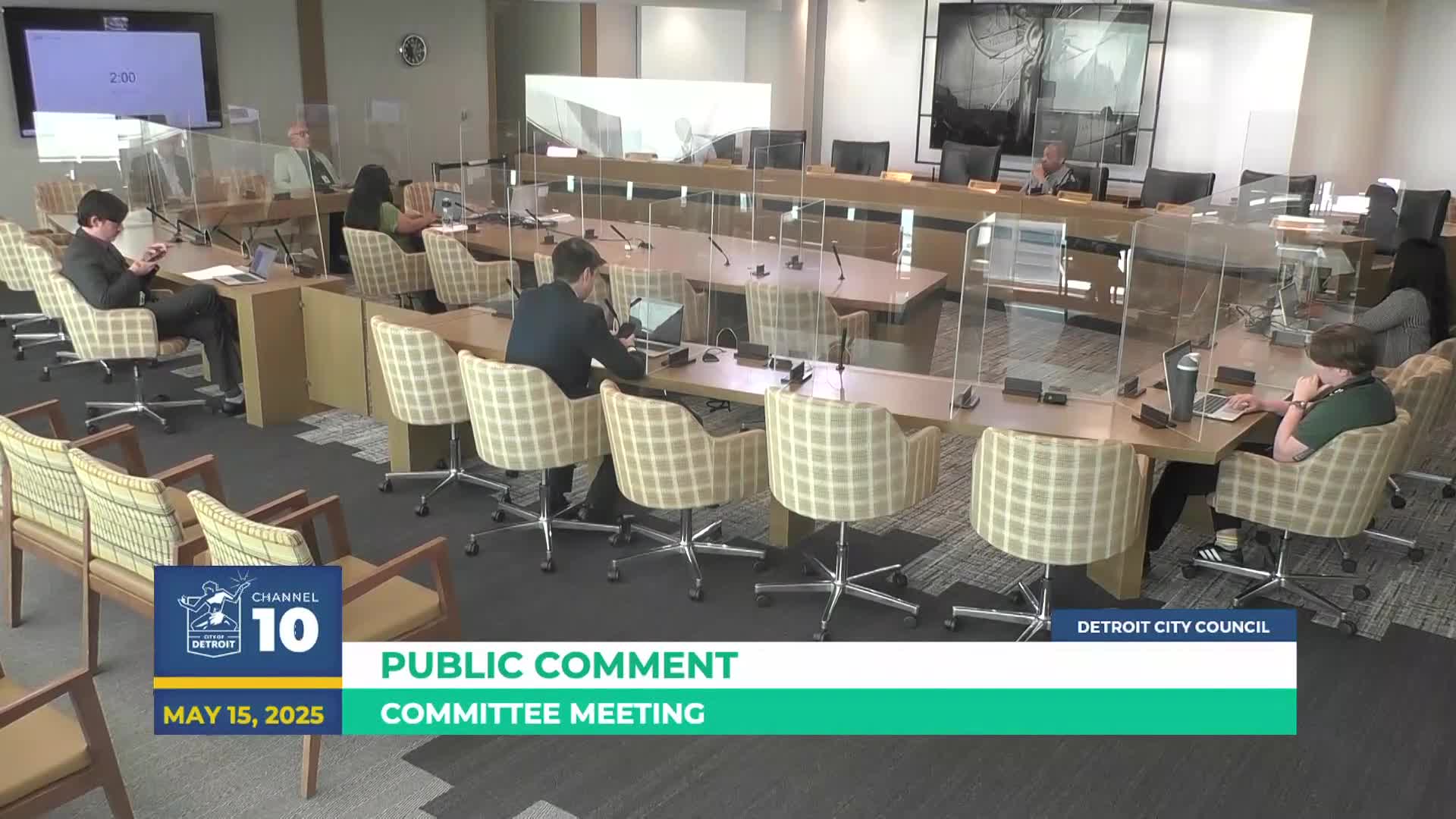
During the meeting’s public comment period, multiple callers urged the council to reconsider plans the speakers described as using eminent domain for neighborhood solar farms and to prioritize home repair funding instead.
A caller using the display name “You Matter” suggested the council study a solar-canopied parking lot at Michigan State University as a model but warned against siting large solar farms in residential neighborhoods and said the city should not use eminent domain where there are other available spaces. “How about help all these people with their home repair needs outside of the solar neighborhoods?” the caller said, and suggested repurposing American Rescue Plan Act (ARPA) funds for greenhouse-gas-reducing home repairs instead of neighborhood solar projects. The caller also suggested 3D printing as a potential affordable-housing option.
A second caller using the display name “We See You” criticized how CDBG disaster-recovery funds were being allocated and asked why the council was not focusing on neighborhoods and households affected by flooding. The caller said $348,000,000 in Community Development Block Grant (CDBG) disaster recovery funds were available for homes impacted by flooding and questioned a plan described by the caller as taking 30 acres to construct a drainage pond, asking whether health department or supporting data had been reviewed. The caller also repeated allegations of misappropriation and criticized a named council member’s competence; those allegations were part of public comment and were not supported by council action during the meeting.
No council action was taken on these specific public-comment items during the meeting. The administration did not provide a formal response on the record to the requests; public commenters asked for greater transparency, alternative siting and program priorities that emphasize home repairs and equitable distribution of funding.