Get Full Government Meeting Transcripts, Videos, & Alerts Forever!
Get email alerts on the Language Access topic
No spam. Unsubscribe anytime.
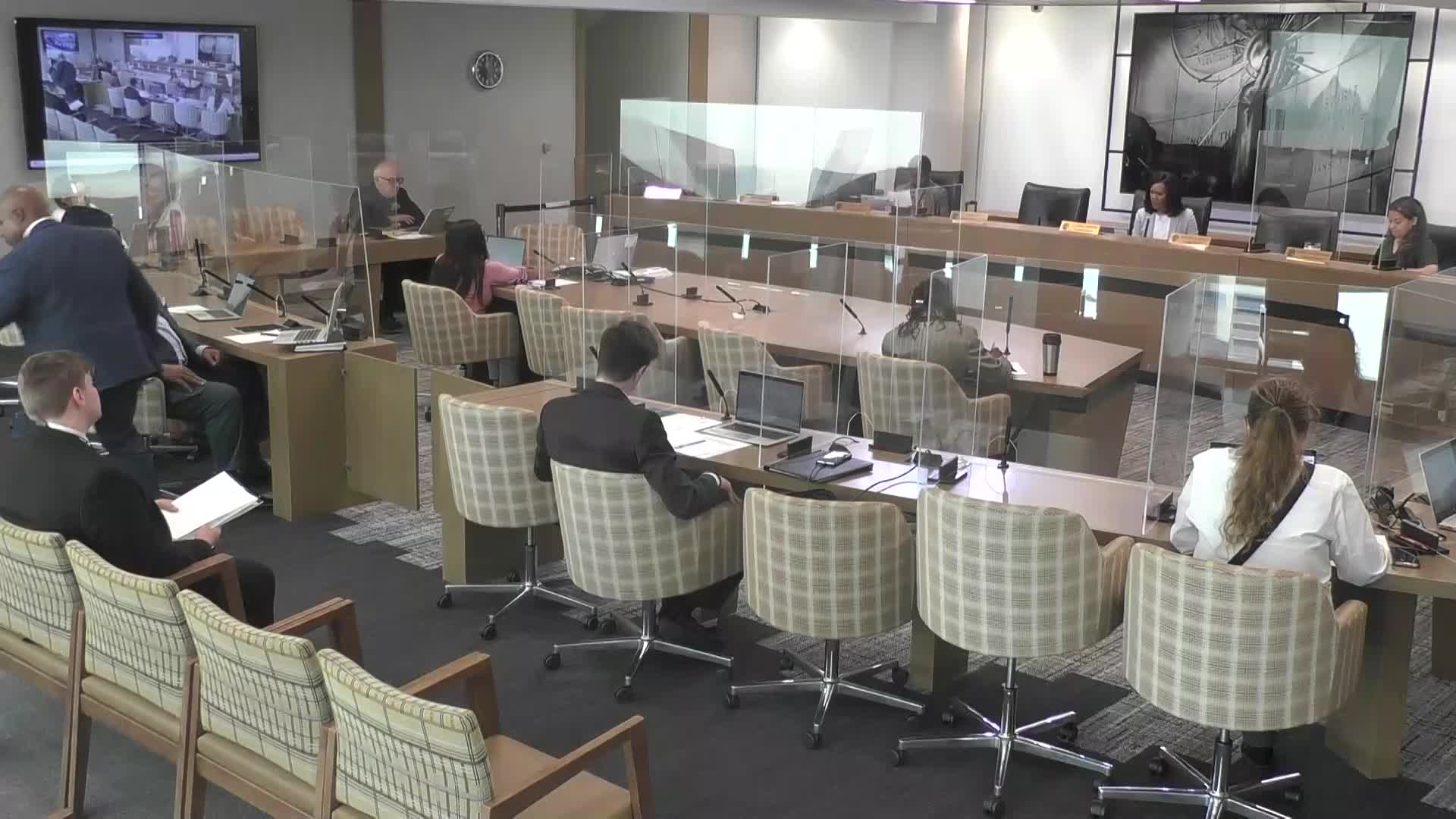
Council committee advances citywide language-access ordinance to formal with amendments
Summary
The Operations Standing Committee advanced an ordinance to add a citywide language-access policy to Detroit’s code, directing departments to produce plans, creating a grievance process and requiring annual reporting. Members adopted two amendments and sent the measure to formal with a recommendation to approve.
The Operations Standing Committee advanced an ordinance to add a citywide language-access policy to the Detroit City Code, directing city departments to create language-access plans and adding grievance and reporting requirements.
The measure, introduced at the committee’s 10:30 public hearing, would add Article 10 to Chapter 23 (Human Rights) to require departments to identify limited-English-proficiency (LEP) residents, translate vital public documents, provide interpretation services and file annual reports on language access.
Attorney Graham Anderson, representing the Law Department, described how the ordinance defines “limited English proficiency” and the types of services covered. “Individuals identified in this article maintain the right to self identify as an LEP person, as well as the right to indicate their preferred language,” Anderson said. He also noted that interpretation services may include bilingual staff, telephonic interpretation and video-remote interpretation.
Sponsor Council Member Santiago Romero said the ordinance codifies an existing program run by the City’s Office of Civil Rights, Inclusion and Opportunity (CREO), and requires departments to produce department-specific plans within 60 days of the ordinance’s effective date. Romero said she has moved in council to secure $200,000 to fund additional CREO staff to implement the ordinance quickly.
During public comment, multiple speakers urged passage. Brenda Magdessi of Rising Voices said the ordinance is “vital to the growth, safety and well-being of all Detroiters” and cited language barriers during recent flooding and a water-main break. Haig Oshagan, co-chair of the City Council’s Immigration Task Force, said language access is critical across Detroit’s many immigrant communities. Several callers and commenters asked the city to use plain language in translations so materials are broadly understandable.
Several speakers raised questions about cost and implementation. Caller Tahira Ahmad and another commenter asked for a fiscal analysis and asked how the ordinance would be enforced, noting existing city ordinances (for example, a recently passed property-tax reform) that they say are not always enforced. Romero said a fiscal-impact study is under review by the Budget, Finance and Audit (BFA) office and that the city has budgeted resources during the current cycle to begin implementation.
The committee approved two technical amendments, removing Spanish, Arabic and French from two subsections and replacing them with a flexible standard requiring translation for “recognized substantial LEP-speaking populations or at the request of at least one qualifying population.” Both amendments were adopted “hearing no objection.” The committee then voted to send the amended ordinance to formal with a recommendation to approve.
The ordinance references the city code change and aligns with recent state action; Romero noted that Governor Whitmer signed Senate Bill 382, the Meaningful Language Access to State Services Act, which took effect last year. CREO staff said they will begin a Language Access Program tour of city departments in June and that CREO is currently staffed by a single coordinator.
Next steps: the ordinance will be considered at formal session after the BFA completes its fiscal analysis. Public commenters and committee members asked that that analysis be provided to council members and the public before the formal vote.