Get Full Government Meeting Transcripts, Videos, & Alerts Forever!
Get email alerts on the Police Body Cameras topic
No spam. Unsubscribe anytime.
Activists urge Detroit council to adopt 7-day body‑cam release rule; they say council draft would allow 90‑day delay
Summary
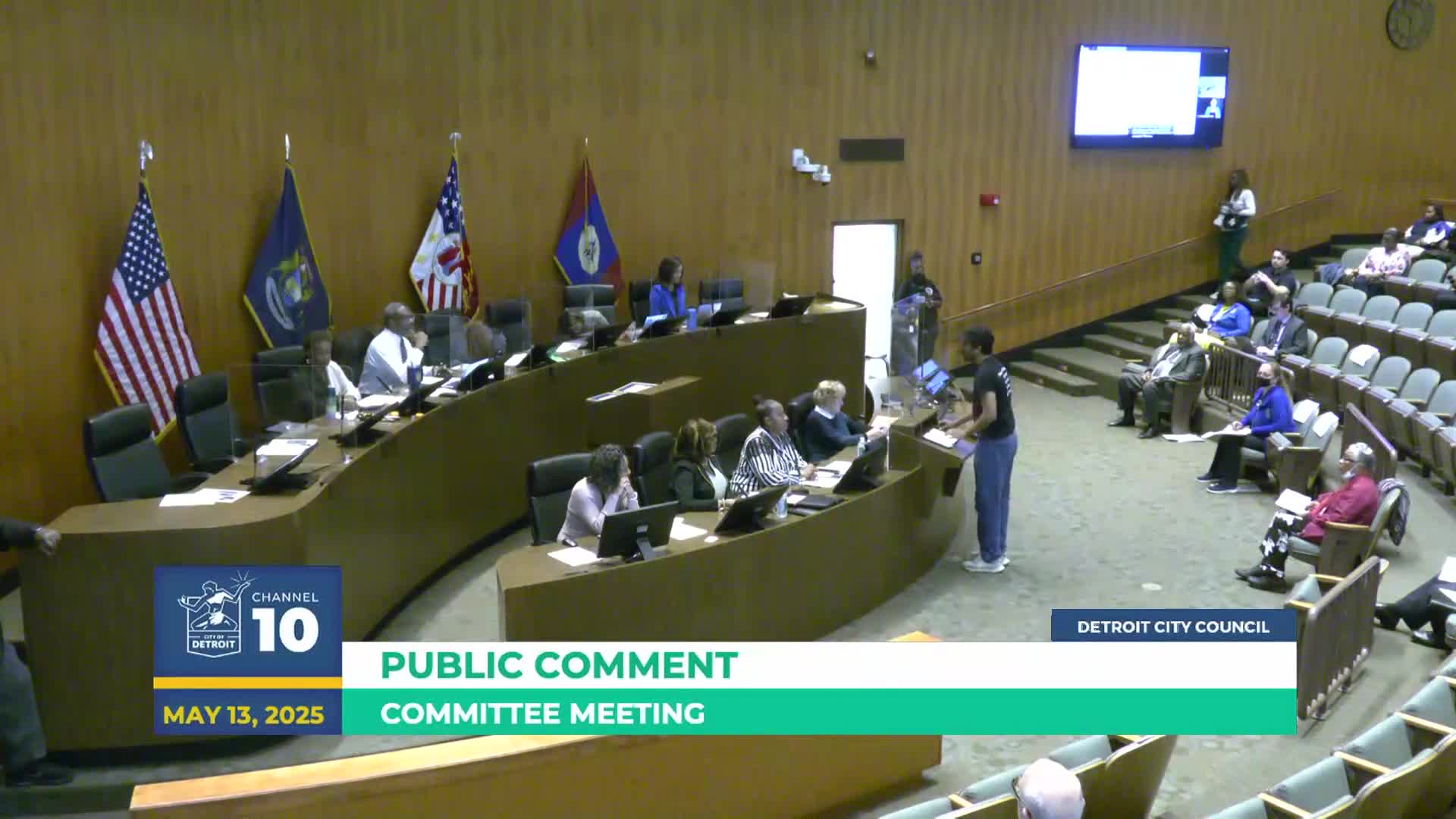
Activists and community members pressed Detroit City Council during public comment to adopt a body‑camera ordinance that would require footage from incidents of alleged police violence to be released within seven days, and criticized a council draft they said would allow up to 90 days and carve out union exemptions.
Activists and community members pressed Detroit City Council during public comment to adopt a body‑camera ordinance that would require footage from incidents of alleged police violence to be released within seven days, and criticized a council draft they said would allow up to 90 days and carve out union exemptions.
The issue drew multiple speakers during the council's public‑comment period, who said the shorter release window is needed for timely police accountability. Jacob Smith, speaking for the Detroit Alliance Against Racist and Political Repression, said the revised city draft “allows the DPD to delay the release of body cam footage for up to 3 months, which in itself is unacceptable.”
Why it matters: supporters of the Coalition for Police Transparency and Accountability (CPTA) version told the council that rapid release of footage is essential to preserve evidence and public trust, and warned that longer delays and contract‑based exemptions create loopholes for unions to block disclosure.
Speakers said the CPTA version would require disclosure within seven days; Owen (a commenter with the Detroit Alliance) told the council that the CPTA draft “would force police body cam footage obtained during any incidents of police violence to be released within 7 days of the incident.” Commenters also criticized an exemption in the council’s revised draft that, they said, would allow release to be delayed under collective‑bargaining contract provisions.
The speakers did not identify a formal council vote on the ordinance during the meeting. No council action on amending or adopting the ordinance was recorded in the transcript excerpt. Public testimony instead centered on urging council members to take up the unaltered CPTA draft.
Community context and concerns: commenters said lengthy delays and contractual exemptions would hinder accountability and allow police unions to “pull body cam footage … anytime that it makes DPD look bad,” in Jacob Smith’s words. Speakers asked the council to take up and pass the CPTA version without the 90‑day delay or the union exemption.
Next steps: The transcript shows only public comment on the topic; it does not record committee action or a formal council vote on the ordinance during this session. Community groups present said they will continue to press the council to adopt the CPTA language.