Get Full Government Meeting Transcripts, Videos, & Alerts Forever!
Get email alerts on the Public Transit topic
No spam. Unsubscribe anytime.
Detroit transit ridership climbs as DDOT reports service and staffing gains; riders press for more investment
Summary
The Detroit Department of Transportation reported improved ridership, more drivers in service and better on‑time metrics for first quarter 2025. Public commenters urged larger investments in DDOT, questioned fare policy and pressed for better communication and rider experience.
The Detroit Department of Transportation reported increased service and ridership in the first quarter of 2025, and council members and callers urged the city to invest more in transit reliability and rider experience.
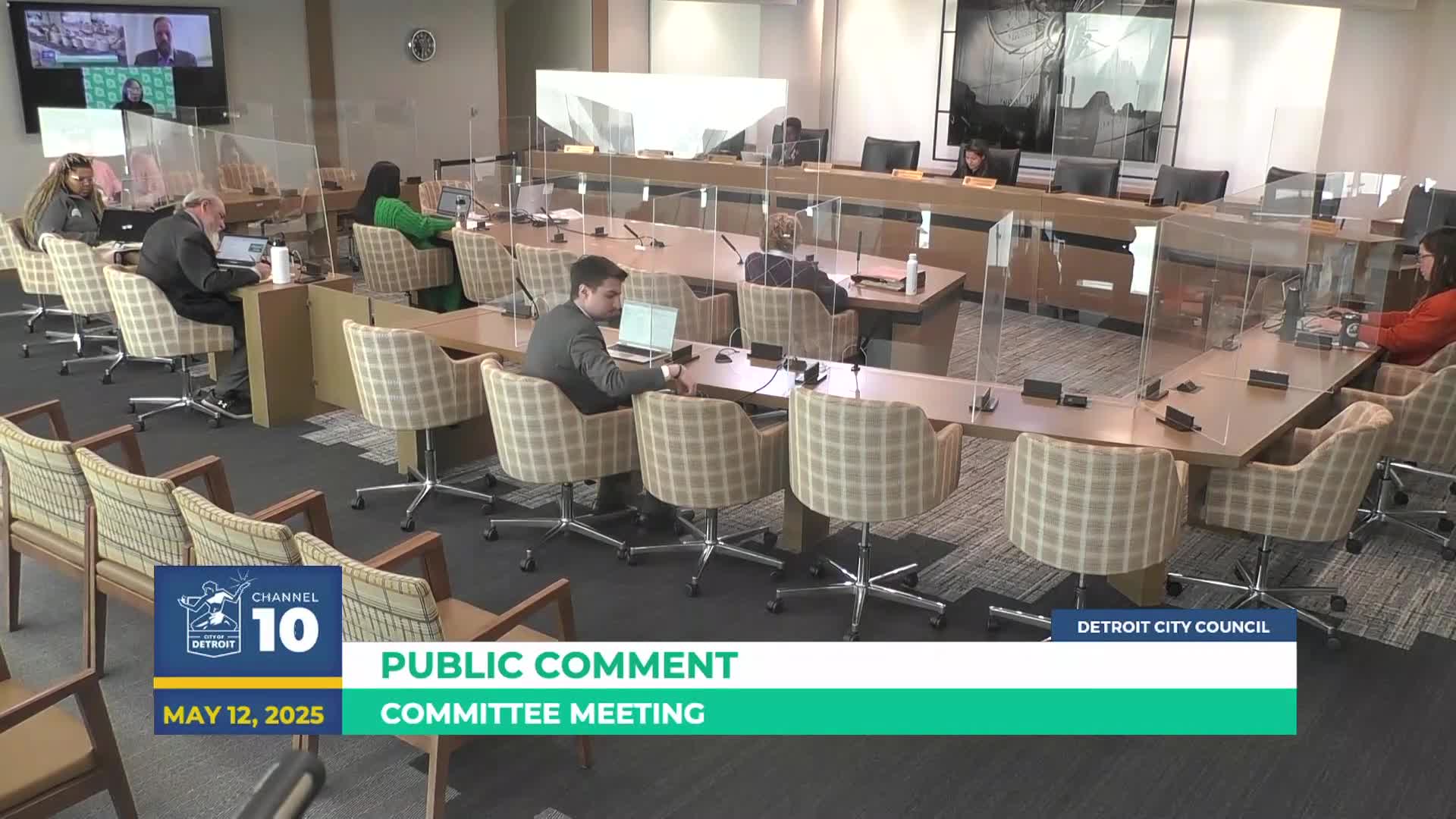
DDOT Director Robert Kramer told the City Council Public Health and Safety Standing Committee on May 12 that revenue miles and ridership are up compared with the same quarter in 2024 and that the agency is running about 96% of scheduled miles, meaning roughly 4% of trips were missed. “You can see that we’re at about 96%,” Kramer said during the presentation. He also said missed trips remain above DDOT’s target of about 2% and that on‑time performance and vehicle availability still need work.
The data presentation gave the committee a range of operational measures: a net increase in transit equipment operators (TEOs) compared with last year, a push to keep monthly training classes full, and efforts to reduce separations and turnover among drivers. Kramer said the agency is working to increase the number of drivers in training to about 80–100 at any given time and to improve vehicle availability and maintenance coordination so scheduled trips are met.
The committee heard robust public comment about transit. Renard Majenski, a District 6 resident and organizer with Detroit People’s Platform, told the committee “DDOT is a core service,” and urged more sustained investment rather than cuts elsewhere. Caller Steven Horry, who said public transit influenced his decision to move from Detroit, criticized a proposed $10 million allocation and argued dollars should instead support service upgrades.
Council members pressed DDOT on details. A vice chair asked why March showed a drop in the number of TEOs on hand and whether separations recorded in March reflected actual losses or paperwork corrections; Kramer answered that a paperwork backlog had shifted some separations into March’s tally and that the department will provide clarifying route‑level and percentage breakdowns. Council members asked for an addendum with route‑level missed‑trip and on‑time performance data, a breakdown of complaint categories, and clearer metrics on TEO turnover.
On safety and customer experience, Kramer said DDOT is working to reduce crash rates and to classify incidents as preventable or nonpreventable in coordination with unions and outside experts. He also described a pilot data dashboard in the City’s enterprise data warehouse, which he said will centralize performance metrics for staff and improve quality checks.
Council members asked about the department’s code of conduct and enforcement. Kramer said a final policy version is with the Law Department and expected to return to council for approval next month, with enforcement to begin after council’s final vote.
Kramer also reviewed progress on paratransit, saying monthly paratransit trips and on‑time performance remain strong and that paratransit providers are meeting a 95% on‑time threshold for the 30‑minute booking window.
Kramer and staff closed by describing customer‑facing improvements: installation of bus shelters under two phases, better real‑time information feeds to mobile apps, and outreach to teach riders how to use services and plan trips. The committee accepted DDOT’s quarterly report for committee review; the item was received and filed by the standing committee.
The department agreed to provide the committee with additional route‑level statistics, a granular complaint breakdown and a TEO turnover addendum before the item returns for formal action.