
Engineering staff launches Traffic Authority web page; posts project timelines, submission form and grant details
Get AI-powered insights, summaries, and transcripts
Subscribe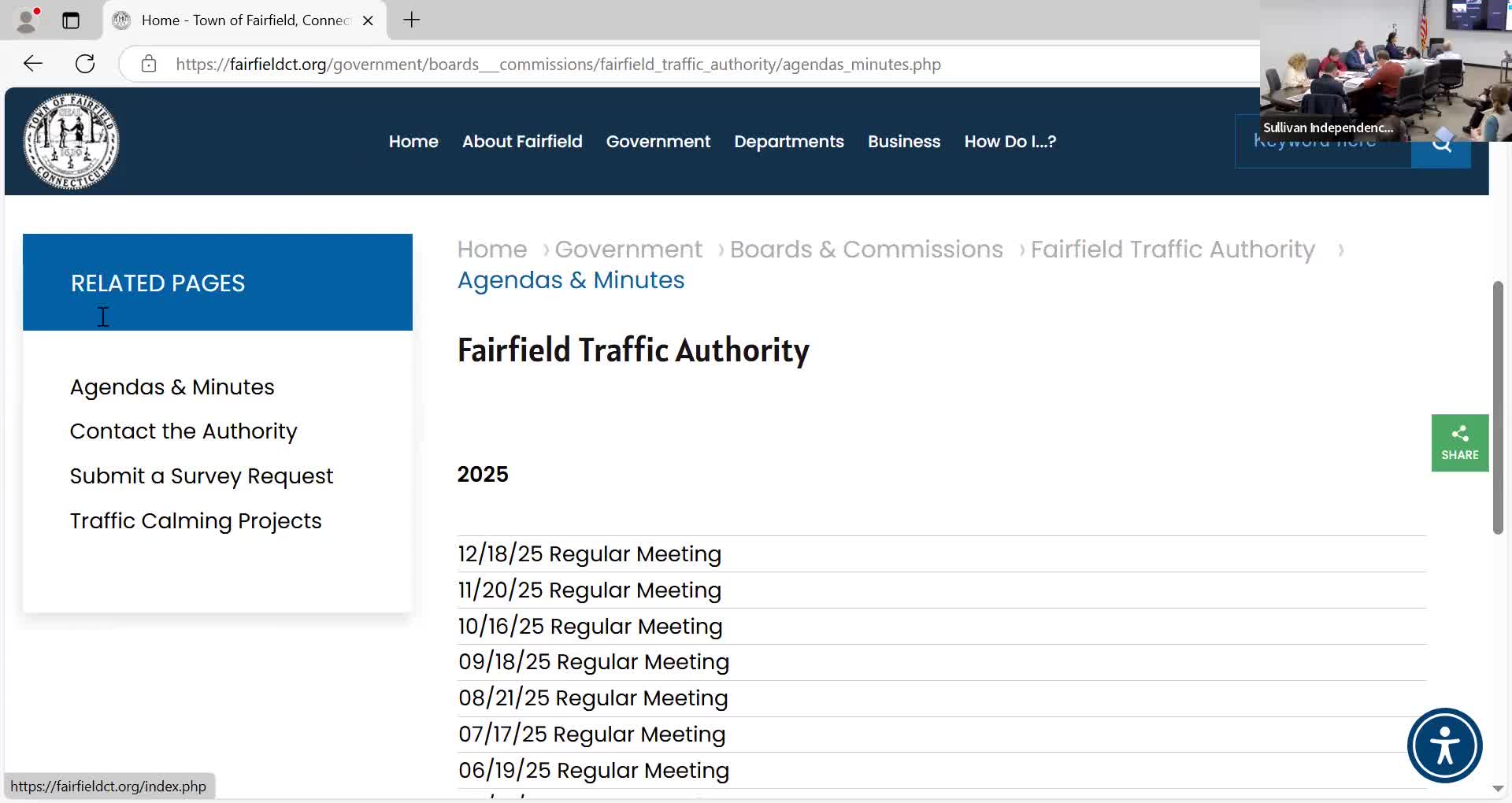
Summary
Fairfield staff demonstrated a new Traffic Authority page on the town website with a public traffic request form, project pages for planned improvements and schedules for design and construction. Staff outlined submission deadlines, public‑involvement steps and several grants funding future projects.
Town engineering staff demonstrated a new Fairfield Traffic Authority web page that includes a traffic‑survey request form, an uploaded project list and detailed timelines for several ongoing and planned projects.
Megha, the town’s senior engineer, showed the page fairfieldct.org/traffic-authority and walked members through the online form residents will use to report traffic or sidewalk concerns. The form routes complaints to the appropriate department (police for enforcement, public works for pavement and signs, engineering for design matters) and requires a contact phone number and street address so staff can follow up. Staff said they will accept submissions on the web form and also consider how to route or integrate existing QAlert citizen service requests with the new form.
Staff previewed project pages for several corridors and neighborhood projects. Highlights noted by staff include: - McKinley School project: staff said the project has design funding and a construction grant; staff cited $681,000 in construction funding and $168,000 in design funds for the McKinley project. - A road‑corridor study: staff said the town had received a $1,000,000 grant (cited by staff as state funding associated with Representative Sarah Kidd) to support survey and design work on a multi‑mile corridor; the consultant’s survey is scheduled to begin in March and may take months because of the corridor length and surveying workload. - South Benson Road: staff described conceptual work that includes new or repaired sidewalks, raised crossings, curb bump‑outs and green bicycle lane markings; staff noted the project may require trade‑offs between parking and bike lanes.
Staff explained the typical project workflow: data collection → engineering analysis → conceptual design (posted for two weeks for public comment) → final design/permitting → construction. For projects with heavy public interest, staff said they may use additional design milestones (30/60/90 percent) and extra public meetings.
What the authority directed Commissioners asked staff to post conceptual plans at least two weeks before a meeting and to include project funding sources and schedules on the public pages. Members asked staff to examine whether the traffic request form can be tied to QAlert service tickets and to propose a clear fast‑track process for small sign/striping items so the authority’s meeting agendas are not overloaded with minor requests.
Megha said the pages will be updated periodically, and staff will continue to refine the submission categories to route items correctly to enforcement, engineering or public works.
(End)