Get Full Government Meeting Transcripts, Videos, & Alerts Forever!
Get email alerts on the Veterans Burial Eligibility topic
No spam. Unsubscribe anytime.
Senate panel approves bill expanding burial eligibility at state military cemeteries
Summary
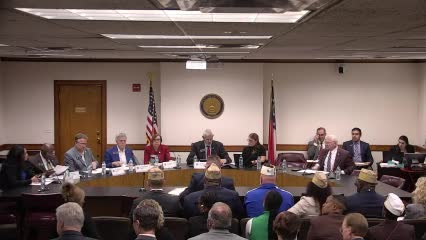
The Senate Veterans, Military and Homeland Security Committee voted to pass House Bill 53, which expands eligibility for burial in Georgia state military cemeteries to certain National Guard members and reservists who served on state active duty but were never federalized.
Senator Bonner, chair of the Senate Veterans, Military and Homeland Security Committee, presented House Bill 53 and a substitute that, he said, corrects language omitted in the House version.
The bill expands eligibility for burial in state military cemeteries to include National Guard members and reservists who performed state active duty or initial enlistments but were never federalized, and thus previously did not meet the state's eligibility rules tied to federal active-duty service or retirement. "There was a piece of federal legislation passed back in 2021 that allowed the states to do this," Bonner said, and the substitute amends state law to implement that option.
The measure makes the change retroactive to 1990, allows qualified spouses or dependent children to be interred under the same eligibility expansion, and ties any family fee to the VA reimbursement rate. Senator Kay Kirkpatrick asked where the fee would go; Commissioner Patricia Ross of the Georgia Department of Veterans Service said the fee would go to the department as part of operational funding to support interments and related services.
Ramona Roper, identified as training director for the Georgia Department of Veterans Service, told the committee that service officers statewide regularly encounter reservists and Guardsmen who currently do not qualify for state cemetery burial under existing law. "We are constantly . . . inundated with reservists and national guardsmen, that come into the offices, and they're seeking benefits," Roper said, noting department staff must currently tell some eligible-seeming veterans that they do not meet cemetery criteria.
Committee members asked practical questions about retroactivity, headstones and capacity. Bonner and Commissioner Ross said headstones would come through a state contract with the same vendor used by the VA, but as a separate state contract, and that the department believes cemetery capacity is sufficient. The committee also heard local examples from senators who visit state cemeteries in Milledgeville and Glenville and discussed the symbolism of military markers.
After public testimony and questions, a motion to pass the bill with the substitute was made and seconded; the committee recorded that the measure "passes unanimously." The transcript does not include a roll-call tally.
Why it matters: the change lets certain Georgia Guardsmen and reservists who performed state active duty but were never federalized share the burial honors of state military cemeteries, and clarifies who bears fees and how headstone contracts will be handled. The department said the number of additional interments is expected to be small but carries symbolic importance for veterans and families.
Votes at a glance: House Bill 53 (substitute) ' Motion: pass (substitute); mover: not specified; second: Senator Kay Kirkpatrick; outcome: approved unanimously (roll-call counts not specified in the transcript).