Get Full Government Meeting Transcripts, Videos, & Alerts Forever!
Get email alerts on the Atl311 topic
No spam. Unsubscribe anytime.
Atlanta’s ATL 311 expands hours, cites staffing changes and digital tools in quarterly update
Summary
Department of Customer Services officials told the Finance and Executive Committee that ATL 311 handled roughly 50,000 call presentations from November–April, extended evening coverage to midnight, added chatbot/live‑agent chat, and is abolishing 19 funded positions after a review of workload and hours.
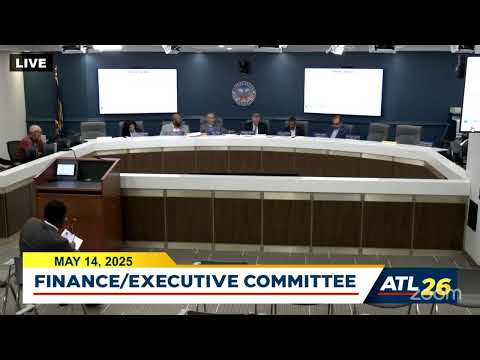
ATL 311, the City of Atlanta’s nonemergency service contact center, reported expanded hours, ongoing technology deployment and staffing changes to the City Council’s Finance and Executive Committee on May 14.
Commissioner Maisha Goode, who presented the quarterly update for the Department of Customer Services, told the committee that ATL 311 extended its hours to midnight on July 1, 2024, and that on April 14 “our supportive services team started to work from extended to midnight as well to support PAD.”
The update covered November 2024 through April 30, 2025, and described channels handled by ATL 311 — phone, mobile app, web portal, IVR and a newly onboarded chatbot with a live‑agent option. Goode said the center saw about 50,000 calls presented in that period and that the team “handled a hundred and forty‑nine of those,” while noting some abandonment. She said the center is meeting service‑level agreements for both the main call center and the evening supportive services team.
The presentation summarized top case types by department: the Department of Watershed Management’s most frequent requests were account information and bill payment locations; Code Enforcement’s top item was general information; Public Works logged bulk collection and missed garbage pickups; Finance saw business license inquiries; Municipal Court cases centered on court dates and fines; ATL DOT’s top calls were potholes and emergency traffic‑signal repairs. Goode said ATL 311’s top fulfillment cases through IVR and chatbot were missed residential garbage and damaged cart repair or replacement.
Goode described back‑office intake and escalation trends, reporting that escalations rose about 63% during the reporting period and that DPW and ATL DOT accounted for many of those escalations. She also presented customer survey results, saying social‑media and in‑call surveys indicate high satisfaction and reporting an 88% rate for likelihood to contact supportive services again.
On staffing, Goode said ATL 311 had 56 positions approved as of February, with 29 vacancies. After reviewing workload tied to the midnight expansion, the department plans to abolish 19 funded positions “because after reviewing our data, we have determined that those positions are no longer needed to stay open till midnight.” She said seven of the remaining vacancies have approval to be filled and would be backfilled as agent‑level roles in August; the remaining three would be filled later for training and back‑office functions.
Committee members pressed for more budget detail and trend analysis. One member asked for a chart breaking out salaries and professional services; Goode said she would provide additional budget detail at the committee’s budget hearing next week. Council members also asked for a multi‑year analysis of case types and volumes to test whether recurring high‑volume items (for example, missed pickups) have changed over time and to verify whether the city’s data is being used to drive operational fixes.
Goode acknowledged those requests and agreed to add a five‑year analysis to the next quarterly report and to provide additional detail on tracking cases that are closed in the system before work is completed. She said the department is tracking those incidents and working with departments that close cases to ensure closure reflects completed work.
The presentation listed operational efficiency measures including a claim of cost savings tied to identified staff changes; Goode said abolishing 19 positions produced “about over 380,000 cost savings” and later referenced larger year‑end savings figures in the presentation materials. She also noted ATL 311 received an industry award of excellence in March 2025 and had rolled out live chat (about 3,000 chats) with a reported 17‑second average response time.
Committee members asked for follow‑up on several items: clearer budget breakdowns by line item; documentation showing how departments determine case closure; and an update on evening‑shift utilization as the public becomes aware of later hours. Goode said she would supply requested analyses in future reports and during upcoming budget hearings.
The committee accepted the report and moved on to the next agenda items.