Get Full Government Meeting Transcripts, Videos, & Alerts Forever!
Get email alerts on the Local Government Audits topic
No spam. Unsubscribe anytime.
Committee advances bill to raise audit threshold, offer cash‑basis option for small Georgia local governments
Summary
House Bill 244 would raise the audit threshold from $550,000 to $2.5 million, add a cash‑basis special purpose framework and preserve taxpayer accountability through periodic full audits and waiver provisions, sponsors and the state auditor said. The committee passed the bill unanimously.
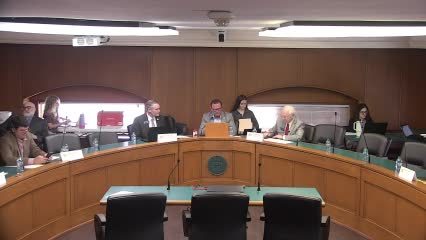
The State and Local Governmental Operations Committee advanced House Bill 244, which would raise the state audit threshold for local governments from $550,000 to $2.5 million and add a cash‑basis "special purpose framework" for smaller entities, sponsors and the state auditor said.
Supporters said the change is intended to reduce cost and administrative burden for very small cities and towns while retaining accountability for state funds. "This bill provides some flexibility in the state's annual audit requirements for small local governments, whose expenditures are less than a $2,500,000 threshold," Representative Cannon said.
The bill would increase the current threshold — which the state auditor described as $550,000 — and allow smaller entities the option of an agreed‑upon procedures engagement (AUP) or a cash‑basis special purpose framework instead of a full GAAP audit. "We currently have a threshold of $550,000. Anything above that requires a full audit," said Greg Griffin of the State Auditor's Office. Griffin told the committee the proposal also adds a requirement that entities undergoing AUPs receive a full audit at least once every five years.
Proponents said many very small cities lack staff and budget to obtain full GAAP audits, which can block those cities from receiving state or federal funds. The committee heard an example that a county of about 50,000 people pays about $75,000 a year for an audit; a single audit for a CDBG award can be about $7,500, which can be a large share of a small city's general fund. The auditor said the bill includes a waiver mechanism for one‑time capital spikes (for example, a single large project) that would otherwise push an entity above the threshold and into a full GAAP audit requirement.
Dante Bridal of the Association County Commissioners of Georgia (ACCG) testified in support and noted a hold‑harmless provision that can limit effects when a constitutional officer is not complying with audit requirements. Representative Cannon and the State Auditor said the change responds to a 2023 recommendation from the Rural Development Council to reduce audit burden by 2025.
The committee approved a motion to pass the bill; the chair recorded that the measure "passes unanimously," and the motion carried without recorded roll‑call tallies in the transcript.
The bill will move from committee for further consideration in the legislative process; staff and the auditor discussed technical edits during the hearing.