Get Full Government Meeting Transcripts, Videos, & Alerts Forever!
Get email alerts on the Public Safety topic
No spam. Unsubscribe anytime.
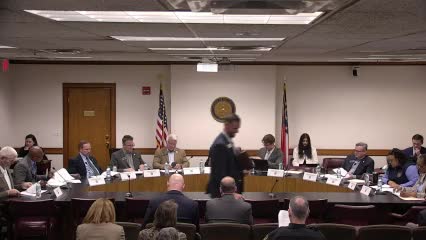
Committee advances Georgia Anti-Squatting Act with amendments after debate on innkeeper and due-process issues
Summary
The Georgia Senate Public Safety Committee advanced a committee substitute for House Bill 61, the "Georgia Anti‑Squatting Act," and adopted two amendments after debate about protections for extended-stay guests and law-enforcement liability.
The Georgia Senate Public Safety Committee advanced a committee substitute for House Bill 61, titled in the hearing the "Georgia Anti‑Squatting Act of 02/2025," and adopted two technical amendments after debate over protections for extended-stay guests and law-enforcement liability.
Representative Seabaugh, the bill's author, told the committee the substitute creates magistrate-court jurisdiction for unlawful squatting cases, adds unlawful squatting to magistrate misdemeanor trials with countywide jurisdiction, defines unlawful squatting and mandatory restitution, and adds protections for innkeepers and landlords. He summarized key provisions: mandatory restitution based on fair-market rent for convictions under the cited squatting code; clarification that guests remain guests unless a written agreement creates tenancy; an affidavit process allowing innkeepers to remove overnight overstaying guests as trespassers via law enforcement; authority for off‑duty certified officers to execute writs of possession when sheriffs are delayed; a new code section permitting verified complaint submission and immediate squatter removal; felony penalties for fraudulent leases or documents (described in testimony as a 1–5 year mandatory prison term); immunity for law enforcement and owners acting in good faith; and civil remedies for wrongful removal.
Committee members raised several concerns during discussion. Senator Jackson asked how the affidavit-based removal would treat extended-stay guests who have lived in a room for months and whether the substitute lacked sufficient due process for families who have made payments or who might later claim payment was made. Representative Seabaugh and other supporters responded that a sworn affidavit creates perjury exposure for false claims and that civil remedies and criminal penalties for fraudulent affidavits would serve as deterrents. Senator Goodman explained committee language allowing an innkeeper to accept a late payment without converting a guest into a tenant while preserving the ability to remove a guest if payment never comes.
The committee also accepted two amendments. The first, offered by the vice chairman and adopted unanimously, removed the words "or former" from two affidavit provisions (lines 204 and 230 in the substitute) so the affidavit language would reference "not current tenants" rather than excluding both current and former tenants. The second amendment, offered by Senator Robertson and also adopted unanimously, deleted the phrase "unless the removal was wrongful after property" from the substitute (line 292) to address a liability concern raised by sheriffs; legislative counsel Kate Alexander and representatives of the Georgia Sheriffs Association (Mike Mitchell and Terry Norris) were cited in the discussions leading to that change.
After amendment, the committee voted to advance the substitute; members recorded five in favor and two opposed. Senator Sean Still was named to carry the bill in the Senate. Committee discussion placed emphasis on balancing swift remedies for property owners and law enforcement with protections for people living in extended-stay lodging, including concerns that the affidavit-based removal process could produce hardship for families if false statements were made or if payment disputes arose.