Get Full Government Meeting Transcripts, Videos, & Alerts Forever!
Get email alerts on the Real Estate Flood Disclosure topic
No spam. Unsubscribe anytime.
Panel clears changes to flood-disclosure law and adds penalty/anti-lien language; amendment narrows attorney-fees language
Summary
The Senate Judiciary Committee unanimously approved a committee substitute for House Bill 618 that tightens flood-disclosure language for 1-to-4 family residential transactions, narrows disclosure to events within a seller's ownership, and adds an anti-fraud lien provision; an amendment inserted "reasonable" before attorney-fees awards.
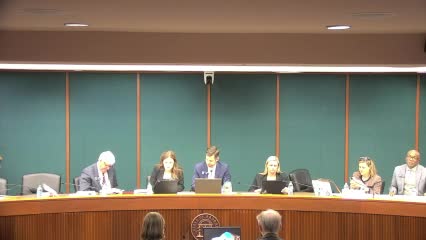
The Senate Judiciary Committee unanimously advanced a committee substitute for House Bill 618 after author and stakeholders described narrow edits designed to improve transparency around flood risk and to deter predatory lien filings at or before real-estate closings.
Representative Campbell, the bill’s House author, presented the substitute and introduced coalition witnesses who worked with the author on edits. Anne Brody of the American Flood Coalition Action said the changes narrow the scope of disclosure and clarify that sellers must disclose flood damage only that occurred during their ownership. "Flood disclosure is a no cost policy that gives buyers crucial information so that they can make informed decisions," Brody told senators.
Major changes: the substitute tightens the definition of flooding, removes phrasing such as "other severe storm or deluge" and replaces it with "the unusual and rapid accumulation of standing water resulting from a storm." The measure specifies it applies to "any arm’s-length transaction of any 1-to-4 family residential real property," clarifies disclosures are limited to the seller’s knowledge during ownership and removes certain civil-adverse-fact and private-remedy language from the previous version.
To address a separate, related problem, the substitute added a section (derived from an earlier, separate House bill) targeting fraudulent or predatory lien filings that impede sales; the added language allows remedies against bad-faith lien filers intended to extort money prior to closing.
Stakeholder changes and protections: the substitute removed an expansive private-remedy section and instead makes willful failure to disclose a required item an unlawful act; crucially, it also adds a noninvestigation clause making clear that sellers, brokers and advisors are not required to undertake independent investigations where they lack actual knowledge, reducing the risk that brokers or sellers must perform title- or flood-mapping research themselves.
Amendment: the committee accepted an amendment to change the bill’s damages language by inserting the word "reasonable" before "attorney's fees" so that fee awards are subject to customary reasonableness review by courts.
Vote and next steps: Leader Jones moved the committee substitute; the motion was seconded and passed unanimously by voice vote. The sponsor said he would carry the bill in the Senate (Sen. Ben Watson was identified as the Senate carry in committee comments).
Ending: sponsors said the substitute balances consumer transparency with protections for sellers and brokers and creates a new civil tool to deter fraudulent lien filings at closing.