Get Full Government Meeting Transcripts, Videos, & Alerts Forever!
Get email alerts on the Medigap Under 65 topic
No spam. Unsubscribe anytime.
Hearing on bill would let under‑65 Georgians with ALS or kidney failure buy Medigap at standard rates; insurers warn of cross‑subsidy
Summary
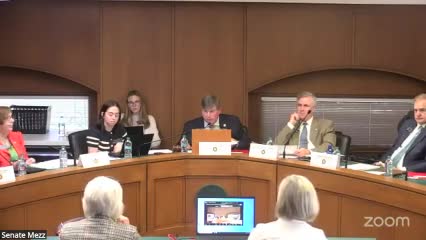
The Senate Insurance and Labor Committee heard House Bill 323, sponsored by Representative Karen Matheak, to let Georgians under 65 with ALS or end‑stage renal disease buy Medicare supplement coverage at the same rates charged to people 65 and older.
The Senate Insurance and Labor Committee heard House Bill 323, sponsored by Representative Karen Matheak, which would allow Georgians under 65 with end‑stage renal disease (ESRD) or amyotrophic lateral sclerosis (ALS) to purchase Medicare supplement (Medigap) coverage at rates comparable to those available to people age 65 and older.
Representative Karen Matheak told the committee the change is a parity or offering of insurance, not a mandate, and argued it would allow eligible patients to afford Medigap coverage that reduces out‑of‑pocket costs and improves access to care. She said the state first took steps in 2010 to equalize treatment and that this bill would expand access to roughly 3,800 ESRD patients who currently face very high Medigap premiums.
Elizabeth Lively, Eastern Region Advocacy Director for Dialysis Patient Citizens, told the panel the group’s actuarial review estimated adding about 3,800 ESRD patients to a pool of roughly 375,000 could raise average premiums by about $2 per month for the overall pool and produce Medicaid savings — the actuarial note cited a projected state Medicaid savings of approximately $6.3 million over five years if some patients avoid spending down to Medicaid.
Richard McDaniel, a Georgia resident with kidney failure representing the American Kidney Fund, testified about the personal consequences of high premiums and out‑of‑pocket costs. He said Medicare covers about 80% of dialysis costs but that patients face roughly $17,000 per year in out‑of‑pocket expenses and cited cases where Medigap premiums for younger patients were dramatically higher than for seniors.
Advocates said the bill is a patient choice and affordability measure and that it could prevent people from spending down assets to qualify for Medicaid. Several witnesses described difficulty accessing transplants due to lack of supplemental coverage; advocates argued reducing that barrier could yield long‑term savings by moving patients off costly dialysis.
Jesse Wetherington (identified in testimony as president of the Georgia Association of Health Plans) opposed HB 323 as written, saying the bill would shift costs from a small under‑65 pool of very high‑cost patients to the much larger 65+ Medicare supplement pool. Wetherington gave carrier estimates ranging from about 5% to 15% premium increases for the 65+ pool, and said that ESRD and ALS patients have substantially higher per‑member costs that drive the disparity.
Patients with ALS also testified. A pre‑recorded statement by a 36‑year‑old woman with ALS described the difference in monthly Medigap premium quotes: $288 per month for a 65‑year‑old female versus $2,610 per month for the same plan for a 36‑year‑old in her testimony. Committee members and witnesses debated whether Medicaid expansion, spend‑down rules, or other mechanisms would affect access for this population.
The committee held no vote; it limited testimony to accommodate the hearing schedule. Sponsors said they will follow up with claims data and additional actuarial detail.
Ending: The hearing closed with committee members asking for more precise claims data and actuarial assumptions; sponsors said they would attempt to obtain all‑payer claims database extracts and further actuarial analysis for committee review.