Get Full Government Meeting Transcripts, Videos, & Alerts Forever!
Get email alerts on the Pans Pandas Coverage topic
No spam. Unsubscribe anytime.
Committee considers bill to require insurers to cover treatment for PANS, PANDAS in children
Summary
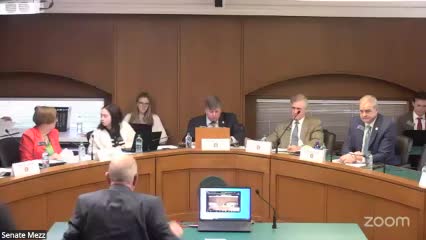
The Senate Insurance and Labor Committee heard House Bill 124, sponsored by Representative Mitchell Scoggins, to require private insurers to cover treatment for children diagnosed with PANS and PANDAS.
The Senate Insurance and Labor Committee heard House Bill 124, sponsored by Representative Mitchell Scoggins, which would amend Titles 33 and 44 to require coverage for health care services for pediatric autoimmune neuropsychiatric disorders known as PANS and PANDAS.
Representative Mitchell Scoggins described PANDAS (pediatric autoimmune neuropsychiatric disorder associated with streptococcal infections) and PANS (pediatric acute‑onset neuropsychiatric syndrome), saying the conditions typically affect children between ages 3 and 13 and that early treatment may reduce long‑term effects. “Early treatment prevents long term effects from PANS and PANDAS,” Scoggins said, and he cited letters from clinicians and national groups that support coverage for early evaluation and treatment.
Scoggins told the committee that the bill was drafted to align treatment coverage with nationally recognized clinical practice guidelines and that the legislation does not include IVIG (intravenous immunoglobulin) as a covered default therapy. Scoggins said the intent is to cover antibiotics, steroids and other treatments consistent with national guidance while excluding more invasive immunotherapies that lack strong evidence.
A committee member referenced a March 2025 clinical guidance report and observed that “there is a lack of consensus among physicians as to how to best treat this.” The committee read aloud language from that review noting a randomized controlled trial of IVIG did not show efficacy and that invasive immunotherapies are “not usually recommended” because of limited evidence and potential adverse effects.
Representative Michelle Au, a physician and former pediatric trainee who now practices anesthesiology and serves in the House, spoke in support of the bill and described PANS/PANDAS as an “orphan” condition that affects a small number of patients and merits codified access to recognized care standards. Au said the bill would align coverage “with what is currently accepted to be the current standard of care.”
Committee members asked about treatments that would be included and about whether insurers already cover these services. Scoggins said the bill relies on recognized national clinical practice guidelines to define covered services and that early antibiotics and other guideline‑recommended therapies are the primary treatments the legislation seeks to ensure are covered; he repeated that IVIG is not included in the bill’s covered list.
No committee vote was held; the hearing proceeded as informational only. Sponsors asked the committee to consider the testimony and follow up with clinical and fiscal questions.
Ending: The committee received clinical letters and statements from pediatric experts and advocacy groups and indicated it would review the March 2025 clinical guidance and the submitted supporting letters before further action.