Get Full Government Meeting Transcripts, Videos, & Alerts Forever!
Get email alerts on the Campus Sustainability topic
No spam. Unsubscribe anytime.
Dallas College outlines campus energy, garden and student-engagement projects
Summary
Representatives from Dallas College described recent energy-efficiency upgrades, campus gardens and student-run sustainability projects — including a greenhouse that supplies campus food pantries — and said they are expanding partnerships with cities and nonprofits.
Representatives from Dallas College updated the Farmers Branch Sustainability Committee on campus sustainability upgrades and student-led projects, saying the college is combining operations and academic programming to prepare students for green jobs while cutting campus energy use and emissions.
The presentation, led by Garrett Rosser, senior director of energy management and sustainability at Dallas College, described measures on multiple campuses including high-efficiency chillers, LED lighting retrofits, building automation upgrades and the installation of variable-frequency drives for large motors. “So we’ve been making some strides in all those areas,” Rosser said, summarizing the campus upgrades and efficiency work.
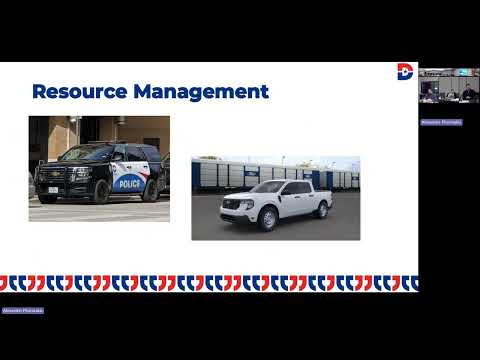
Rosser told the committee the college prioritizes efficiency in equipment selection, has upgraded digital controls (some older than 30 years) and is pursuing demand-management strategies tied to the ERCOT 4CP coincident-peak rate structure to reduce summer peak contributions. He cited examples at Brookhaven and other campuses: new chillers with smaller footprints that replace original equipment from the 1990s, LED lighting projects that can reduce wattage by roughly 60 percent in retrofit areas, and a move to smaller, more efficient fleet vehicles, including hybrids. On vehicle electrification he said the college will initially install infrastructure for four chargers with capacity for two EVs to start and “we’ll keep expanding that fleet.”
Neil, a Dallas College staff member who leads plant- and garden-centered projects, described campus food and horticulture work including a 20-by-40-foot greenhouse at Mountain View used to propagate seedlings and produce lettuce donated to campus food pantries. “We propagate our own cuttings,” Neil said. He also outlined campus pollinator gardens and prairie restoration work at Brookhaven, North Lake, Cedar Valley and Mountain View and noted volunteer and student involvement in planting and maintenance.
Sonia Ford, assistant director of sustainability special projects at Dallas College, described student engagement through the Student Green Team, a campus-faculty-student network aligned with U.N. Sustainable Development Goals. She said 29 student teams had enrolled and that service-learning hours are tracked by a QR-code process that can earn participants recognition (a green cord and certificate) on graduation. Ford outlined recurring events — campus cleanups, Earth Day activities, an annual sustainability summit and partnerships with organizations such as the Texas Trees Foundation — and said the college is building internships and employer connections through the Handshake platform.
Speakers emphasized partnerships with municipal governments for events such as electronics recycling and tire-collection drives; Rosser said a recent joint event handled roughly 300 vehicles and more than 80 tires. Panelists also said the college uses small demonstration solar arrays at some campuses (examples cited: about 14 kW and 11 kW systems) and has prioritized energy savings measures ahead of large-scale solar deployments because “it tends to be a lot more effective, fiscally, to save a kWh than to generate it.”
The college representatives said they are exploring formal sustainability education options, including microcredentials or elective courses that combine service learning and case studies; a meeting with academic leadership was planned to discuss next steps.
The presentation concluded with a public-question period and committee thanks for the college’s community partnerships, including use of campus parking and facilities for joint events.