Get Full Government Meeting Transcripts, Videos, & Alerts Forever!
Get email alerts on the Firefighting Equipment Chemicals topic
No spam. Unsubscribe anytime.
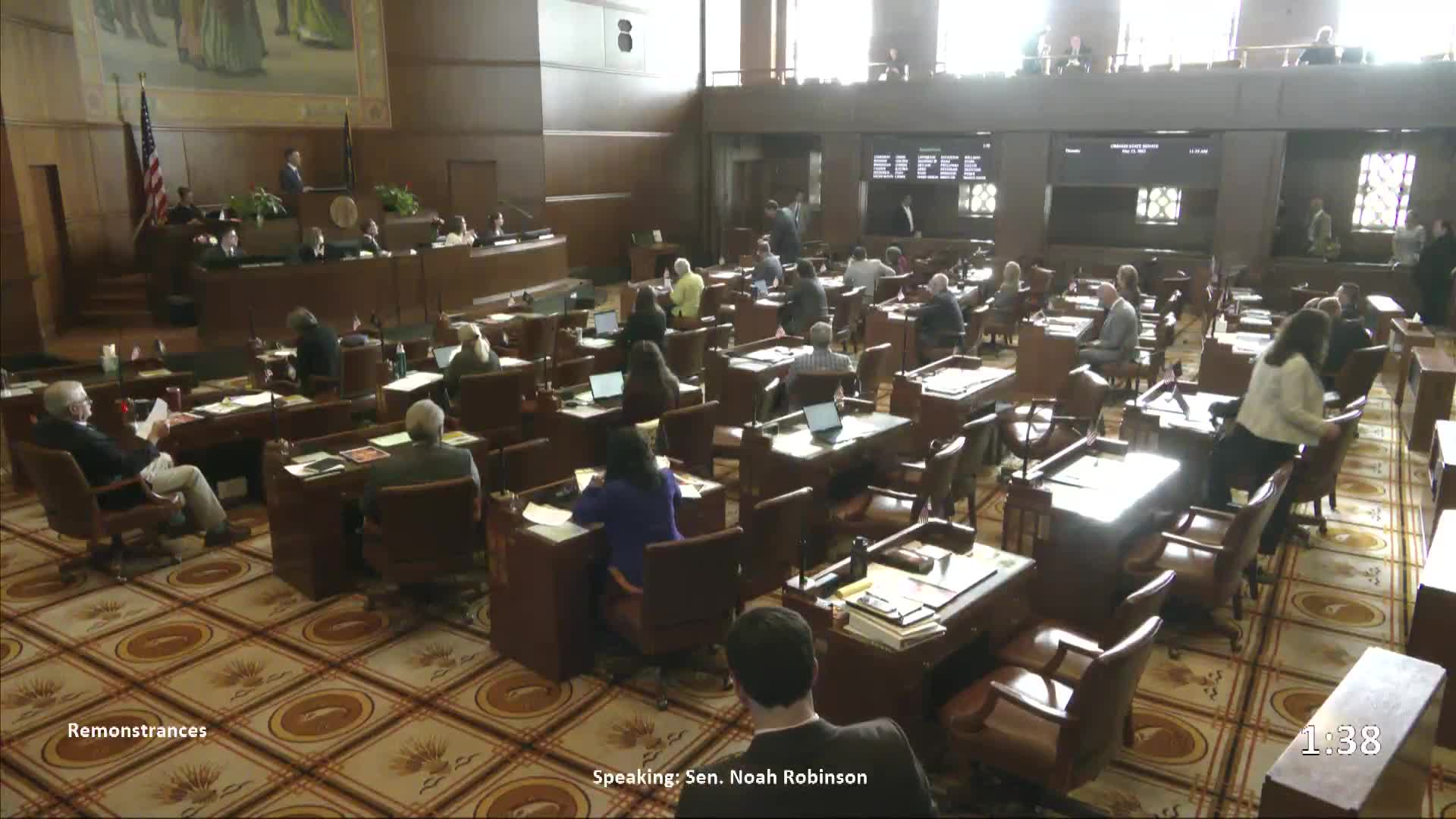
Senator Robinson urges re-evaluation of Halon ban, demonstrates extinguishers on Senate floor
Summary
Sen. Robinson used visual aids to argue halon fire extinguishers remain the most effective clean-agent suppressants and urged reconsideration of production bans enacted in the 1990s, saying modern replacements are less effective.
Sen. Robinson demonstrated two fire extinguishers on the Senate floor and urged caution in chemical bans that removed Halon from production in the 1990s.
The lede: Robinson said Halon is "the most effective clean agent fire extinguishing agent ever invented" and contrasted it with Halotron, which he told colleagues "works only half as effectively as Halon." He said Halon—s production was ended as part of a refrigerant ban in the 1990s and that remaining Halon supplies were left legal to use but new production ceased.
The nut graf: Robinson framed his remarks as a technical caution about replacing firefighting agents with less effective alternatives and appealed to the need for the best equipment when fighting fires.
Robinson described Halon 1211 (bromochlorodifluoromethane) and said its "room temperature vapor pressure is only 37 PSI, so additional pressure is provided by compressed nitrogen." He noted Halon left no residue and was used in airplanes for that reason. He said the larger Halotron bottle "replaces the more effective Halon extinguisher on my left." He concluded on the floor, "We should be careful when banning chemicals. Halon should still be in production. When fighting fires, is it important that the best equipment be available?"
The presentation prompted no Senate policy action on the floor at that time; the remarks were delivered as a courtesy/visual aid demonstration during a day that included recognition of fire service personnel visiting the Capitol.
Ending: Robinson asked colleagues to consider the operational implications of chemical bans for firefighters and to weigh trade-offs between environmental regulation and on-the-ground fire suppression effectiveness.