Get Full Government Meeting Transcripts, Videos, & Alerts Forever!
Get email alerts on the Behavioral Health Oversight topic
No spam. Unsubscribe anytime.
Senate passes bill moving Measure 110 oversight advisory role into Oregon Health Authority
Summary
The Senate passed Senate Bill 610 A to place oversight and funding responsibility for behavioral health resource networks with the Oregon Health Authority and make the Oversight and Accountability Council advisory; supporters said it improves accountability while critics warned against centralizing authority in OHA.
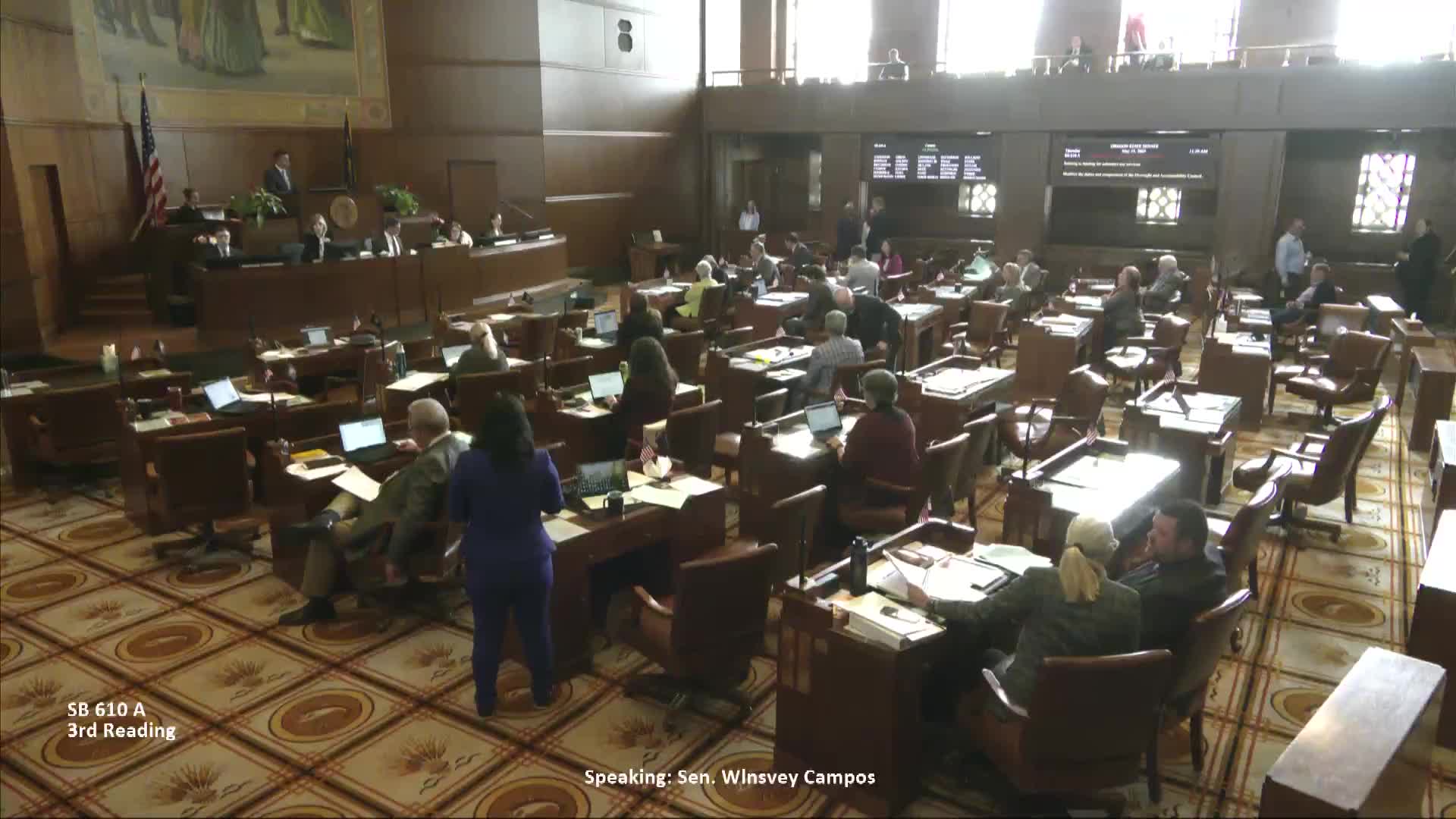
Senate Bill 610 A passed the Senate on third reading after floor debate about oversight of behavioral health resource networks created under Measure 110.
The bill shifts the Oversight and Accountability Council (OAC) into an advisory role to the Oregon Health Authority (OHA) and places responsibility for funding formulas, grants and appeals with OHA, the bill—s sponsor said.
Sponsor Sen. Chris Campos, sponsor, said the change was meant to provide "accountability and clarity" and to "bring greater stability, transparency, and effectiveness" to behavioral health resource networks. "One of the most significant changes in this bill is moving the OAC into an advisory role within OHA," Campos said on the Senate floor. He also said the bill "phases out the statewide burn telephone hotline" and directs OHA to develop "a fair accessible appeals process consistent with other state agency standards."
The nut graf: supporters argued the changes respond to stakeholder feedback and are intended to improve how Measure 110 funds and programs are administered; opponents said centralizing authority at OHA risks mismanagement and excludes some stakeholders.
Sen. Mark Anderson, speaking in favor, called SB 610 a starting point for more work and praised the process that produced the bill. "There is a lot of work left to be done, but Senate Bill 6 10 is the beginning of this work," Anderson said.
Sen. Dennis Gerard said he opposed the bill. "I voted in opposition to this bill, and I still am opposed to put OHA in charge of anything," Gerard said, arguing other agencies might do better and objecting that law enforcement had not been included in discussions. "If you're not at the table, you're for lunch," he said.
The floor debate included questions about membership and the function of the advisory council, the fate of an underutilized statewide telephone hotline, and appeals for funding decisions. Campos said the changes reflect months of collaboration among state agencies, the governor's office, advocates and community partners.
The measure received a constitutional majority on final passage and was declared passed. The Senate record shows roll call votes and excused members noted at the time of the vote.
Ending: The bill now returns to the next steps in the legislative process for enrollment and, where applicable, any further action noted in the journal. The bill sponsor described the measure as a step to make Measure 110—s intent "deliver on the key promises of Measure 110," by clarifying governance and funding procedures.