Get Full Government Meeting Transcripts, Videos, & Alerts Forever!
Get email alerts on the Wildfire Utility Liability topic
No spam. Unsubscribe anytime.
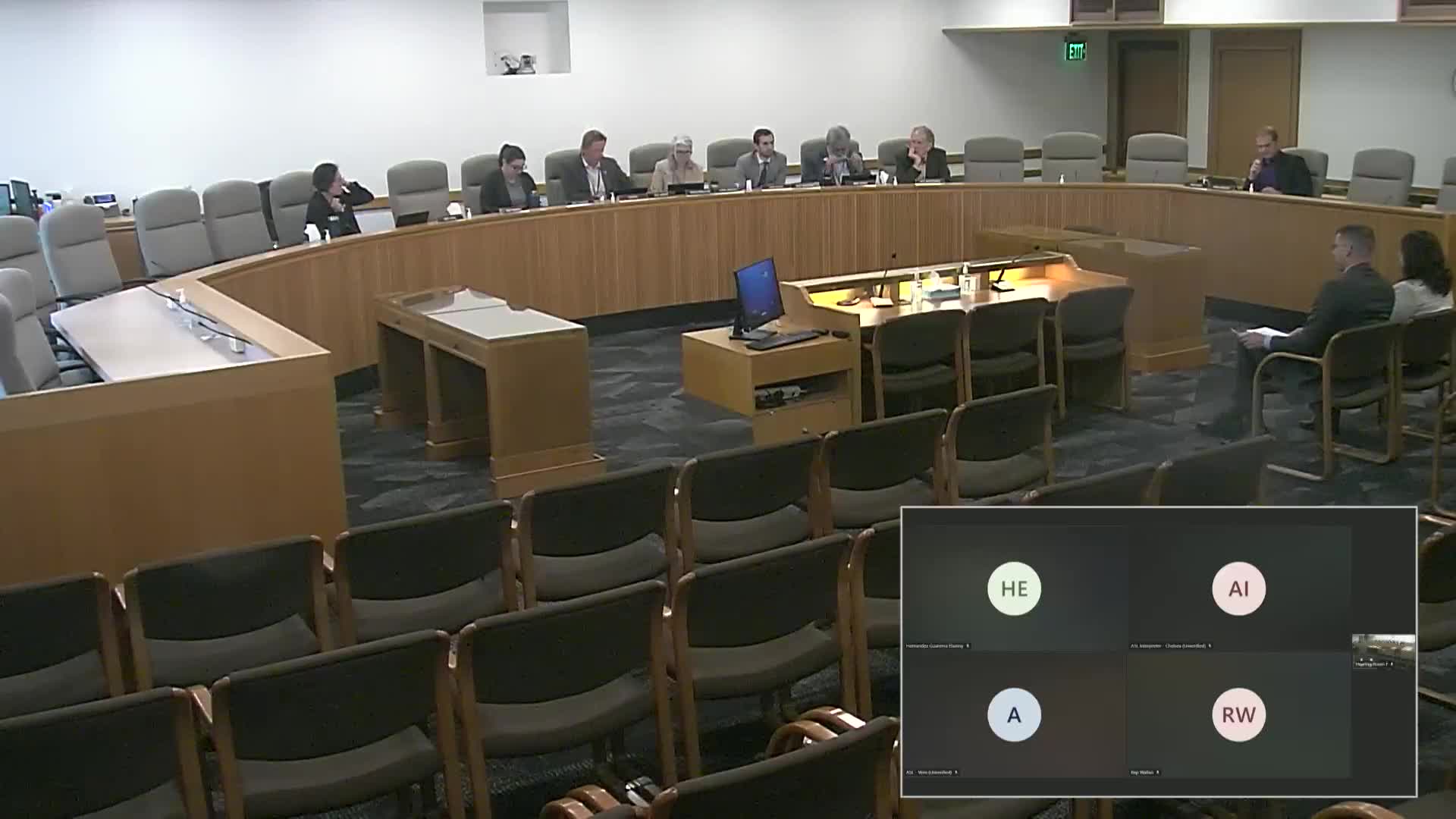
House Judiciary reviews bill that would bar Oregon PUC-regulated utilities from passing wildfire liability to ratepayers
Summary
The House Committee on Judiciary on May 15 took an extended work‑session briefing on Senate Bill 926 A, a measure that would stop Oregon’s Public Utility Commission‑regulated electric companies from recovering certain wildfire‑related costs in customer rates and would limit distributions while specified judgments remain unpaid.
The House Committee on Judiciary on May 15 took an extended work‑session briefing on Senate Bill 926 A, a measure that would stop Oregon’s Public Utility Commission‑regulated electric companies from recovering certain wildfire‑related costs in customer rates and would limit distributions while specified judgments remain unpaid.
Legislative staff summarized the bill for the committee. "Section 2 also prohibits an electric company from recovering those costs and expenses, or associated with repairing or replacing the real or personal property of the electric company that was damaged or destroyed in the wildfire that was resulted from the negligence or higher degree of fault on the part of the electric company," said Chris Alnatt, deputy legislative counsel. Marisa James, chief deputy legislative counsel, and Alnatt explained sections that also would bar dividends, stock repurchases and other distributions while an outstanding judgment based on a finding of negligence or higher degree of fault remains unpaid.
The bill’s provisions discussed by counsel include: a prohibition on recovering civil judgments, fines, penalties, settlements and litigation costs in rates for the two investor‑owned utilities regulated by the Oregon Public Utility Commission (PUC); a bar on paying dividends or repurchasing ownership interest while a judgment debt remains unpaid; a statutory prejudgment interest rate of 9 percent per year on judgments where the wildfire was caused by the utility, measured from the date the wildfire was ignited; a ban on offsetting plaintiff awards by monies the plaintiff received from other sources; and a provision that, if a judgment arising from wildfire litigation remains unpaid on Jan. 1, 2026, the electric company would be liable for taxes that the prevailing party owes on that judgment. Alnatt said the prejudgment interest provision is retroactive to wildfires ignited on or after Jan. 1, 2020.
Committee members sought clarifications about scope and operation. Several members asked whether the bill would reach utilities that operate in multiple states; Alnatt said the PUC regulates rates charged to customers in Oregon and that the bill would not regulate rates charged to customers outside Oregon. Chair Jared Croft summarized a central point of section 2: "if you lose a lawsuit, you can't have your customers pay your litigation costs, your judgment costs, or the cost of your own property that you have to replace if it was your fault that it got destroyed?" Alnatt confirmed that reading.
Members also pressed on practical questions the bill raises: how an "outstanding judgment" would be interpreted while appeals are pending and whether judgments stayed on appeal would trigger the distribution and tax provisions; how prejudgment interest typically operates in tort claims; whether insurance subrogation or contractual reimbursement would affect awards; and whether the bill’s tax liability clause would create cascading tax consequences for plaintiffs and require additional litigation to obtain reimbursement of taxes. Committee counsel and other members described those elements as novel and flagged potential legal and implementation questions, including retroactivity and the interplay with appeals and stays.
No motion was taken on SB 926 at the May 15 work session. Chair Croft said he asked Legislative Counsel to walk the committee through the bill because "there are sort of new concepts in here that don't exist in other provisions of the law," and the committee will return to the measure for further work sessions next week. The committee did not adopt language, direct final amendments or vote on the measure during this session.
Background: committee members referenced ongoing large wildfire litigation involving investor‑owned utilities; counsel noted some judgments and damage awards have been entered and others are pending. Committee members repeatedly asked about how this statute would apply to judgments that are appealed or stayed and how courts would apply the retroactive prejudgment interest and tax liability provisions.
Potential next steps: the committee carried the bill forward for additional work session consideration; Legislative Counsel and staff indicated they would return to address legal and drafting questions raised by members.