Get Full Government Meeting Transcripts, Videos, & Alerts Forever!
Get email alerts on the Public Advocate Selection topic
No spam. Unsubscribe anytime.
Committee advances bill to align public advocate selection with public defender process
Summary
The Senate Community and Regional Affairs Committee moved House Bill 58 from committee, which would make selection of the Office of Public Advocate director follow the same process used for the public defender and subject that director to removal only for cause.
Representative Zach Fields (House District 17) reintroduced House Bill 58 on May 15, 2025, asking the committee to make the selection process for the Office of Public Advocate director the same as the process for selecting the public defender.
The bill would require the Judicial Council to forward nominees to the governor, who would then appoint one director; it would also make the public advocate director removable only for cause. "If House Bill 58 passes, the director of the Office of the Public Advocate is subject to removal for cause, not arbitrarily," Fields said.
Fields told the committee the Office of the Public Advocate was created by statute in 1983 and the public defender agency was created in 1969 and argued the alignment is a governance correction rather than a statement about current officeholders. "This is a forward-looking good governance bill," Fields said.
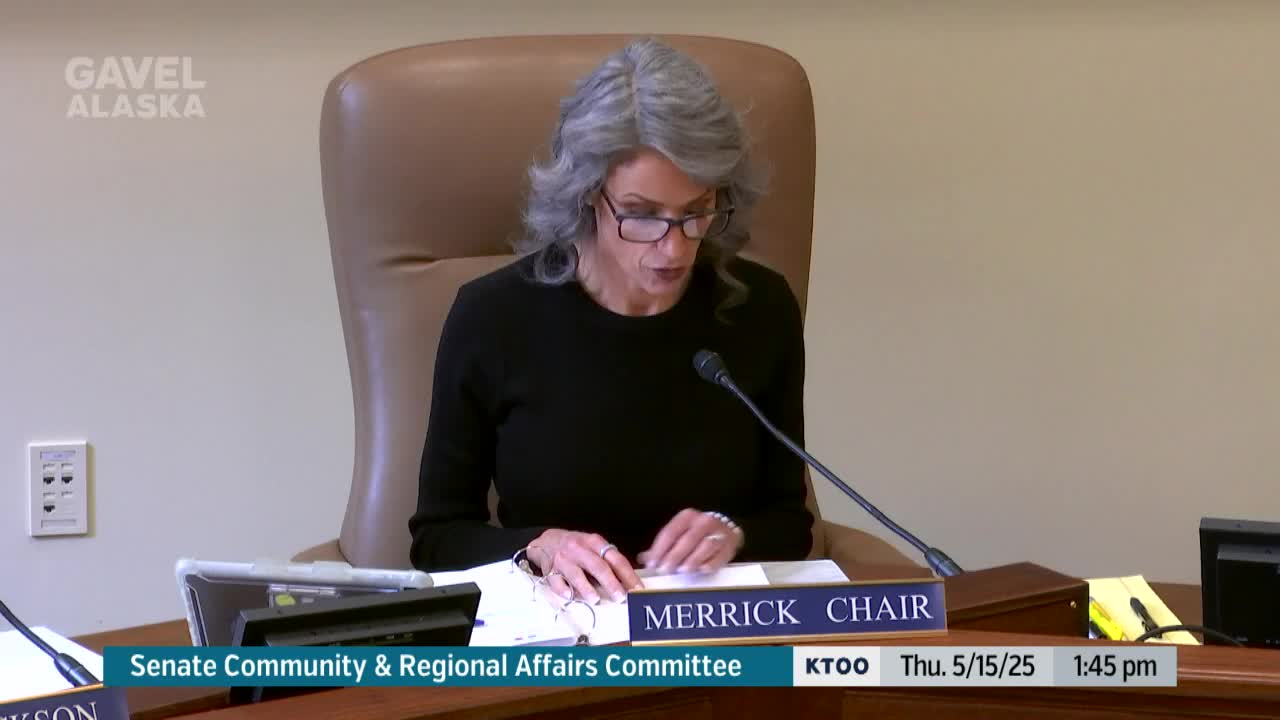
Committee discussion was brief. The vice chair moved to release HB 58 from committee with individual recommendations and accompanying fiscal notes and authorized Legislative Legal Services to make conforming changes; with no objection, the motion carried and HB 58 was moved from committee.
The bill’s sponsors and witnesses framed the change as a technical alignment intended to protect the office’s independence and reduce the state’s need for outside legal contracting; no public testimony occurred at this hearing and no amendments were adopted at the committee action recorded on the transcript.
The committee record shows the bill will proceed with the committee’s recommended language and fiscal notes; next steps are typical committee processing and any subsequent hearings or floor action required under legislative rules.