Get Full Government Meeting Transcripts, Videos, & Alerts Forever!
Get email alerts on the School Finance topic
No spam. Unsubscribe anytime.
House adopts school finance act with new protections for education funding
Summary
Lawmakers repassed the annual school finance act, directing new funds to K–12, adjusting at‑risk distributions and adding a small recurring contribution to the State Education Fund. Sponsors said the measure balances district needs while committing to longer‑term adequacy work.
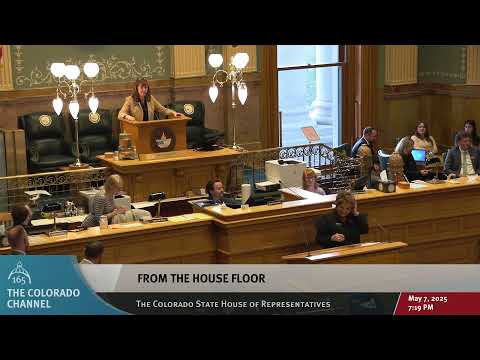
The Colorado House repassed House Bill 13‑20 on May 7, its constitutionally required school finance act for the year.
Sponsors said the bill provides a one‑year fix for a charter school at‑risk funding anomaly and adds roughly $32.6 million to the BEST (Building Excellent Schools Today) capital construction program for one year. It also establishes a small recurring transfer into the State Education Fund — a mechanism intended to help stabilize K–12 funding going forward.
"Investment into Colorado schools is essential to maintaining and improving the competitiveness of Colorado and its students," Representative Hamrick said during floor debate. Backers described the bill as a near‑term step toward the adequacy reforms recommended by two statewide adequacy studies.
Opponents urged continued work during the interim: several members said the formula produces winners and losers across districts and that the state must tackle long‑term revenue and cost drivers to make funding sustainable. Representative DeGraaf argued that more money alone would not solve performance shortfalls and called for administrative and regulatory reforms.
The House adopted the senate amendments and repassed the bill by voice and machine votes (final repassage recorded as 57‑8 on the day). Conference committees and interim work groups were scheduled to study trust‑land revenue and longer‑term implementation of the new formula.
Sponsors urged members to commit to multiyear planning and revenue solutions to fully close the gap identified by adequacy studies; critics asked for sharper attention to cost control and outcomes. The bill now goes to the governor.