Get Full Government Meeting Transcripts, Videos, & Alerts Forever!
Get email alerts on the Emergency Medical Services topic
No spam. Unsubscribe anytime.
House backs bill codifying emergency-care duties for Colorado facilities, after debate on scope and rural impacts
Summary
Senate Bill 130, which mirrors federal EMTALA protections at the state level and sets state standards for emergency medical services and transfers, was passed by the House after amendments and a long floor debate about rural hospitals, stabilization standards and whether the bill would impose burdensome new compliance costs.
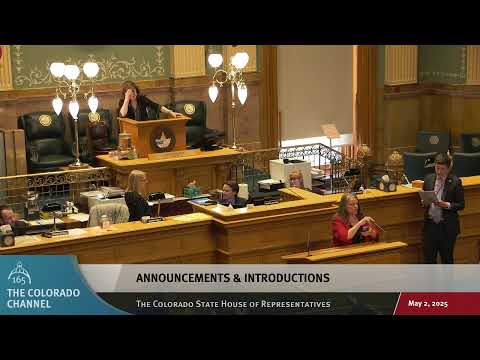
DENVER — The Colorado House passed Senate Bill 130 on May 2 after lengthy floor debate over how state law should treat emergency medical services, patient stabilization and transfers.
SB 130 requires licensed facilities that represent themselves as able to provide emergency medical services — including hospitals and freestanding emergency departments — to comply with an explicit set of state standards on triage, stabilization, nondiscrimination and when a patient may be transferred. Sponsors said the measure codifies established federal rules and helps ensure patients receive care before a transfer. Opponents warned the state-level rules would create new paperwork and legal exposure for rural providers.
The bill’s sponsor, RepresentativeFran Froelich, said the bill was modeled on federal EMTALA and “was written to prioritize patient safety and stabilization above all else.” Supporters said the measure would require facilities to keep logs of patient outcomes, prohibit pre‑treatment questioning about ability to pay and set standards for when transfers are appropriate.
Several amendments were considered on the floor. One amendment clarified what the law means by a licensed facility offering emergency services and made explicit that the law is not intended to impose requirements on mobile assets such as ambulances or air ambulances. Legislators representing rural districts pushed for — and debated — amendments and a “safety net” amendment that would require a return to the Legislature if the bill’s implementation resulted in closures of hospitals or other unintended harm to access. The safety-net amendment failed on the floor.
Rural lawmakers said they are already seeing closures of labor-and-delivery units and narrow operating margins for many small hospitals, and they argued that increased compliance or potential litigation risk could accelerate closures. “We have 22 hospitals, especially in rural Colorado, barely operating above the red,” Representative Tasha Johnson said during the debate, urging protections to avoid further loss of services.
Supporters responded that the bill codifies protections already present under federal law and that it had been negotiated with the hospital association and other stakeholders. The sponsor also noted that the bill removes language requiring state rulemaking in two places and clarifies obligations for facilities not federally required to maintain on-call rosters.
The House adopted several technical amendments on third reading and then approved the bill as amended. Sponsors urged agencies to work with rural providers during implementation and to provide guidance so small hospitals are not unduly burdened.
Discussion vs. decision: Debate focused on the bill’s potential impact on rural hospitals and emergency responders; the formal decision was the House’s passage of SB 130 as amended.
What’s next: The legislation will return to the Senate for any consideration of House amendments before enrollment. Agency rule-writers and facility licensing authorities will need to coordinate to implement the statutory standards and provide clear guidance to small and rural hospitals.
Ending: Supporters said the bill clarifies patient protections during emergencies; opponents contended it could add compliance costs and legal exposure for already-stressed rural providers.