Get Full Government Meeting Transcripts, Videos, & Alerts Forever!
Get email alerts on the Educator Homeownership topic
No spam. Unsubscribe anytime.
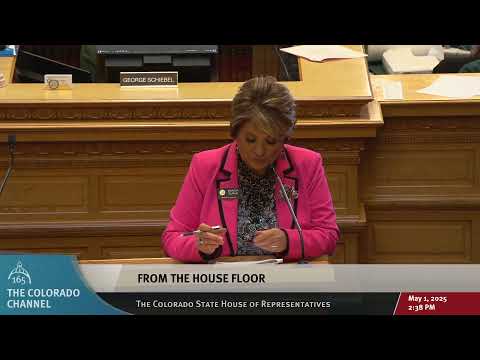
House advances bill to invest in educator homeownership program; lawmakers debate scope and "second-order" effects
Summary
Senate Bill 167 would invest public-school permanent fund assets into an educator-first homeownership program managed by CHFA; lawmakers split over whether the program creates precedent for preferential housing assistance and debated potential effects on other public employees and housing markets.
The House moved forward with Senate Bill 167, a bill that would direct state investment into an "educator-first" homeownership program and related community investments intended to help public school employees buy homes in the communities where they teach.
Representative Lukens, a sponsor, described the bill as a way to "make valuable investments back into Colorado while simultaneously establishing a program that is estimated to help thousands of public school employees gain access to market-rate housing." She and co-sponsors said the Colorado Housing and Finance Authority (CHFA) would manage a homeownership program and that programmatic guardrails were included in a House amendment.
The bill attracted sustained floor discussion about targeting scarce public resources. Representative Byrd, a co-sponsor, said 75% of the proposed program funds would support a homeownership program for public school employees managed by CHFA and 25% would be invested in community projects that benefit public schools. The sponsors framed the funding as a way to stabilize teacher retention and school operations by easing housing pressures. "There isn't enough money to drive the market in a way that would drive the cost of housing up for so many," Byrd said, arguing the program would promote retention rather than compete with other homebuyers.
Several members urged caution. Representative Bradfield and others said the proposal sets a precedent by directing public funds to a particular occupational group and asked whether other public employees (for example, police, firefighters or other essential workers) might merit similar preference. Representative De Graaf and Representative Hertzak raised fiscal and philosophical objections, arguing the state should reduce overall costs and remove barriers rather than create targeted preferences; De Graaf said the bill could be used as a vehicle for broader fiscal policy decisions.
Lawmakers also asked for clarifications about the program's mechanics. The House adopted an amendment that clarified program details, reporting requirements and guardrails. Sponsors pointed to numeric targets included in debate: Representative Bradfield noted legislative discussion that the bill would support an initial portfolio of roughly $100 million by 2028 and $200 million by 2030 (sponsors described these as program scale goals during debate).
After discussion, the House passed the bill. Lawmakers said they expected CHFA to operationalize the homeownership product and to coordinate with local districts on eligibility and program delivery.