Get Full Government Meeting Transcripts, Videos, & Alerts Forever!
Get email alerts on the Rail Safety topic
No spam. Unsubscribe anytime.
House adopts rail-safety bill after tense debate over fees, oversight and railroad input
Summary
The Colorado House passed Senate Bill 162, a package of rail-safety measures that creates/clarifies the Office of Rail Safetyauthority, notification requirements and a railroad fee; members debated stakeholder consultation, data reporting, preventative maintenance plans and the commission—9s liability protections before final passage.
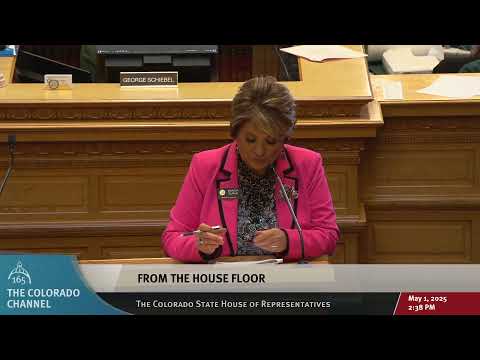
The Colorado House passed Senate Bill 162 on a voice vote after more than an hour of debate over how the state should regulate rail safety and charge fees to railroads.
The bill builds on work lawmakers approved last year with House Bill 1030 to expand the Office of Rail Safety—s role, tighten incident reporting and authorize a fee to fund the office—s work, sponsors said. Representative Mabry, a sponsor in the chamber, said the measure is intended to "gather and analyze rail safety data" and to require railroads to notify the state's watch center and the Office of Rail Safety when an emergency occurs.
The debate focused on how the state should write rules and set fees without unduly harming rail carriers, and whether the bill should require more routine preventive plans, faster public notices after emergencies, or formal consultation with rail operators.
"We urge a no vote on this amendment," Representative Velasco said during floor debate on one amendment, urging defeat of a provision that would have required consultation with at least five Colorado railroads during rulemaking. Velasco warned that existing stakeholder processes and a task force created last year already supplied industry input.
Opponents of several proposed amendments said the changes would either duplicate work already done by advisory groups or impose heavy new costs and paperwork on the fledgling office. Representative Mabry argued the bill was the product of prior advisory committee work and was designed to "double down on rail safety, public health and environmental protection." Representative Puglisi, the minority leader, said it was important to ensure affected railroads had a voice in rulemaking.
Lawmakers considered a series of floor amendments that would have required annual preventive maintenance plans from railroads, mandated two-hour community notifications for certain emergencies, and required specific railroad consultations during rulemaking. The House rejected those amendments after floor votes (several failed on voice votes and recorded machine votes during the floor session). One debated amendment would have struck a liability-immunity clause for the oversight commission; that amendment also failed.
Sponsors said the bill clarifies notification and reporting obligations and provides the Office of Rail Safety with tools to analyze risk factors such as train length and wayside detector failures. Critics said some amendments were necessary to protect rural and local interests and to ensure railroad buy-in on fee methodology; a handful of members urged more direct consultation and additional guardrails.
After debate and the defeat of multiple amendments, the House approved the bill on the floor. The motion to adopt Senate Bill 162 carried and the presiding officer announced that the bill was passed.
Members will now return the bill to the Senate for any concurrence steps required by the amendments made on the House floor.