Get Full Government Meeting Transcripts, Videos, & Alerts Forever!
Get email alerts on the Food Security topic
No spam. Unsubscribe anytime.
House debates, then passes measure directing state to seek federal approval for SNAP restaurant meals program; lawmakers raise fiscal and operational concerns
Summary
The House approved Senate Bill 169, authorizing the state to apply to USDA to join the Restaurant Meals Program so qualifying SNAP recipients could use benefits at participating restaurants, subject to funding and federal approval.
The House passed Senate Bill 169, which directs the Colorado Department of Human Services to submit an application to USDA by Jan. 1, 2026 for participation in the Restaurant Meals Program (RMP). The program would allow certain SNAP recipients—older adults, people with disabilities and people experiencing homelessness—to use SNAP benefits at participating restaurants.
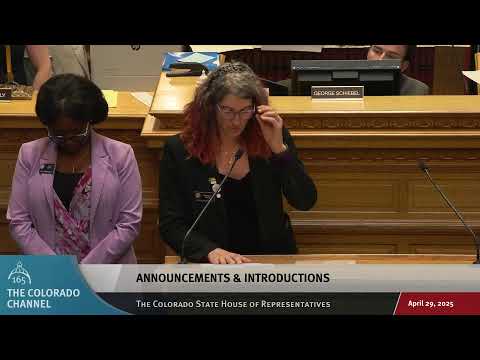
Representative Zokai, the bill sponsor on the floor, said the program would help people who lack access to a kitchen or otherwise cannot prepare their own meals. She noted the bill does not require implementation until appropriations are available and that program participation by restaurants would remain voluntary.
Floor debate, and earlier committee testimony, probed operational, fiscal and equity questions. Opponents raised concerns about limited geographic reach (some areas have few participating restaurants), the logistics of benefit use at restaurants (whether benefits could be used to tip servers), health and nutrition implications, and the risk of the voluntary program becoming mandatory in the future.
Representative Bradley, citing the fiscal note, said Colorado will incur implementation costs: CDHS estimated $253,000 in fiscal 2026–27 (split between general fund and federal funds) for 0.5 FTE to implement the program, computer programming costs and vendor updates to the electronic benefits transfer system, plus ongoing vendor fees. The department provided estimates for contractor programming hours and ongoing system fees to pay restaurants and manage transactions.
Supporters argued the program will reach people with no cooking facilities and increase access to hot meals; sponsors pointed to stakeholder and local restaurant interest and said implementation is discretionary and dependent on appropriations. Representative Zokai said the bill allows the state to pursue federal approval but does not force implementation without funding.
After extended debate and questions about the scope and long-term costs, the House passed the bill by voice vote.