Get Full Government Meeting Transcripts, Videos, & Alerts Forever!
Get email alerts on the Firearms Policy topic
No spam. Unsubscribe anytime.
House approves optional process for firearm serial-number checks after lengthy debate
Summary
The House passed Senate Bill 205, which creates an optional serial-number check procedure for federal firearm licensees (FFLs). The measure drew hours of debate, multiple floor amendments and motions over privacy, potential unfunded local mandates, access to Colorado Bureau of Investigation (CBI) data and whether the bill could become a de facto
House passes measure creating optional serial-number check for FFLs
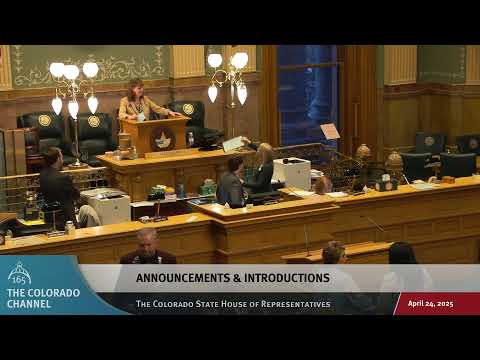
The Colorado House on April 24 passed Senate Bill 205, establishing an optional, state-level procedure for federal firearms licensees (FFLs) to request a check of a firearm’s serial number with law enforcement to determine whether a firearm was reported lost or stolen.
Why it matters
Supporters said the measure helps FFLs and law enforcement return lost or stolen firearms to owners and keep stolen guns off the street. Opponents said the bill creates burdens on sheriffs and police, risks de facto registration and could impose unfunded mandates on local governments.
What the bill does
As passed on the floor, SB 205 allows a federal firearms licensee to request a serial-number check; a sheriff's office or police department that receives the request is to perform the check and respond. The bill provides that the state process would be optional for FFLs (not mandatory) and includes a provision that if the federal government later provides a direct mechanism that would allow dealers to perform the checks themselves, the state process could be superseded.
Extensive floor debate and amendments
Representative Espinosa, speaking for the bill, said the measure came from FFLs who asked for a process similar to pawnshops' current access to lost-and-stolen records. "This is an optional program. It is not a mandated program," Espinosa said on the floor, adding that the Senate adopted an amendment to allow both police and sheriff access to the system so responsibility would not fall solely on sheriffs.
Opponents and some law-enforcement witnesses warned the bill could create a new workload for local agencies. Representative Bottoms and others urged amendments to protect sheriffs and police from unfunded costs; an amendment (L17) that would have required the Department of Public Safety to reimburse a county law enforcement agency for performing a serial-number check was debated but lost. Representatives who supported reimbursement argued counties already struggle with budget overruns and the new checks could require more staffing or overtime.
Privacy, record retention and registry concerns
Multiple amendments debated record-retention, anonymity, and appeals. Representative DeGraaf and others proposed language to require destruction of any records of a completed serial-number check; proponents said the change would prevent creation of a de facto gun registry and preserve privacy. The amendment was offered and lost after extensive floor debate. Another amendment that would have given FFLs direct access to the Colorado Bureau of Investigation (CBI) lost; sponsors and the CBI testified they expect federal systems or upgrades to be available in the near future and said CBI access for dealers would not be immediately feasible.
Appeals and protections for dealers
Representatives also debated an amendment creating an appeal process for dealers or purchasers who were flagged by a lost-or-stolen match; the amendment would have allowed someone who had documentation that they were the lawful possessor to challenge a hold. That proposal did not pass on the floor.
Implementation timing
Several members urged delaying implementation until federal or CBI systems are available. An amendment to push the effective date to 2028 was considered and lost; the floor ultimately left the bill’s effective date per the enacted statutory schedule discussed during debate.
Outcome
The House adopted multiple committee and floor amendments in roll-call votes recorded in the transcript for committee reports and then passed Senate Bill 205 on final passage. The transcript records the bill’s passage but does not include a final roll-call tally for the passage in the floor debate excerpt. The bill is optional for FFLs and contains procedures that will require local law enforcement coordination if used.
Votes at a glance
- Motion: Passage of Senate Bill 205 (moved by Representative Espinosa). Outcome: passed (final tally not specified in floor discussion).
Proper names and authorities
- Colorado Bureau of Investigation (CBI) — discussed as the agency that maintains lost/stolen firearm records and as a potential future access point for FFLs. - Department of Public Safety — referenced in reimbursement discussions and as a coordinating agency for statewide functionality.