Get Full Government Meeting Transcripts, Videos, & Alerts Forever!
Get email alerts on the Public Health Environment topic
No spam. Unsubscribe anytime.
Concord committee endorses warrant article asking state to ban second‑generation anticoagulant rodenticides
Summary
A resident urged the Climate Action Committee to support Article 36—a home‑rule petition seeking statewide relief to bar second‑generation anticoagulant rodenticides (SCARs). The committee voted unanimously to endorse favorable action and will publicize alternatives and an informational Zoom on May 5.
A group of Concord residents and at least one public‑health advocate urged the Town of Concord Climate Action Committee on April 22 to support Article 36, a warrant article that would allow the town to seek stronger local restrictions on second‑generation anticoagulant rodenticides (SCARs). The committee voted unanimously to endorse the article.
Gwen Shipley, a Concord resident, presented the article and told the committee she is seeking a town‑wide ban on SCARs because of documented wildlife and pet exposures. “Studies have shown that 96% of bait boxes in Massachusetts contain SCARs,” Shipley said, and she described the poisons as anticoagulants that “kill by preventing clotting, causing internal bleeding.” Shipley said the poisons bioaccumulate and can move up the food chain when poisoned rodents are eaten by raptors, foxes, or pets. She urged the committee to back a home‑rule petition that would allow Concord to expand protections beyond municipal properties.
Shipley noted that the town does not currently use SCARs on municipal properties but that licensed professionals and some private users still apply them in Concord. She said humane, non‑SCAR alternatives exist — integrated pest management that emphasizes exclusion, sanitation, snap traps, carbon‑dioxide gassing of burrows, and certain non‑bioaccumulating rodenticides — and announced an informational Zoom forum about SCAR alternatives on May 5.
Committee members voiced support for the proposal and for public outreach. Pamela (Climate Action Committee member) said, “If you care about the environment, this is as bad as DDT. We don't want a silent spring,” and asked that the town publish a list of pest‑control companies that do not use SCARs. Another committee member noted local incidents of pet exposure. Committee members said the board of health will be a logical partner for outreach and education about alternatives.
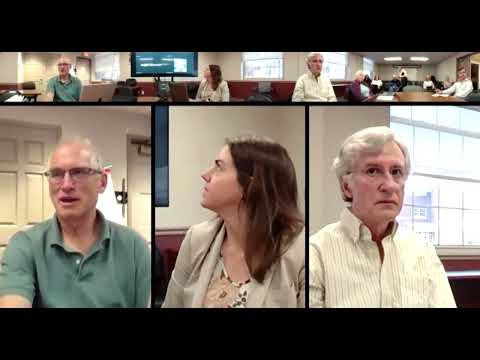
The committee then considered a motion to endorse the warrant article. A member moved that the Climate Action Committee “endorse favorable action” on Article 36; another member seconded. The committee chair called the vote and found unanimous support among the five members present. The committee agreed to circulate the petition information and to publicize the May 5 informational meeting and the committee’s support in advance of town meeting.
The article, if passed by Town Meeting, would enable Concord to petition the state legislature for authority to regulate SCARs locally through a home‑rule petition. The committee did not claim the measure would automatically ban SCARs statewide; committee members and the resident presenters noted previous home‑rule petitions on this subject had not cleared the legislature during the last session and that a statewide ban remains a separate legislative effort.