Get Full Government Meeting Transcripts, Videos, & Alerts Forever!
Get email alerts on the Tax Administration topic
No spam. Unsubscribe anytime.
Trenton resident says tax-office staff humiliated her; council apologizes and asks staff to follow up
Summary
At an April 2025 Trenton City Council meeting, resident Joanne Parker described a confrontational encounter at the city tax office. Councilmembers apologized, noted limits set by the Ohio Revised Code, and directed staff to follow up on customer-service improvements.
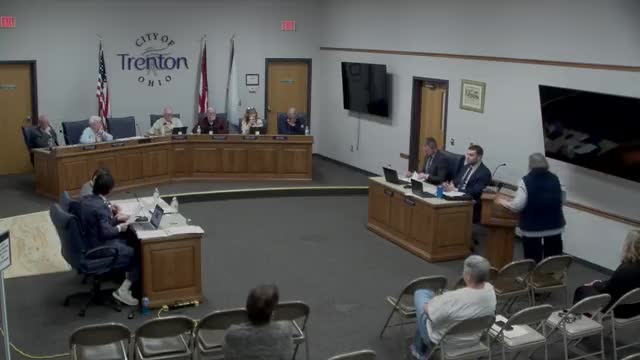
Joanne Parker told the Trenton City Council at its April 2025 meeting that a visit to the city tax office left her “humiliated” after a staff member accused her of tax fraud while she was trying to file for her daughter.
Parker said she went to pay taxes for her daughter, who had moved to Cincinnati. She said a tax-office employee told her the daughter needed documentation proving a change of address and later said Parker had committed fraud. “I was shaking. I'm probably not telling the whole—let me remember some of the comments,” Parker said during public comment, adding that another employee laughed as she left.
Councilwoman Montgomery apologized on behalf of the city: “I apologize to you on the behalf of the city of Trenton that you got treated that way by an employee, and no employee should ever laugh at another resident of Trenton.” Finance Director Matthew told the council the city has limited flexibility over filing requirements because those are governed by state law, saying, “Most of that is controlled by the Ohio revised code.”
Council discussion that followed focused on service and next steps rather than changing the statutory filing rules. Council members suggested the city pursue customer-service and sensitivity training for municipal staff. One councilmember asked Finance Director Matthew and Councilman Nichols to research firms or programs the city could contract for mandatory training. City staff told Parker they would follow up and requested her contact information.
Parker said she later provided a landlord agreement and a tax payment check of $609; she received a letter instructing her daughter to amend her tax return. Councilmembers and staff did not dispute her account at the meeting; rather, they emphasized both the legal limits on how records are handled and the need to improve resident-facing service.
The council did not take formal action to change tax-filing rules, which Finance Director Matthew identified as determined by state statute, but directed staff to explore customer-service training and to contact Parker with next steps.