Get Full Government Meeting Transcripts, Videos, & Alerts Forever!
Get email alerts on the Town Budget topic
No spam. Unsubscribe anytime.
Town manager proposes $63.63 million FY26 operating budget; officials report 4.74 net FTE reduction
Summary
Town Manager Carrie Lafleur presented a $63,630,061 FY26 operating budget that centralizes facilities under public works, includes a net reduction of 4.74 FTEs, and shows benefit premiums and debt service as the primary upward pressures.
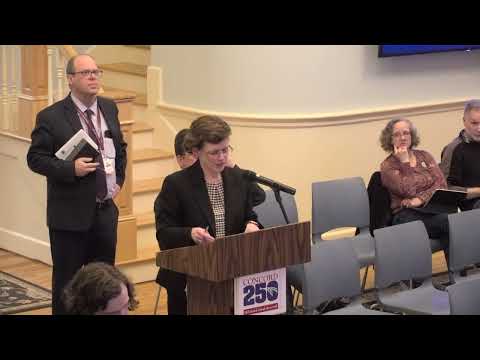
Town Manager Carrie Lafleur presented Concord’s proposed FY26 general‑fund operating budget to the Finance Committee: $63,630,061 to fund town departments, joint accounts and shared services.
Lafleur said the budget was prepared as a guideline‑level proposal; managers submitted level‑services budgets and the town identified roughly $600,000 in reductions to meet the committee’s guideline (a 2.85% target). The proposal included an estimated net reduction of 4.74 full‑time equivalent positions, accomplished through one vacant‑position elimination, voluntary reassignments, a planned layoff and other workload adjustments. Lafleur and staff said some of the staffing shifts are being moved to enterprise funds (for example, solid waste) where operational matches are more appropriate.
Key points presented: - Joint accounts (employee benefits and debt service) are the largest single category, and joint accounts are driving most of the budget increase; health‑insurance premiums rose sharply in the renewal (the presentation cited a 14.84% premium increase). Debt service totals about $13.5 million in the article’s joint‑account appropriation with a total town debt service projection of about $16.9 million when regional school assessments are included. - Facilities management was moved into Public Works (operational change first executed FY24), and a facilities funding request is included in the capital plan. - Public‑safety cost center shows a small overall increase; dispatch has been separated as a standalone function in the budget, with the town exploring the option of providing hosted or contracted dispatch services to neighboring towns.
Lafleur and staff said 85% of the operating budget funds resident‑facing services and that managers continue to pursue operational efficiencies, software consolidation and opportunities to centralize work to avoid larger staffing increases. Committee members asked for clearer, itemized breakout of joint‑account costs that are school vs. town (for example, health and retirement apportionments) and for better ROI metrics on economic vitality / visitor‑center spending.
Why this matters: Joint accounts (especially benefits and debt service) are the primary drivers of the town budget increase; decisions here affect the levy and taxpayers’ bills.
What’s next: The Finance Committee will deliberate and may vote a recommendation at a later meeting. Staff will provide additional breakdowns of joint accounts and ROI data on economic‑vitality expenditures at committee request.
Speakers (excerpted): Carrie Lafleur (Town Manager); Anthony (CFO); members of the Finance Committee.
Figures in this article are drawn from the town manager’s presentation to the finance committee.