Get Full Government Meeting Transcripts, Videos, & Alerts Forever!
Get email alerts on the Pavement Maintenance topic
No spam. Unsubscribe anytime.
Trenton public works outlines patching, crack-seal and paving limits as streets backlog grows
Summary
Public works described ongoing pothole and pavement work, a program that includes concrete repair in the paving budget, and the city’s limits given materials costs and prior levy defeats; staff said many streets require full-depth repair, not just surface crack sealing.
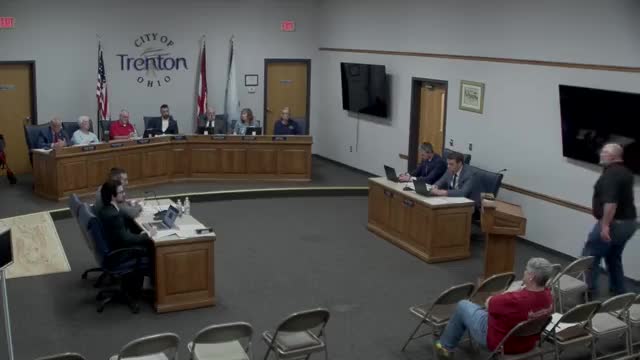
Brad Baker (public works) and other city staff updated the Trenton City Council on May 1 about pothole repairs, crack sealing, paving priorities and constraints on the city’s paving program.
Public works staff said routine pothole repair uses cold patch and hot mix as available, with full-patch and base repair needed for many long-deteriorated streets. Baker described pavement structure standards the city now uses and why some streets need full-depth repairs rather than surface crack sealing: “Full depth of asphalt in the city of Trenton is 9 inches. It's 6 inches of base, inch and a half intermediate, and inch at the top.” He and other speakers explained that stress cracking, temperature swings and water infiltration drive recurring pavement failures and that patching alone will not restore many streets.
Staff said crews concentrate first on 24-hour complaints and safety-critical needs, then on broader routes; patching is performed roughly six to eight days per month, with additional crack-seal miles and targeted base repairs where budget allows. Baker described past projects and a sample cost: when West Aberdeen (and related short segments) was rebuilt, that single-street project cost in the mid-five-figure range: “It was between 55 and $60,000 for just that one street.”
Council members and residents asked about program design and equity. Staff noted the council previously added concrete repair (sidewalks and curbs) into the paving program rather than assessing homeowners, which reduces resident out-of-pocket costs but reduces the number of streets the city can fully repave in a given year. The vice mayor and other councilors discussed the influence of petroleum prices on asphalt, and staff cited federal data to show an industry index has roughly tripled since 2004.
Residents and councilors stressed that the city has limited funds and that some streets were neglected for years. Staff emphasized catch-up work is underway but will take time: “We are gonna be chasing this bill for a while.” Councilors requested written notes from recent street inspections; staff said those notes exist and can be supplied to council.
The discussion closed with a request for residents to submit repair requests via the city’s CClickFix system so staff can prioritize complaints and meet response goals.