
Trenton officials outline multi-pronged plan to address persistent water loss
Get AI-powered insights, summaries, and transcripts
Sign Up Free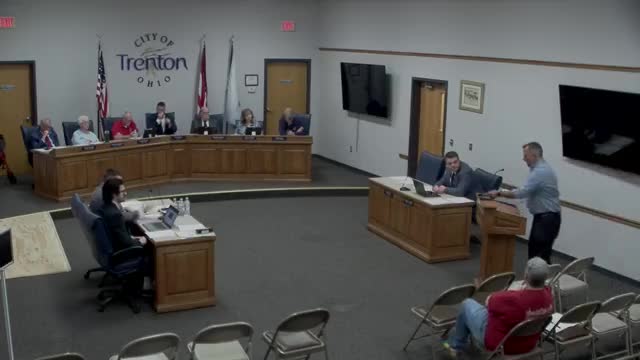
Summary
City staff told the Trenton City Council the system is losing a large share of produced water and described steps including new equipment, hiring a leak-detection technician, meter replacements and targeted service-line work to reduce losses and avoid EPA enforcement.
David (service department) told the Trenton City Council on May 1 that the city continues to experience high water loss and described steps staff are taking to find and fix leaks.
City staff presented the scope of the problem and a sequence of remedies the city has adopted and plans to expand, including hired leak-detection surveys, purchase of correlation equipment with Ohio EPA grant support, consolidating meter reading into a single monthly read, replacement of aging meters, targeted hydrant and service-line surveys and a proposed program to move certain residential meters to pits near the street.
The service department official said the problem predates his tenure: “you have 30 to 40% water loss, and you need to deal with it.” He said some distribution lines are manufactured plastic (described in the meeting as “Bluemax”/purple plastic) with a known history of leaks and litigation. He described the purchase of correlation equipment funded in part by a roughly $10,000 Ohio EPA grant and said the city will operate that equipment regularly: “we actually received $10,000 in grant funding from Ohio EPA, and that cost, that was about towards half of, what the the equipment cost.”
Staff said the city has about 5,000 meters and moved to one complete monthly read in October 2022 to improve accuracy. The presenter said crews also perform acoustic hydrant surveys and follow-up main surveys in seasons when leaks are most detectable, which has produced measurable repairs: after fall surveys and staff follow-up the city fixed 17 leaks and reduced estimated loss by roughly 300,000 gallons per day.
On acceptable loss levels, the presenter said federal guidance aims for much lower loss: “15% is what they're looking for,” and said an interim local target discussed with peers is to get under 25%.
Officials discussed the cost tradeoffs. Staff cited a 2022 calculation that it cost about $400 to produce one million gallons of water, and said hiring a dedicated leak-detection/ distribution employee should pay for itself within a few years as lost water is recovered. The presenter said the U.S. EPA is increasing scrutiny and that sanitary surveys (performed every three years) are flagging water loss as an issue that can move from recommendation to violation if not controlled.
Council members asked how production and distribution are metered; staff explained each well has a magnetic production meter and plant effluent is metered before distribution, with the last accounting point being the residence meter. The presenter noted limitations: “If it's in a plastic line, which more than likely it is, it's almost gonna be silent. It's gonna be very difficult to hear.”
Staff also described operational steps the council could expect: hiring a new distribution employee dedicated to leak detection and repairs, a program to relocate meters to pits at the curb to make leaks visible and shorten the utility-owned portion of service lines, and continued use of contracted acoustic surveys. Staff said a new vacuum truck will aid less-invasive work and that a pilot to convert roughly 100 service connections per year is under consideration for budgeting purposes.
Council members asked about test wells and contracts for outside drilling; staff said a contractor would be on site in the coming weeks to test potential well sites outside city limits and that copies/time stamps of related contracts and bids can be supplied to councilors on request.
The presentation closed with staff stressing that the city will “aggressively go after this water loss problem” and asking for council support for staffing and budget items needed to pursue the program.