Get Full Government Meeting Transcripts, Videos, & Alerts Forever!
Get email alerts on the Shared Path Safety topic
No spam. Unsubscribe anytime.
Residents urge more signs, speed controls after child injured on San Clemente multiuse path
Summary
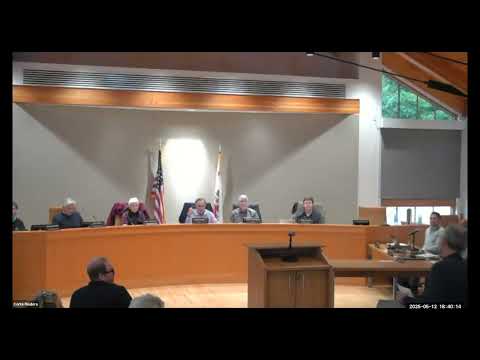
Gary Champagne, a Corte Madera resident and owner of a boutique fitness center, told the Bicycle Pedestrian Advisory Committee on May 12 that his 4‑year‑old son was struck on the San Clemente multiuse path in a March 5 collision that fractured the child’s tibia and left him in a leg cast for nine weeks.
Gary Champagne, a Corte Madera resident and owner of a boutique fitness center, told the Bicycle Pedestrian Advisory Committee on May 12 that his 4‑year‑old son was struck on the San Clemente multiuse path in a March 5 collision that fractured the child’s tibia and left him in a leg cast for nine weeks. "He completely, you know, shattered his tibia," Champagne said of the injury, and added that his son "was in a cast for, 9 weeks."
The incident and similar reports from other residents prompted public commenters and BPAC members to press town staff for steps to slow bikes and e‑bikes, increase visibility at crossings and deploy clearer signage and markings. David Bell, who identified himself as a Corte Madera resident, said the collision was “not if but when” for a more serious crash and asked the committee to agendize e‑bike limits and other safety measures. Bob Bundy and other residents urged posted speed limits, painted curb daylighting and signs that remind cyclists to call out when passing.
Why it matters: the San Clemente path and several other multiuse crossings are heavily used by pedestrians, children and dog walkers, and commenters described recurring conflicts with cyclists and fast e‑bikes. Committee members and multiple residents said simple, visible signs and pavement markings could change behavior even where enforcement capacity is limited.
Staff described options and constraints. Nick Cartagena, senior civil engineer and staff liaison to the committee, said the town can use two types of devices: official traffic control devices governed by the Manual on Uniform Traffic Control Devices (MUTCD) and non‑regulatory educational signs or temporary wayfinding markers. "If we did implement MUTCD signs they would be reflective," Cartagena said, adding that non‑official educational signs (like the colorful circular markers used in nearby Tiburon) can be used as pilots.
On enforcement, staff and BPAC members noted limits. A staff member said code enforcement can ticket parking and other stationary violations, but policing moving violations or speed on multiuse paths would generally rely on the Central Marin Police Authority. Committee members were told CMPA staffing is stretched and regular path speed enforcement is unlikely without new resources.
Several people urged short, low‑cost pilot steps before committing to permanent changes. Matt Hartzell (Larkspur) and others recommended trimming vegetation near the High Canal Path crossing at Hickory Avenue, adding rectangular rapid‑flashing beacons (RRFBs) at high‑use crossings, and testing painted or plastic "call out when passing" markers on paths. Staff agreed to explore options and to contact Tiburon about the colorful path signs Tiburon has used as an educational pilot.
Committee discussion also covered more intensive measures: permanent curb daylighting (no‑parking zones within 20 feet of crosswalk approaches, now required by California Assembly Bill 413), physical traffic‑calming elements and the need for traffic studies to establish enforceable path speed limits. Staff cautioned that enforceable speed limits on a path require an engineering speed study (80th percentile analysis) and that enforcement would still depend on available police resources.
No formal motions were made. The committee provided feedback and staff identified next steps: research educational sign pilots (including contacting Tiburon), consider targeted vegetation trimming and sight‑distance improvements, and evaluate RRFBs or other high‑visibility devices at priority crossings. Staff said any wider enforcement or permanent curb painting would be prioritized based on complaints, equity of need and maintenance budgets.
What remains open: residents asked the town to prioritize the San Clemente crossing and similar hot spots; staff did not commit to a funding package or an enforcement plan. BPAC members suggested returning with cost estimates for pilot signs and for solar RRFBs, and to invite CMPA traffic staff to a future meeting to discuss collision data and enforcement options.
Ending: residents and committee members said they would continue urging low‑cost, visible interventions while recognizing limits on enforcement and resources. "Is it acceptable if I reach out to Tiburon and see who made those colorful circle signs and determine if we can acquire some for the town?" a committee member asked; staff answered, "We can reach out," and said they would report back.