Get Full Government Meeting Transcripts, Videos, & Alerts Forever!
Get email alerts on the Transit Light Rail topic
No spam. Unsubscribe anytime.
Fife council presses Sound Transit as agency narrows Tacoma Dome Link alternatives, sets June decision timeline
Summary
Sound Transit presented staff nalysis of three route alternatives for the Tacoma Dome Link Extension through Fife and said the board will act on a staff preliminary preferred alternative in June. Fife staff recommended the I-5 alignment and asked council to return a resolution on June 10 stating the city—s position.
Sound Transit staff presented an updated analysis of route and station alternatives for the Tacoma Dome Link Extension through Fife and asked the city council whether it intends to take a formal position before the Sound Transit Board considers a preliminary preferred alternative in June.
The presentation, led by Sound Transit planning director Lauren Douglas and South Segment lead Diane Weider, summarized the draft environmental impact statement (DEIS) process, public comments and the agency—s preliminary staff recommendation. "The preferred alternative is a step in our planning process that is a big milestone," Douglas said.
Why it matters: the preferred alternative will shape where light rail guideway and stations are built and how property access, local businesses and tribal trust lands are affected. Sound Transit said board action on a staff-preferred choice will allow the agency to advance engineering to about 30 percent and prepare a final EIS, a step that narrows the options for mitigation and design.
What Sound Transit presented: the DEIS studied several alignment options through Fife, including alignments along I-5 and two options on Pacific Highway (one at-grade/median and one on the south side). The DEIS identifies a preferred station location in the Fife city center; the agency had not yet identified a single preferred route through the city. Diane Weider summarized the agency—s conclusion: "The preliminary staff recommendation is ... to identify I-5 alternative and confirm Fife station as the preferred alternative." She said staff based recommendations on technical DEIS analysis, equity considerations, stakeholder meetings and implementation factors.
Local concerns raised: Council members and local business representatives asked about construction impacts, visual effects, noise mitigation and access for car dealerships and tribal businesses. Diane Weider and engineer Molly Larson said Sound Transit is studying noise mitigation, potential noise walls, and ways to move track elements such as double crossovers to reduce impacts near sensitive sites. Molly Larson said the guideway height over Port of Tacoma Road in the current 10-percent design is approximately in the mid-20s of feet above roadway but the team is exploring ways to optimize profiles and possibly lower portions where feasible.
Costs and schedule: Sound Transit staff said advancing the design from 10 percent to 30 percent to refine impacts is expected to cost tens of millions of dollars. Douglas said the board will act on a preferred alternative in late June and Sound Transit staff anticipate publishing a final EIS in 2027; the Federal Transit Administration would later issue a record of decision for federal environmental review.
Tribal and agency coordination: Sound Transit said it has been coordinating with the Puyallup Tribe and other agencies, and that the tribe—s formal DEIS response was pending. City staff noted earlier written comment letters from the Puyallup Tribe were included in the council packet.
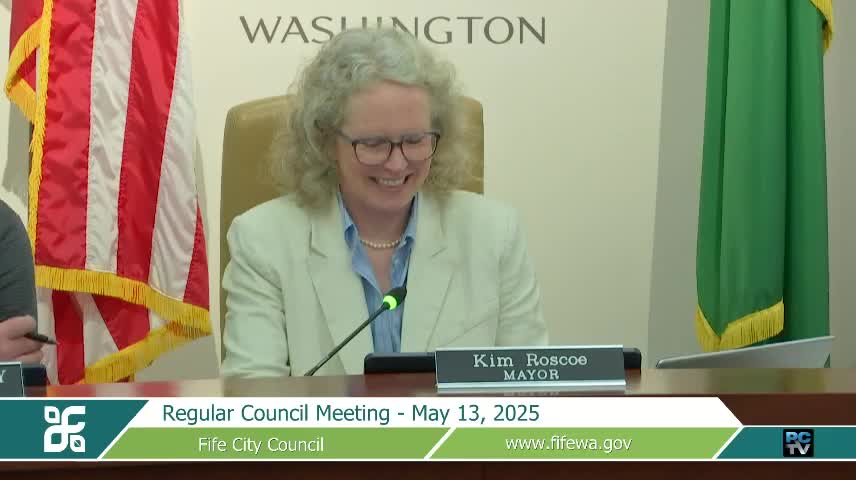
Council direction: Council asked staff to return on June 10 with a formal resolution stating the city—s position on the preferred alternative so the council—s views can be forwarded to the Sound Transit Board. Mayor Kim Roscoe urged council to make a clear recommendation that the city can send along to the board. Sound Transit staff said the board will consider the preliminary staff preferred alternative at system expansion committee meetings and then at board action scheduled later in June.
What—s next: the council will consider a resolution at its June 10 meeting; Sound Transit will take board-level action in late June and, if the board identifies a preferred alternative, agency staff plan to advance engineering and prepare a final EIS.
Ending: Councilmembers and Sound Transit staff agreed to continue coordination during the engineering phase and to seek more detailed answers about property impacts, mitigation measures and construction staging as the project advances.