Get Full Government Meeting Transcripts, Videos, & Alerts Forever!
Get email alerts on the River Access Navigability topic
No spam. Unsubscribe anytime.
Lawmakers hear calls for clearer 'navigable' definition as property owners close streams
Summary
A Georgia Rivers associate and Paddle Georgia coordinator told the committee that uncertainty about which streams are "navigable" is reducing access for anglers, outfitters and recreational boaters; he urged the legislature to clarify law after prior bills and court decisions left ambiguity.
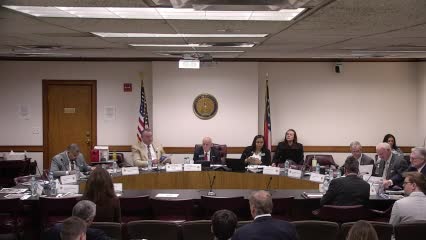
Joe Cook, Paddle Georgia coordinator with Georgia Rivers, told the Senate Economic Development and Tourism Committee that unclear state definitions of "navigable" streams are shrinking the waterways available for boating, hunting and fishing and are harming outfitters and tourism.
"We would like to see policy adopted that protects our right to float down any stream that is capable of floating a recreational watercraft, like a canoe or kayak," Cook said, describing the right he said historically existed in Georgia.
Why it matters: Cook told the committee that the 2023 law (Senate Bill 115) affirmed rights to boat, hunt and fish on navigable streams, but that the state still lacks a clear, modern definition of "navigable." He said a House study committee recommended against creating a navigable-streams list and suggested no statutory change, leaving uncertainty for landowners, outfitters and the public.
Cook reviewed legal history, citing the 1849 Georgia Supreme Court decision Young v. Harrison and later cases that, he said, affirmed a historical right of passage. He also summarized a 1990s case (Givens v. Itchaway) in which a local user lost a dispute over stream access; Cook said the outcome and litigation resources have contributed to closures of traditionally used streams.
Committee members and other speakers raised property-rights and enforcement concerns. An unidentified resident who described owning riverfront property on the Broad River told the committee about littering, trespass and public-behavior incidents he has experienced when people left the river and used private land. He said respect for private property and improved outfitters' education of customers are needed to reduce conflict.
The committee heard that neighboring states (Florida, South Carolina, North Carolina and Tennessee) generally adopt a policy that allows passage if a stream can float a boat, and Cook said some out-of-state paddling groups avoid Georgia because of unclear access rules.
Ending: Cook left the committee with a set of questions for lawmakers: whether individual riparian owners should be able to close streams used by outfitters; whether Georgia's policy best serves the tourism industry; and whether a clearer statutory standard could help attract recreational visitors. The committee did not adopt statutory changes at the meeting; staff members offered to research comparative state approaches and ownership questions raised by senators.