
Yakima clean-air board hears federal funding risk for FY2025-26; members ask to remove 3% COLA from draft budget
Get AI-powered insights, summaries, and transcripts
Subscribe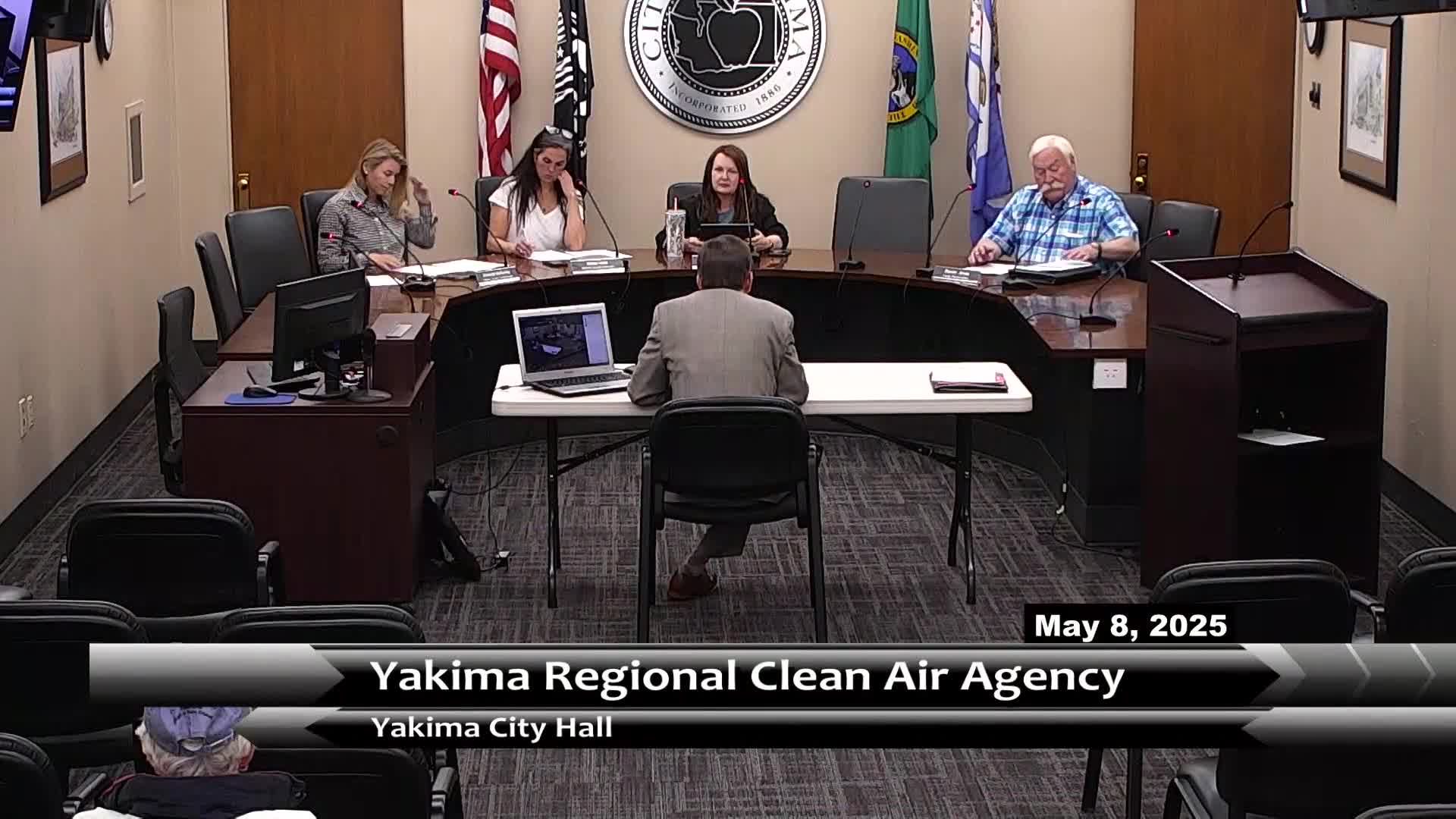
Summary
At a public hearing on the proposed fiscal 2025–26 budget, agency staff warned of steep proposed EPA cuts; board members asked staff to present the budget without a 3% cost‑of‑living increase and to adopt any future salary changes by resolution.
The Yakima Regional Clean Air Agency opened a public hearing on its proposed fiscal year 2025–26 budget and heard staff describe uncertainty tied to federal funding proposals and board members request removal of a proposed 3% cost‑of‑living adjustment (COLA) from the draft.
"The request starting off was for a reduction in EPA funding... just under 55%, more than half," said Mister Thornsburg, the agency's executive director, summarizing a recently released federal budget proposal. He told the board the president's budget proposals often change during congressional negotiations but said the initial ask was substantial and could lead to funding reductions unless grants were exempted in later negotiations.
Commissioner Amanda McKinney asked that the 3% COLA for salaries and benefits be removed from the draft budget and that any increases be handled through a separate board resolution. "Salaries and benefits have always been, implemented through board resolutions. So I would like to have those 3 percent COLAs taken out of this budget, please," she said. Several board members agreed that the draft should be presented without the increase and that any pay changes could be adopted later by resolution.
Board members and staff also discussed program-level implications: Thornsburg said state consolidated budget proposals showed little reduction, but most of the agency's anticipated funds come from federal sources; he said monitoring programs were "probably unlikely" to be affected while some wood‑smoke reduction programming could be at risk. The board noted the agency coordinates wood‑smoke public education with Benton Clean Air to reach overlapping television markets and that the Northwest opacity‑certification training is conducted primarily by this agency for the region.
No formal vote to adopt the budget occurred at the hearing. The public hearing record was closed after no members of the public offered comments on the budget. The board directed staff to prepare a budget without the 3% COLA for consideration at the next meeting; any salary increases would be brought forward by separate resolution if the board later chooses to adopt them.
The discussion reflects uncertainty at the federal level for grant funding and board caution about committing to salary increases until final funding levels are clearer.