Get Full Government Meeting Transcripts, Videos, & Alerts Forever!
Get email alerts on the Public Assets And Land topic
No spam. Unsubscribe anytime.
Yakima staff map surplus parcels; council asks for more research into marketability, zoning and affordable‑housing options
Summary
City attorney Sarah Watkins outlined a shortlist of city‑owned parcels that may be marketable and explained legal and funding restrictions including RCO grant limits and a local code allowing surplus property disposition for affordable housing. Council asked staff to research selected parcels and constraints; no sale decisions were made.
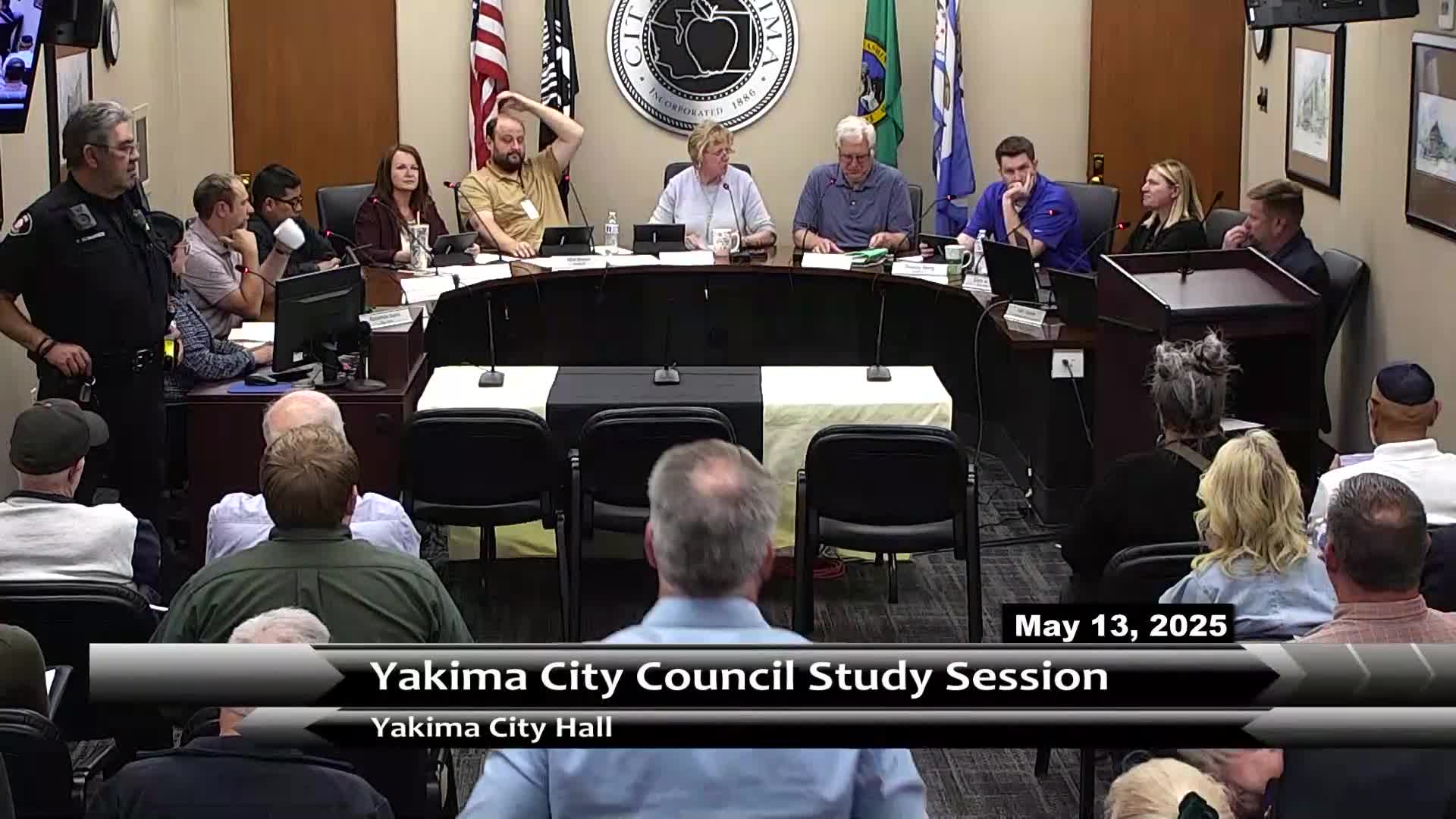
City Attorney Sarah Watkins briefed the Yakima City Council on May 13 about about 300 city‑owned parcels and highlighted a subset that staff view as potentially marketable, but constrained by acquisition terms, utilities, access and grant restrictions.
Watkins said staff identified parcels with minimal improvements that might be surplused and sold, but several have deed or grant restrictions that affect whether proceeds can be used citywide. "Some of these parcels do have restrictions due to how we acquired them as well as some might need additional site work before becoming marketable," she told the council.
Watkins walked council through examples shown on a map and noted site‑specific constraints: a roughly one‑third‑acre parcel near the Bravo Company Boulevard roundabout has water and sewer but may need a narrow strip vacated to improve access; a cluster of roughly six parcels at South Fair Avenue and East Chestnut is awkward because access would be limited to Chestnut under state DOT rules; a donated parcel near South 13th and East Chestnut is deed‑restricted so proceeds must be used for Kiwanis Park; a 2.74‑acre parcel off Highway 24 was rezoned general commercial and sits outside the floodplain but is in the Greenway overlay and has a development agreement; and a Reservoir Road parcel contains a vacant house atop city water conduits and would require short‑platting, easements and likely demolition to be marketable.
Watkins explained an additional constraint affecting certain properties along the Lower Kawitchi Creek Trail: Recreation and Conservation Office (RCO) park grants can require that land purchased with RCO funds remain in park or open‑space use, or that an exchange of equivalent acreage be secured within the city before a conversion. "If we take RCO money and purchase a piece of property, if we then want to transfer it because RCO money is for parks and open spaces, we have to find double the amount of acreage within the city to then become a park or open space," she said.
Watkins also described a city code section and related state statute that permit disposition of surplus property at below‑market value for affordable housing, subject to a perpetual covenant restricting future use to the designated public benefit. "It's very strict," she said; the restriction typically requires the property to remain in affordable housing use and may include income limits such as 80 percent of area median income.
Watkins outlined the surplus‑sale process: identify parcels for surplus, complete required environmental review (SEPA) and appraisals, hold a public hearing for properties acquired for utility purposes, adopt a surplus resolution, and then market by sealed bid, auction or negotiated sale depending on council direction. She emphasized that some parcels will need additional site work, survey and easement work before marketing.
Councilmembers discussed priorities. Several members asked staff to pursue further investigation on specific parcels: the two larger parcels north of the wastewater treatment plant (the Highway 24/Greenway overlay area), the triangular parcel near the Bravo Company Boulevard roundabout, and the chestnut/Thirteenth area. Council asked staff to evaluate vacating a narrow strip of right‑of‑way to make the Bravo Company parcel more developable, to identify zoning and comp‑plan steps needed to market the Chestnut parcels, and to explore whether the Reservoir Road parcel could be broken into developable lots or offered for affordable or multi‑family housing while protecting water easements. No parcel was declared surplus nor was any sale authorized at the study session; Watkins asked for council direction to perform background research and return with detailed recommendations.
Watkins also reminded council that proceeds from some donated parcels must be spent on specified park uses, and that staff would bring back information on zoning, required administrative adjustments, SEPA status and deed restrictions for parcels council asked to prioritize.