Get Full Government Meeting Transcripts, Videos, & Alerts Forever!
Get email alerts on the Ada Transition Plan topic
No spam. Unsubscribe anytime.
Yakima committee reviews ADA transition plan; staff estimate $30,000/yr for APS upgrades and $25,000/yr for curb ramps
Summary
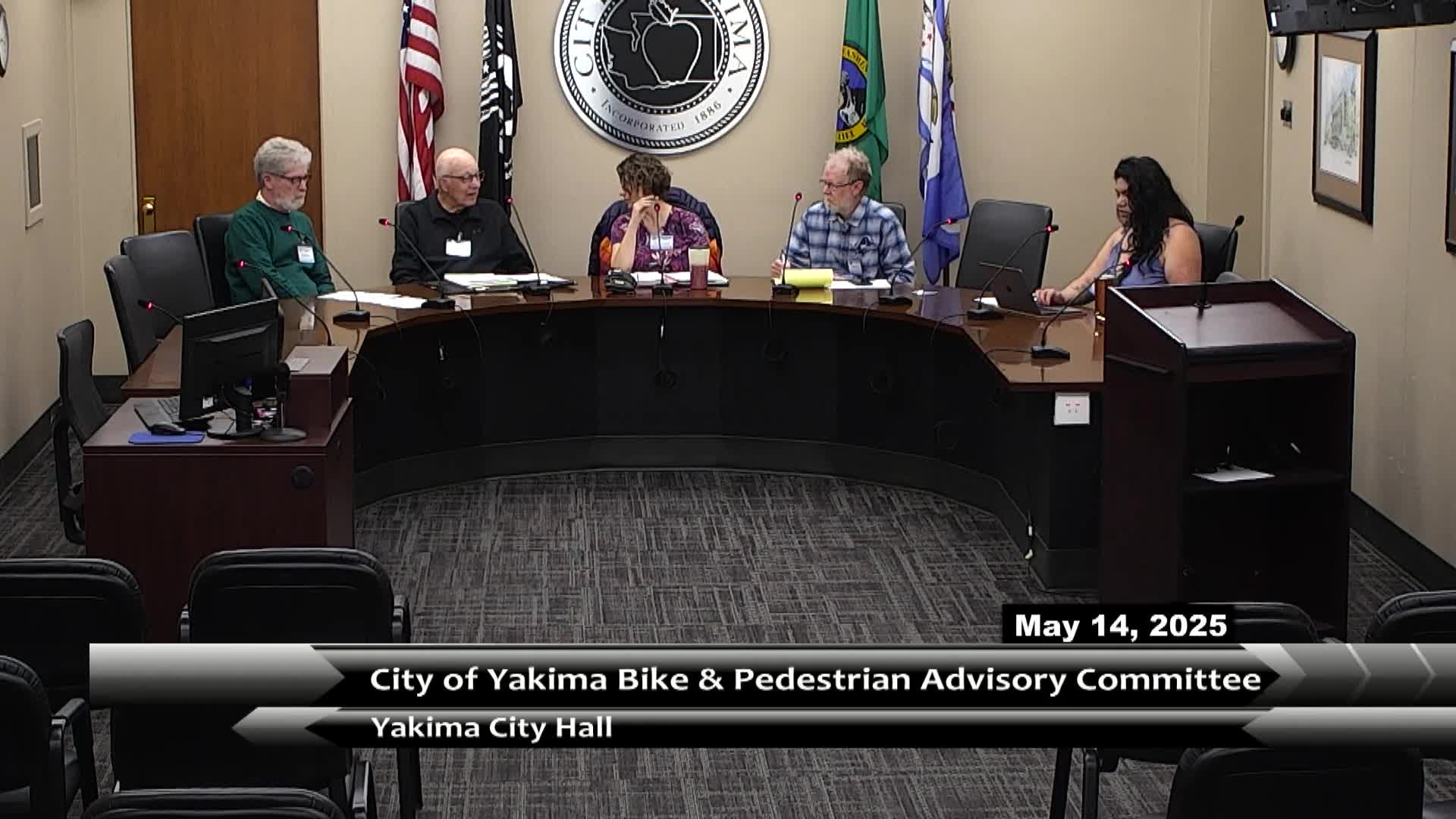
Committee members reviewed Yakima’s ADA transition plan and heard staff estimates that upgrading accessible pedestrian signals and curb ramps would require roughly $30,000 per year and $25,000 per year, respectively, under a 20-year schedule unless coordinated with capital projects.
Committee members reviewed the Yakima ADA Transition Plan and discussed the city’s remaining needs to bring signal hardware and curb ramps to current accessibility standards.
A staff summary in the meeting noted that 27 traffic signals have older APS-style hardware, six signals already have modern Polaris APS push buttons, and roughly 13 signals “need upgrading” to meet current standards. The staff estimate for hardware-only upgrades to remaining signals was presented at about $6,000 per signal, leading to an approximate $500,000 total hardware cost and an annual budgeting figure of about $30,000 per year over a 20-year transition schedule. For curb ramps, the plan assumes $25,000 per year to fill missing ramps at medium- and high-priority locations; the transition plan recommends prioritizing high-priority locations and coordinating ramp work with resurfacing and other projects when possible.
Members discussed a high-priority example, Fruitvale Avenue and 16th Avenue, where the transition plan listed all four corners missing ramps with a recommended priority of “high.” The transcript records the plan’s cost estimates for that corridor: recommended ramp installations with cost estimates noted as $45,000 plus a total construction cost for the intersection upgrade of approximately $100,000.
The committee discussed grievance and documentation procedures, ADA coordinators, and the need to align the committee’s annual review with the city’s current review process. Several members urged the committee to avoid spending meeting time simply reading the plan aloud; instead they requested the document be circulated in advance for a structured review and asked staff to clarify when the city’s formal review cycle occurs. Carol volunteered to make contact and report back on the city’s schedule and who is reviewing the ADA transition plan so the committee can coordinate.