Get Full Government Meeting Transcripts, Videos, & Alerts Forever!
Get email alerts on the Public Library Funding topic
No spam. Unsubscribe anytime.
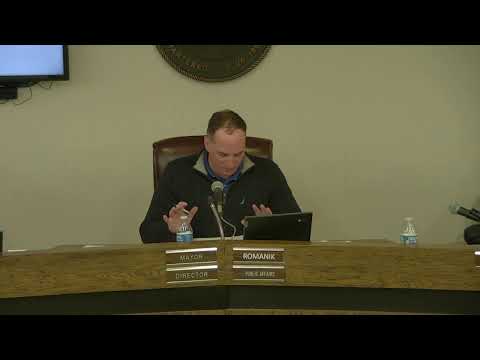
Residents, volunteers and service providers urge Millville commissioners to increase public library funding
Summary
Dozens of residents and community leaders at a Millville City Commission meeting urged the commission to raise funding for the Millville Public Library, saying the library provides essential services — from job help and cooling-center access to children’s programming — despite being flat-funded for a decade.
Dozens of residents, former trustees and nonprofit advocates told the Millville City Commission that the Millville Public Library delivers broad social, educational and economic benefits and needs increased city funding.
Speakers at the Feb. 18 meeting described the library as a “third space” where people of all ages access computers, reference help, notary services and programs that support job readiness, family engagement and safety during outages. Multiple speakers said the library’s municipal allocation has not risen in 10 years even though demand and costs have increased.
The comments opened during the meeting’s public-comment period and drew speakers from longtime volunteers to business owners and former trustees. Cindy Cook of Cedarwood Village said the library has been a vital resource in emergency and social-service responses: “Over the years, you have been such a vital help to helping us with our homeless and those in need,” she told commissioners, adding that the library has acted as a cooling center during power outages and a place to find job resources. Greg Herers, a Millville resident, described the library as a rare public “third space” that “allows people to communicate and socialize on an actual human level.”
Former trustee Bill Fenton outlined the library’s recent capital campaign and operating history, saying the city’s direct share of the renovation was “between 10–15%” and noting a $3,250,000 matching grant the library received from the state. He said the library has absorbed several ongoing costs — health insurance, security officers and utilities — after those expenses shifted away from the city, and urged the commission to increase annual operating support.
Multiple speakers recited operating and usage figures supplied at the meeting: a speaker representing library staff said about 20,241 city residents hold library cards, and cited reference-desk interactions (6,548), computer-help sessions (2,788) and notary appointments (1,0181 — transcript) as examples of day-to-day services used by residents. Those numbers were presented as evidence that the library returns value for municipal investment.
Business owner Eric Nyman said the library — along with recent promotional work by the city — bolstered downtown economic activity and should be preserved as a community asset. Several social-service speakers, including Michelle White, offered to connect library staff with domestic-violence advocacy and survivor-support programs to expand referrals and on-site services.
Commissioners responded in turn: several thanked the speakers and praised the library’s role. Vice Mayor Watson and Commissioner Hewitt both acknowledged the library’s importance and said the commission faces competing budget priorities, including recent and ongoing public-safety contract settlements and equipment replacements. No formal financial pledge or budget amendment was made at the meeting; commissioners noted budget limits and said funding questions would be addressed in future budget discussions.
Why it matters: Library speakers argued the facility performs functions — internet access, job-application help, notary and meeting space for social services — that have direct impacts on residents’ daily lives. Speakers warned that decade-long flat funding has constrained staffing and program expansion even as costs rose.
At the meeting’s close, commissioners reiterated they had heard the comments and would continue to consider budget priorities; the commission’s next regular meeting was announced for March 4. Several public-service and advocacy speakers said they planned to follow up with staff and commissioners through meetings and written materials.