Get Full Government Meeting Transcripts, Videos, & Alerts Forever!
Get email alerts on the Inactive Landfill Permits Tceq topic
No spam. Unsubscribe anytime.
Senate committee debates bill to cancel decades‑old municipal solid waste permits in high‑growth counties
Summary
House Bill 3071 would require the Texas Commission on Environmental Quality to cancel certain inactive municipal solid waste permits in defined high‑growth areas; senators questioned scope, change‑of‑ownership implications and precedent, and sponsors said they will bring a committee substitute.
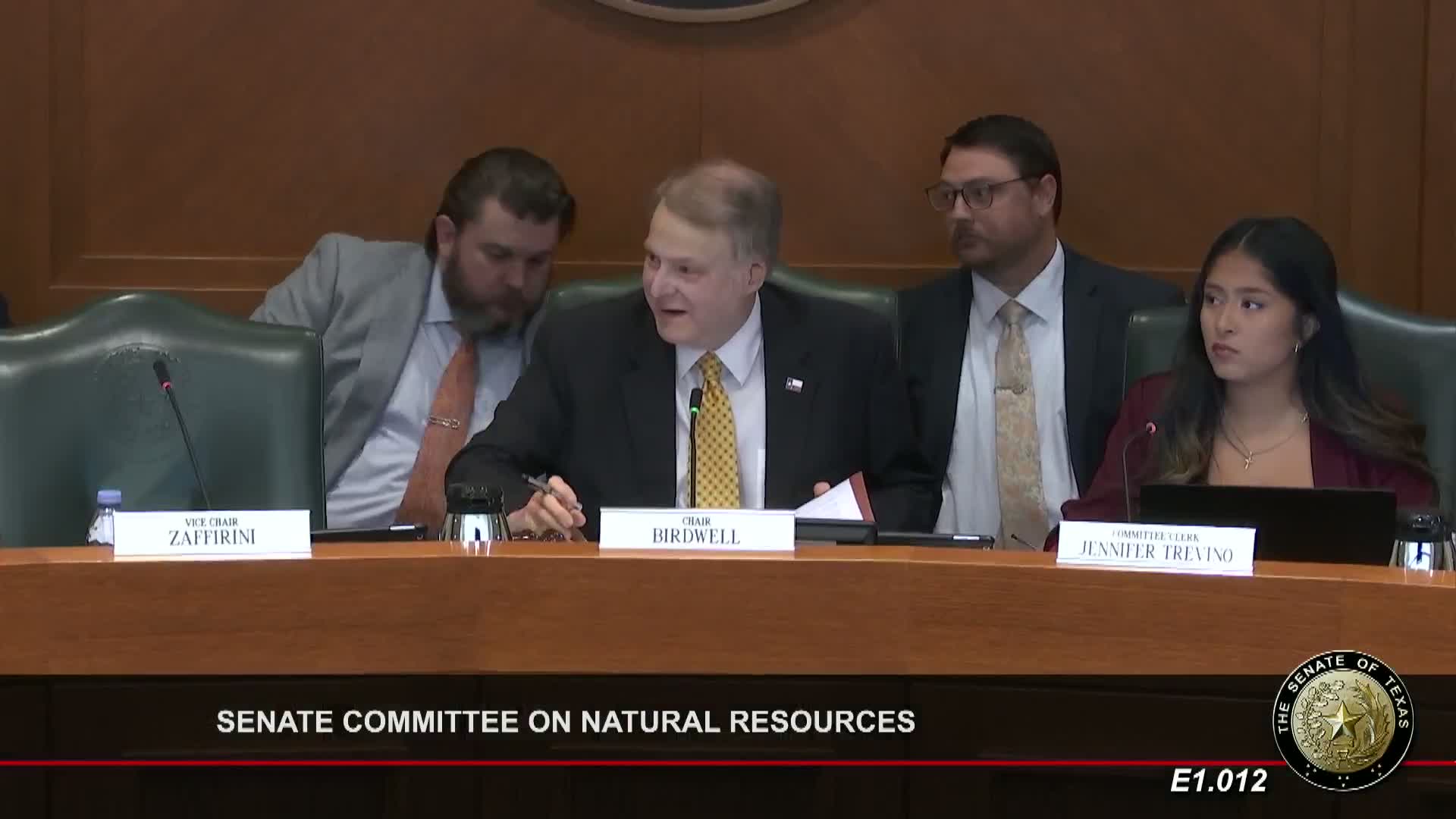
The Senate Committee on Natural Resources heard House Bill 3071, a measure to require the Texas Commission on Environmental Quality (TCEQ) to cancel certain inactive municipal solid waste permits under defined conditions so that decades‑old permits cannot later be reactivated in now‑developed residential areas.
The sponsor described situations—citing an example near Lake Worth—where a decades‑old permit was used to propose a landfill in an area that has since become densely developed, prompting local concern about health, safety, and quality of life. The bill’s intent is to ensure outdated permits do not disrupt modern communities.
Senator Sparks questioned provisions that could allow a permit to expire when ownership of the facility has changed, noting many permits remain valid through ownership transfers and mergers. Sparks also raised concerns about steps in the bill that would prohibit the TCEQ from approving subsequent permits at a site after cancellation and about setting precedents for permit expiration consequences. During the exchange, Sparks referenced possible specific defining elements discussed by sponsors, such as a county population threshold and extraterritorial jurisdiction numbers (discussed as possible narrow targeting), and urged narrowing to avoid undesirable precedent.
Committee members expressed sympathy for communities near long‑dormant permitted sites but asked staff and the sponsor to work on language. The sponsor said they were working with the chair and expected a committee substitute. No public testimony was offered; TCEQ resource staff were available. The bill was left pending with a committee sub expected.