Get AI Briefings, Transcripts & Alerts on Local & National Government Meetings — Forever.
Senate committee hears bill to require removal or de‑energizing of electrical equipment at long‑inactive oil and gas wells
Loading...
Summary
Lawmakers and landowners told the Senate Committee on Natural Resources that House Bill 2663 would close a regulatory gap by requiring operators of wells inactive 10+ years to remove or de‑energize electrical equipment; the bill was left pending after testimony and discussion about enforcement and penalties.
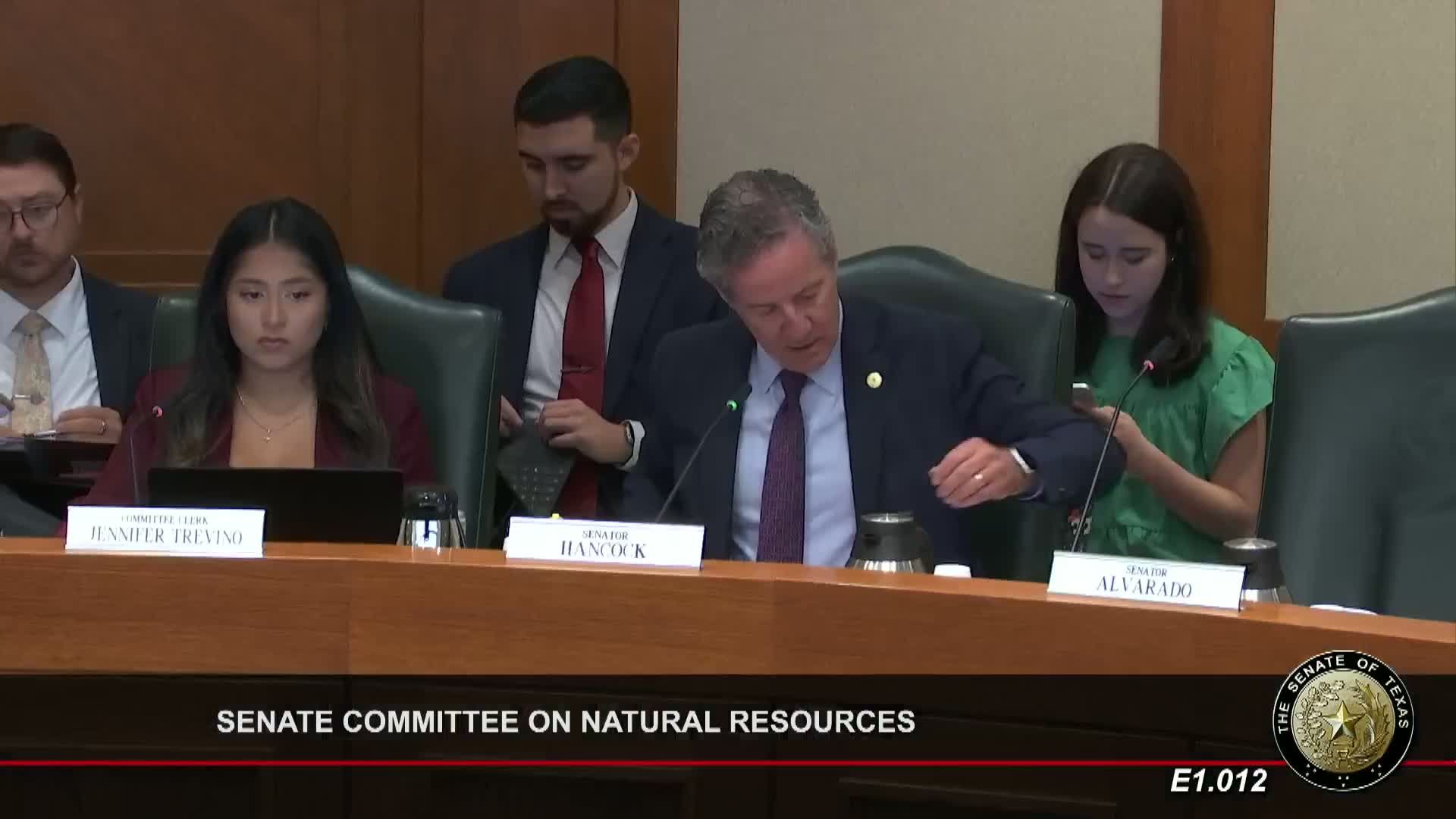
At a Senate Committee on Natural Resources hearing, lawmakers considered House Bill 2663, a measure by Rep. Darby (Senate sponsor recognized) that would require operators of oil and gas wells inactive for 10 or more years to affirm that all electrical service equipment has been removed or de‑energized when applying for a plugging extension and would authorize the Railroad Commission of Texas (RRC) to assess administrative penalties of up to $25,000 per violation.
The bill was framed as a targeted response to the 2024 Panhandle wildfires, which testimony described as sparked in part by neglected electrical equipment at inactive oil sites. The committee heard landowners and ranchers say the change would reduce wildfire risk and hold operators accountable.
Supporters said the existing regulatory framework does not specifically require removal or de‑energizing of electrical equipment on long‑inactive well sites. James Henderson, a Childress and Donley County landowner testifying for the Texas Southwestern Cattle Raisers Association, said the 2024 fires burned “over a million acres” and led to the loss of “over 20 to 30,000 head of cattle,” and that improved enforcement could have prevented some fires. Curtis Smith, a Panhandle cow‑calf operator and oil‑and‑gas investor, said much of the electrical infrastructure in older fields remains unchanged for decades and that the Railroad Commission has not effectively enforced removals.
Sierra Club Lone Star Chapter representative Cyrus Reed also testified in support, saying the House investigative committee found old electrical equipment at inactive wells and the bill’s option to remove equipment or turn off power addresses that gap. The bill would build on section 89.029 of the Natural Resources Code (existing framework for removal of other surface equipment) by explicitly covering electrical service equipment on long‑inactive wells.
Senator Sparks asked whether the bill would require removal of direct‑burial cable or allow safe de‑energizing as an alternative; the record reflects senators discussed permitting a de‑electrification path. A Railroad Commission resource witness was present but the testimony panel and senators focused on aligning the bill’s requirements with practical decommissioning and ensuring enforcement authority.
No final action was taken; the measure was left pending for further work and the sponsor indicated intent to bring a committee substitute to address concerns about precedent and definition of targeted locations.