Get Full Government Meeting Transcripts, Videos, & Alerts Forever!
Get email alerts on the Nil Contracts Student Athletes topic
No spam. Unsubscribe anytime.
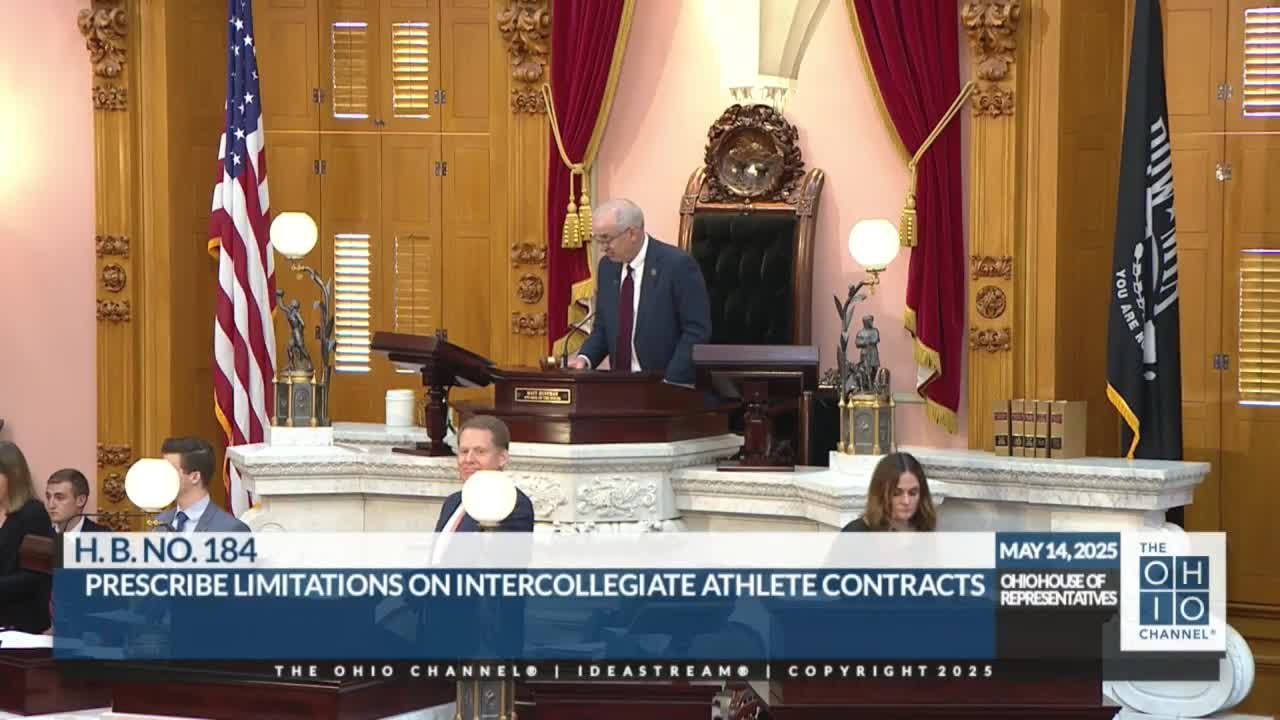
Ohio House passes bill limiting name‑image‑likeness contracts to collegiate eligibility period
Summary
House Bill 184 passed the Ohio House to prevent NIL agreements and agent terms from binding student athletes beyond their period of collegiate eligibility; sponsors said the bill protects athletes from predatory deals and ensures contracts do not claim rights to professional earnings.
The Ohio House on Tuesday passed House Bill 184, legislation that prohibits name‑image‑likeness (NIL) contracts and related agent terms from extending beyond a student athlete’s period of intercollegiate eligibility.
Supporters said the bill protects young athletes from contracts that could bind them into professional careers or require them to share future professional earnings with colleges, boosters or agents. Representative Ty Matthews, a sponsor, said the measure ensures “NIL agreements do not extend beyond a student's athlete's period of intercollegiate eligibility” and protects athletes from being bound to contracts that could impede their professional prospects.
Representative Brian Stewart, another sponsor, described the bill as “common sense consumer protection” and said it would bar contract terms that require a student athlete to use the same agent at the professional level or to give a share of future professional earnings. Stewart cited a high‑profile dispute involving Marvin Harrison Jr. as an example of why protections are needed. Several organizations and university officials—including Ohio State’s athletic director, Ross Bjork—were thanked on the floor for supporting the bill.
Representative Pickelantonio and others urged colleagues to support the measure as an important safeguard for college‑aged athletes who may not yet have the experience to negotiate long‑term contracts. The clerk reported 90 affirmative votes and no negative votes; the House declared the bill passed.
The bill's floor discussion emphasized consumer protections for younger athletes, transparency in NIL agreements, and constraints on agent practices; no fiscal impacts were discussed on the floor. The measure now moves to the Senate for further consideration.