Get Full Government Meeting Transcripts, Videos, & Alerts Forever!
Get email alerts on the Medicaid Work Requirements topic
No spam. Unsubscribe anytime.
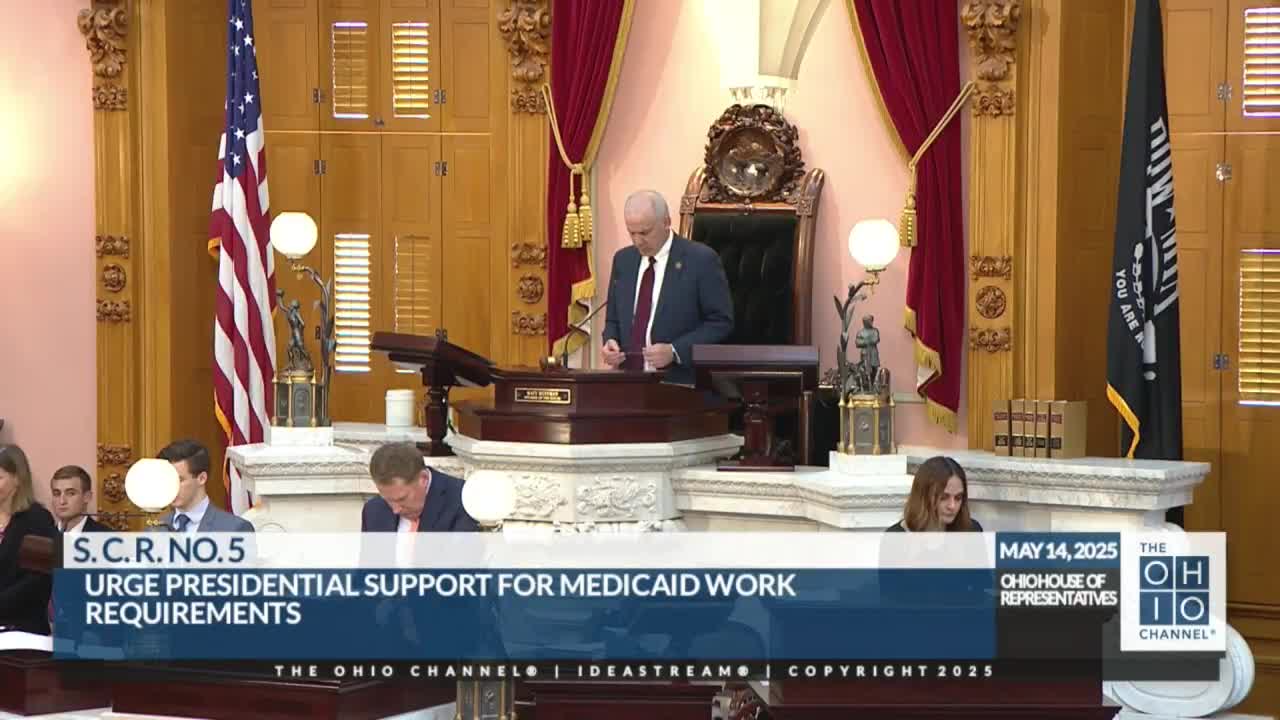
Ohio House adopts resolution urging presidential support for Medicaid work requirements after heated floor debate
Summary
The House adopted Senate Concurrent Resolution 5, urging federal approval of work requirements for certain Medicaid recipients; debate split lawmakers over workforce incentives and potential coverage losses, and the resolution passed 57‑31.
The Ohio House on Tuesday adopted Senate Concurrent Resolution 5 (SCR 5), which urges the President of the United States to support Ohio’s request to implement work requirements for certain Medicaid recipients.
Proponents described the measure as a tool to encourage workforce participation, training and self‑reliance for able‑bodied adults. Representative Gross, speaking in support, said the proposal would “create pathways to opportunity and self reliance, not barriers,” and emphasized exemptions for people 55 and older, parents, students and those who are ill.
Opponents warned the proposal would reduce coverage and shift costs to hospitals and taxpayers. Representative Derek Hall, who opposed SCR 5, said proponents had not produced evidence of successful implementation elsewhere and pointed to experience in other states where coverage fell and uncompensated care rose: “Not a single beneficial benefit to unemployment rates,” he said. Hall argued the measure would increase uncompensated care costs that are then passed to commercial payers and consumers.
Representative Williams, supporting the resolution, said work requirements can help people “dig themselves out of poverty” and cited his own experience with workforce training and public supports. Representative Thomas said the floor debate overlooked people who cannot work because of addiction, lack of childcare, or other barriers and urged a more targeted approach.
After extended debate, the clerk reported the roll call: 57 affirmative votes and 31 negative votes, and the House adopted SCR 5. The resolution urges federal approval of Ohio’s plan to require able‑bodied adults under 55 to engage in work, education, or community activities, and acknowledges carve‑outs for certain groups. The resolution itself does not change Medicaid policy; it expresses the chamber’s position and asks federal action.
Floor debate focused on whether work requirements would meaningfully improve employment outcomes or instead deepen coverage gaps and uncompensated care burdens; supporters pointed to workforce training and childcare programs as available resources, while opponents urged caution and recommended a narrower, evidence‑based approach.