Get Full Government Meeting Transcripts, Videos, & Alerts Forever!
Get email alerts on the Education Assessments topic
No spam. Unsubscribe anytime.
Oregon committee hears testimony on bill to inventory kindergarten assessments
Summary
Lawmakers and education officials discussed Senate Bill 302A, a proposal to audit kindergarten assessment practices statewide and to expand family-centered kindergarten intake conversations; no vote was taken during the public hearing.
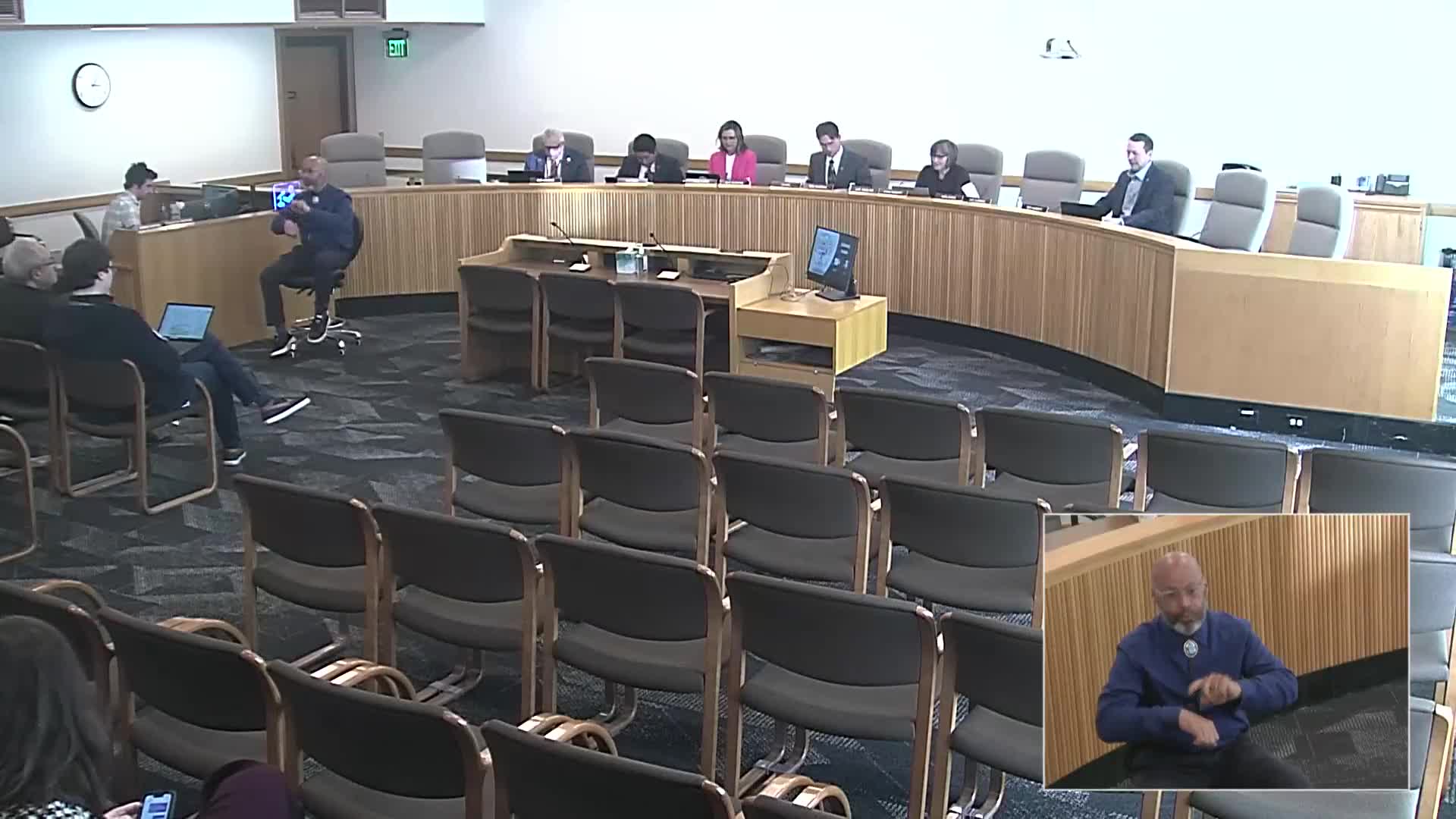
The House Committee on Education heard public testimony May 14 on Senate Bill 302A, which would direct state review of what assessments kindergarten students receive and when, and would inform possible changes to practice and state support for family-centered kindergarten transition conversations.
The bill’s sponsor, Sen. Lou Frederick, told the committee he introduced the measure after hearing from parents and teachers that children sometimes spend the first days or weeks of kindergarten taking tests. “Very simply, I'd like to test to trust that the information is coming in but I'd like to verify it,” Sen. Lou Frederick said, arguing an audit would show what assessments districts use and when they are administered.
Supporters from the Oregon Department of Education described a state effort that differs from traditional readiness testing. Dan Farley, assistant superintendent in the Office of Research, Assessment, Data, Accountability and Reporting at the Oregon Department of Education, said the department has piloted an “early learning transition check‑in” that prioritizes family conversations and systems readiness over testing. “The question is, are schools ready, to receive them and support them and their families the way that we need them to be supported,” Farley said.
Farley and staff described the check‑in as a family conversation — not a checklist — designed to gather information about children’s experiences, primary language needs and what brings children joy. The department said it has run multiple pilots since 2018–19 and plans a fourth pilot in fall 2025 with about 36 schools in 12 districts; it also said many districts have independently scaled the practice after piloting it with state support.
Committee members pressed how an audit under SB 302A would capture the concerns sponsors raised. Farley said the department can build on work done under House Bill 4124, which produced a district assessment inventory, and that the audit could collect timing and administration details that matter to educators. He cautioned, however, that fully validating every district response or making thousands of follow‑up calls would carry additional fiscal costs. “There will be some limitations to the survey tool that could be met if there were a fiscal [appropriation], but it’s going to have to essentially be a trust, but not without the verify process, at this point,” Farley said.
Farley summarized findings from the prior inventory work: the state audit found more than 500 different assessments administered at the kindergarten level, that kindergarten students spent approximately 53 minutes per assessment, and that districts spent roughly $8 per student on those testing experiences. He said certain student groups — English learners and students with individualized education programs — typically take additional assessments.
Several committee members described the problem as partly cultural and local: Sen. Frederick and others said district and school leaders have sometimes encouraged teachers to collect local data, which has led to varied local practices and, in some cases, lengthy testing regimens in the first days of school. Vice Chair Dobson said the senator and others reported anecdotal examples from parents and teachers who were surprised by the amount of early testing.
No votes or formal committee actions on SB 302A occurred during the hearing. Chair Rep. Tara Hudson closed the public hearing and the committee scheduled potential work sessions on Monday for several bills, including SB 302A.
The hearing record shows the department is willing to expand the family conversation model statewide and to help the committee design an audit that is descriptive about timing and administration. ODE staff said partnering with the State Board of Education and providing district training materials will be part of efforts to scale the family conversation approach. Farley also noted that without additional funding, the department’s ability to verify district responses will be limited.