Get Full Government Meeting Transcripts, Videos, & Alerts Forever!
Get email alerts on the Educator Workforce Grants topic
No spam. Unsubscribe anytime.
Education subcommittee receives Educator Advancement Council grant report, including Grow‑Your‑Own and regional network data
Summary
The subcommittee received a required report from the Educator Advancement Council on grant programs and proposed Grow‑Your‑Own performance measures; presenters described regional education networks, scholarship outcomes and measures to track educator pipeline and retention.
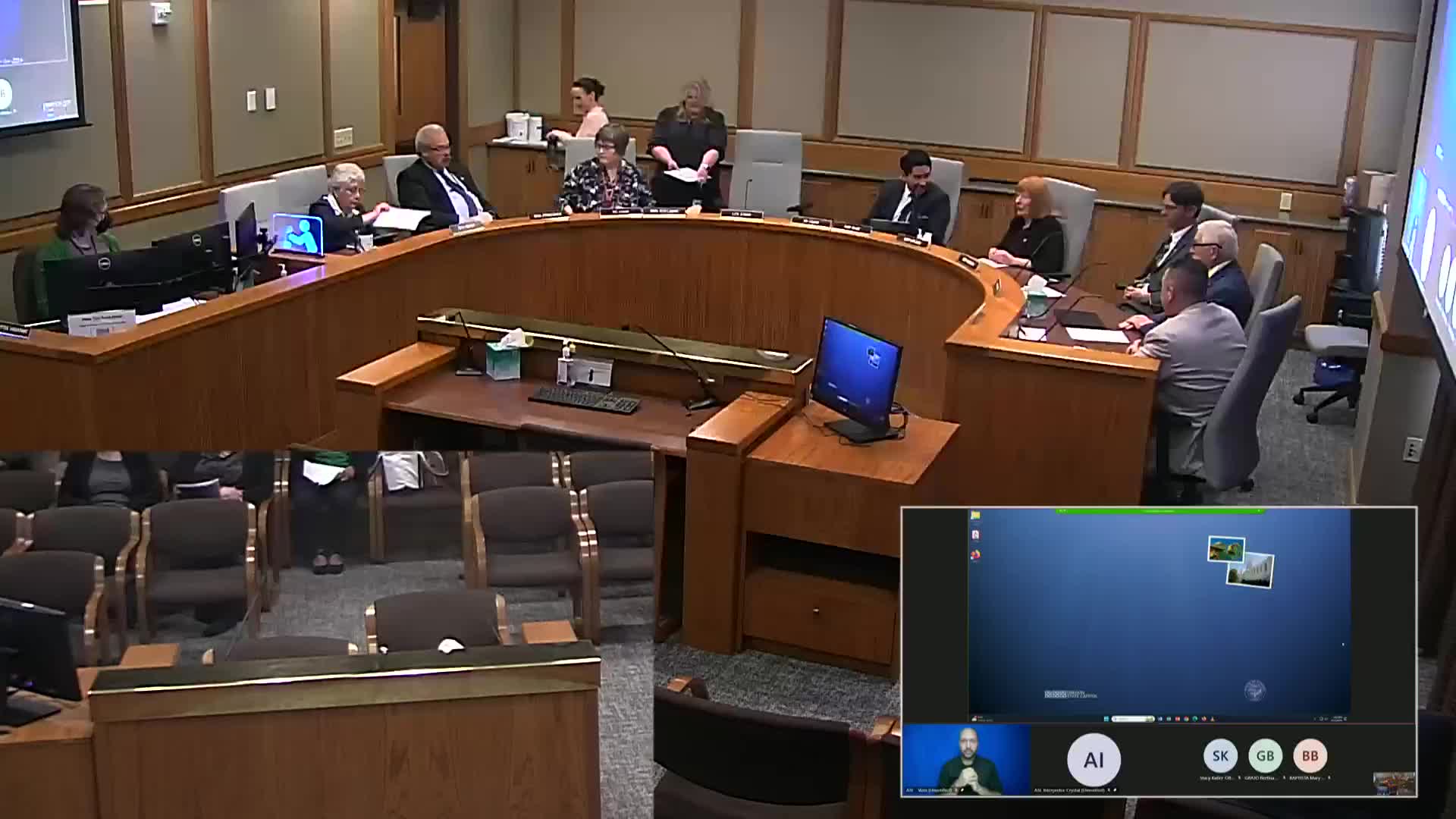
The Education Subcommittee for Ways and Means on May 14 received the Educator Advancement Council's biennial report on its GRAMA and grant‑in‑aid programs, as required by the 2023 legislature, and accepted the Legislative Fiscal Office recommendation to place the report on file.
Dr. Karen Perez, executive director of the Educator Advancement Council, told the committee the EAC and Oregon Department of Education worked with the Legislative Fiscal Office to produce a report that describes each program, intended outcomes, geographic reach and participant outcomes. “The Educator Advancement Council staff work with the EAC Council to make strategic investments, in expansion of, promising programs and practices that support and advance educators,” Perez said.
The report highlights statewide workforce challenges and program activity. The presenters reported that the broader educator workforce in Oregon exceeds 88,000 people, with roughly 32,000 licensed educators; nearly one‑quarter of those licensed educators have three or fewer years of experience. The EAC and partners cited teacher attrition rates of about 17% and administrator attrition near 20% in recent years and referenced a longitudinal study by the University of California, Irvine summarized in the 2024 Oregon Educator Equity Report.
Key program numbers presented: Regional Education Networks (RENs) cover 10 state regions and provided professional learning to more than 10,000 licensed educators in 2023–24; RENs received $6,900,000 in capacity grants for operational costs and roughly $35,800,000 in formula grant funds for programs and services in the biennium. RENs funded 165 projects statewide in 2023–24 and invested more than $9,000,000 in project activities. The EAC reported REN programs vary widely in per‑participant cost depending on program intensity and that improved data collection is underway to better capture those variations.
The EAC's Grow‑Your‑Own grants supported 29 local and regional partnerships in the first biennial year. Presenters reported 1,713 adult participants and 639 high‑school participants in those programs; the report said more than 640 educator candidates earned an educator license, endorsement or early‑learning credential and that 218 of those earned a TSPC license as of February 2024. The EAC reported the average direct cost per adult Grow‑Your‑Own participant was about $6,000 (this figure excludes program administrative costs).
Higher education and licensing partners described related scholarship and licensure programs. Erin Rowe of the Higher Education Coordinating Commission said the Oregon Teacher Scholars Program (OTSP) has expanded since 2017; award amounts increased from $10,000 to $12,000 per year under 2023 changes, eligibility expanded, and the program serves more than 600 privately funded scholarships and OTSP recipients who graduate at higher rates. Rowe said about 87% of OTSP recipients graduate and about 88% were working in education two years after graduation; roughly 80% held an active TSPC license and about 74% held preliminary or other teaching licenses.
Dr. Chera Mondraken of the Teacher Standards and Practices Commission described three TSPC‑administered programs funded through interagency agreements with the EAC: the Oregon Administrator Scholars Program (scholarships to complete administrative licensing programs), a licensure expense reimbursement program (average reimbursement reported near $500; about 695 educators served so far in the biennium), and the Multiple Measures program (alternative assessments to high‑stakes tests) which supported about 375 educators in the current biennium.
House Bill 5014 (2023) required the EAC to propose key performance measures for Grow‑Your‑Own programs; the EAC recommended metrics to report enrollments of high‑school completers into educator preparation pathways and the number of adult Grow‑Your‑Own completers who obtain certification/licensure and are employed as Oregon educators. The Legislative Fiscal Office recommended the subcommittee receive the report; the committee voted to place the report on file and move that receipt to the full committee with the LFO recommendation.
Committee members asked for additional data and follow‑up: Representative Wright asked whether exit‑interview data exist for people who leave the profession; presenters said the Oregon Educator Equity Report and UC‑Irvine study include information on where educators go and reasons for leaving. Members also discussed aligning REN work with early‑literacy efforts, educator preparation programs and other state agency hubs; presenters said coordination is underway with the Department of Early Learning and Care, ESDs and other partners.
The committee accepted the report and LFO recommendation and moved receipt to the full committee with no recorded objections.